Front-End Development and Web Standards Weekly Digest: Modern Frameworks, AI Agents, and Advanced Browser Capabilities

The rapid evolution of modern web development continues to reshape how developers design, optimize, and secure digital experiences across an increasingly fragmented device ecosystem. In recent weeks, the industry has seen a convergence of groundbreaking tooling, crucial standards updates, and innovative solutions to persistent infrastructural challenges. From new browser-based layout testing environments and accessible component libraries to advanced methods for managing aggressive web scraping bots, the front-end engineering community is actively pushing the boundaries of what the web platform can achieve.
Main Facts and Layout Challenges Beyond the Viewport
Designing responsive digital interfaces has long extended far beyond simple screen resizing. Contemporary web users routinely navigate platforms in complex environments characterized by on-screen virtual keyboards, split-screen browser viewports, docked developer tools, and irregularly dimensioned in-app browsers. These non-standard viewports frequently break layouts that were optimized solely for traditional desktop or mobile resolutions.
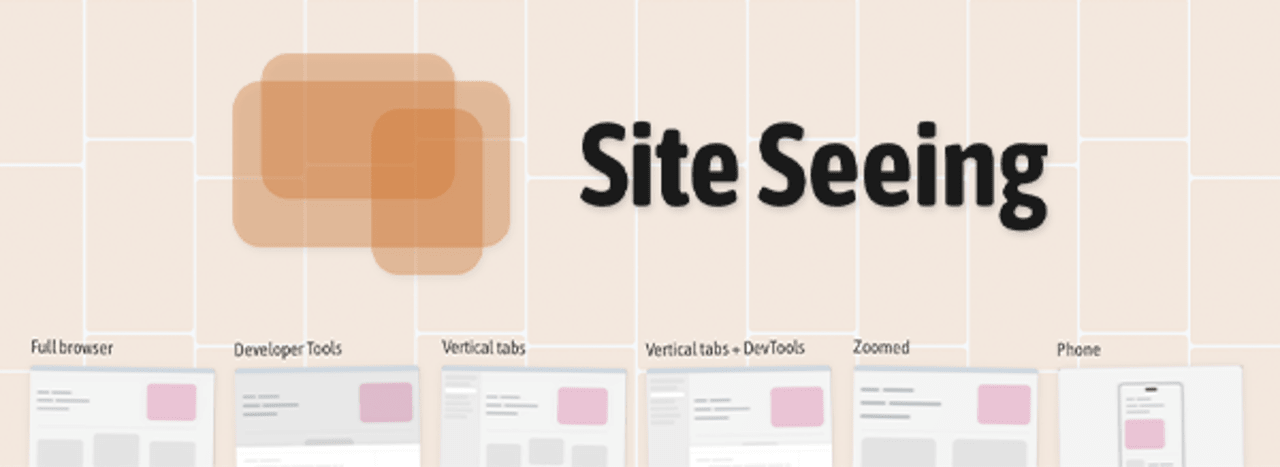
To combat this widespread design hurdle, developer Ahmad Shadeed has released Site Seeing, a new, free browser-based diagnostic tool specifically engineered to preview web layouts within these awkward, real-world contexts. By allowing developers to simulate cramped or obstructed viewport scenarios seamlessly, the tool bridges the gap between theoretical responsiveness and practical usability.

Simultaneously, the foundational frameworks governing CSS are seeing deep architectural shifts. Agustin Capeletto recently highlighted the computational power inherent in native CSS layout engines through an interactive exploration of CSS Grid and Flexbox. By leveraging the intrinsic behavior of modern layout calculations and reading those computed values back as raw numbers, developers can now achieve complex programmatic feats—such as drawing dynamic, animated charts—entirely within CSS, minimizing reliance on heavy JavaScript runtimes.
Evolution of Web Standards and AI Integration
As artificial intelligence increasingly permeates the software engineering lifecycle, ensuring that AI coding assistants adhere to modern web standards has become a critical priority for platform maintainers. Google’s Chrome team, alongside prominent web architects including Lea Verou, Patrick Brosset of Microsoft Edge, and Jake Archibald of Mozilla Firefox, has officially stabilized Modern Web Guidance 1.0.
This major milestone introduces standardized web expertise and skills directly tailored for AI coding agents. While AI agents have historically proven adept at generating basic functional syntax, they frequently fall behind on evolving web standards, Baseline-aware HTML, and modern CSS best practices. By embedding structured web guidance directly into agent workflows, the project aims to steer automated coding tools toward robust, future-proof web development practices.
Concurrently, the broader capabilities of the web platform are expanding at an unprecedented pace. Paul Ford recently emphasized the immense, often underestimated power of the modern web platform, pointing out that advanced implementations of WebAssembly, Web Crypto, WebGL, and Web Audio are now firmly within reach for everyday developers. These native browser technologies are empowering teams to build sophisticated, high-performance applications directly inside the browser—capabilities that were once thought impossible outside of native desktop environments.
Tooling, Accessibility, and Framework Updates
The ecosystem for developer tooling and UI libraries has also received major upgrades, focusing heavily on accessibility, performance, and developer ergonomics.
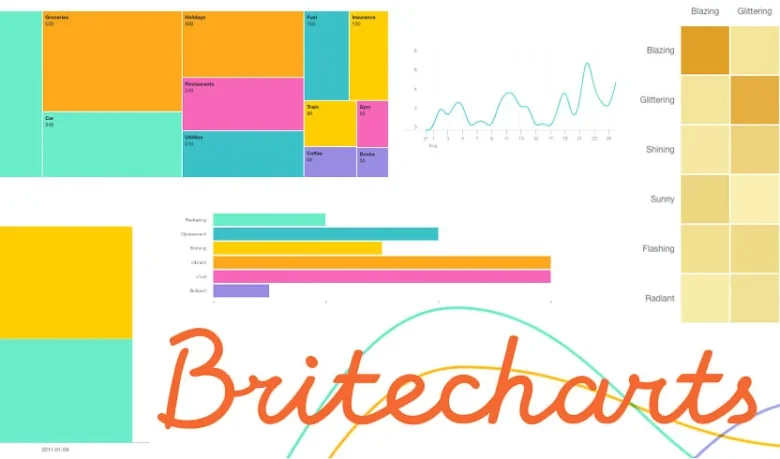
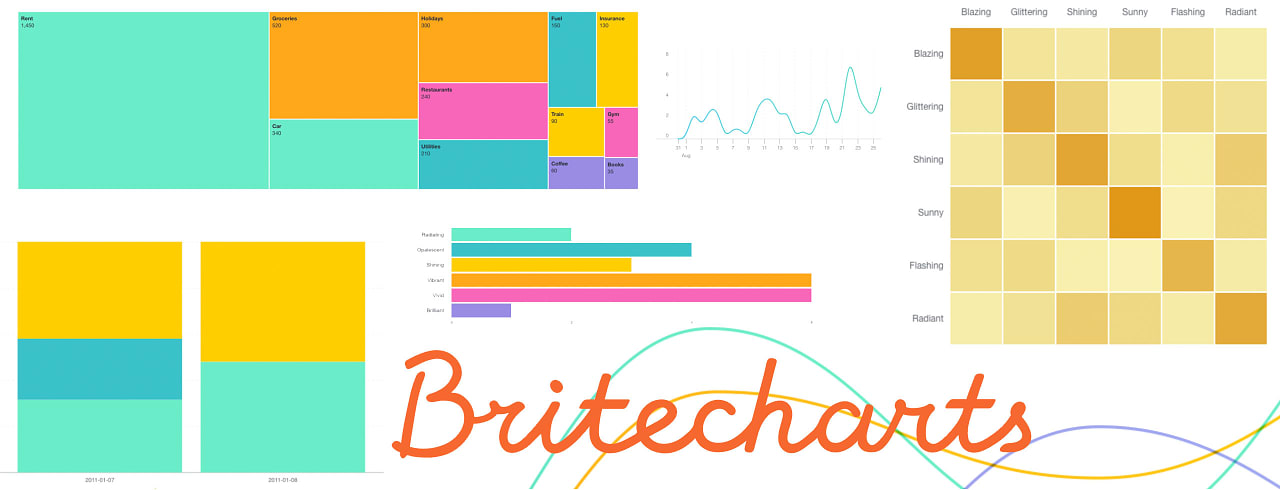
Marcos Iglesias announced the release of Britecharts 3.0, a long-awaited major update to the popular library of reusable D3-based charts. Crucially, this latest iteration prioritizes accessibility out of the box, introducing native screen reader data tables and robust keyboard navigation capabilities. Furthermore, Britecharts 3.0 incorporates native dark mode support, comprehensive TypeScript definitions, and an all-new treemap component, backed by extensive documentation.
In the realm of styling frameworks, Aoyue Design introduced Master CSS 2.0, a markup-driven CSS language and utility-class framework designed to streamline styling logic. By allowing a single utility class to encapsulate complex values, selectors, and conditional states—such as fg-blue-70:hover@sm—the framework significantly reduces stylesheet bloat. Version 2.0 introduces powerful new features, including custom design tokens defined directly within native CSS, a wide-gamut color palette, and enhanced linting and editor tooling.
Meanwhile, industry mainstays are undergoing essential modernizations. Geoff Graham detailed the official rollout of CSS-Tricks Version 20. Following its acquisition and transition to new ownership, the iconic web development resource is undergoing comprehensive technical maintenance, including extensive JavaScript cleanups and a thorough reorganization of its Sass architecture to ensure long-term sustainability and performance.

System Color Contrast and Accessibility Concerns
Accessibility standards extend deeply into operating system integrations, as illustrated by recent findings in cross-browser color rendering. Aaron Gustafson published a comprehensive cross-browser study examining the behavior of CSS system colors across various platforms.
Gustafson’s research revealed critical accessibility flaws in specific environments, noting that paired CSS system colors—such as HighlightText and Highlight—fail to achieve acceptable readability thresholds. Most notably, in Chrome on Android under dark mode conditions, these paired system colors yield a contrast ratio of just 1.98:1, falling far short of the Web Content Accessibility Guidelines (WCAG) requirements. The study provides developers with crucial data on which color pairs maintain structural integrity and legibility across disparate browsers and operating systems.
Mitigating Aggressive Bot Traffic and Web Scraping
As automated web scrapers, data harvesters, and malicious AI training crawlers proliferate, website administrators are increasingly forced to implement aggressive defensive strategies to protect server bandwidth and data integrity.
Terence Eden recently documented his successful deployment of a custom honeypot designed to combat aggressive scraping bots that willfully ignore robots.txt directives. By luring resource-consuming bots into a trap and automatically issuing a network ban, Eden observed an immediate 90 percent reduction in unauthorized bandwidth consumption, albeit with notable architectural tradeoffs.
The struggle against automated traffic is echoed widely across the industry. Nick Gray shared insights from a year-long battle against scrapers using Cloudflare infrastructure, detailing the iterative firewall rules and experimental configurations required to manage traffic where automated requests routinely outnumber human visitors. In a more creative approach to digital defense, security researcher Utku Sen populated a test environment with specific taboo phrases, discovering that automated AI agents explicitly refused to interact with or parse the compromised code—offering a potential deterrent against casual automated vulnerability hunting and reverse engineering.
Compounding these infrastructural challenges, human analytics are increasingly skewed by sophisticated crawling algorithms. An investigation by Hugo Attal into server log data revealed that up to 90 percent of reported "human" visitors on certain web properties were actually advanced automated bots masquerading as organic traffic. These findings underscore an urgent need for more accurate telemetry and robust server-side bot-filtering mechanisms in modern web analytics.
Broader Impact and Industry Implications
The convergence of these developments highlights a pivotal transitional phase for the web industry. As browsers evolve into high-performance application runtimes capable of executing complex computational tasks, developers must simultaneously navigate heightened demands for universal accessibility, strict color contrast compliance, and robust server-side security against automated threats.
The institutionalization of AI guidance standards, combined with advanced diagnostic utilities like Site Seeing and automated mitigation frameworks, indicates a maturing ecosystem. By fortifying the foundational layers of web design, styling, and security, the front-end community is laying a resilient groundwork for the next generation of digital experiences.