Web Standards, Security Challenges, and Modern Tooling Take Center Stage in the 2026 Developer Landscape

The rapid evolution of web technologies continues to reshape how developers build, secure, and optimize applications for the modern internet. From foundational shifts in HTML specifications and browser performance optimization to emerging security vulnerabilities in email rendering engines, the web ecosystem is experiencing a period of intense transformation. Industry leaders, standards bodies, and independent developers are currently grappling with these sweeping changes, balancing the desire for richer user experiences against the imperative of performance and robust security.
Evolution of HTML and the 2026 Standards Landscape
While Cascading Style Sheets (CSS) and JavaScript historically capture the spotlight for rapid feature rollouts, the HyperText Markup Language (HTML) is quietly undergoing a substantial modernization phase. In mid-2026, web developers are being introduced to a suite of long-overdue additions designed to bring native capabilities to the browser without the heavy reliance on external JavaScript libraries.
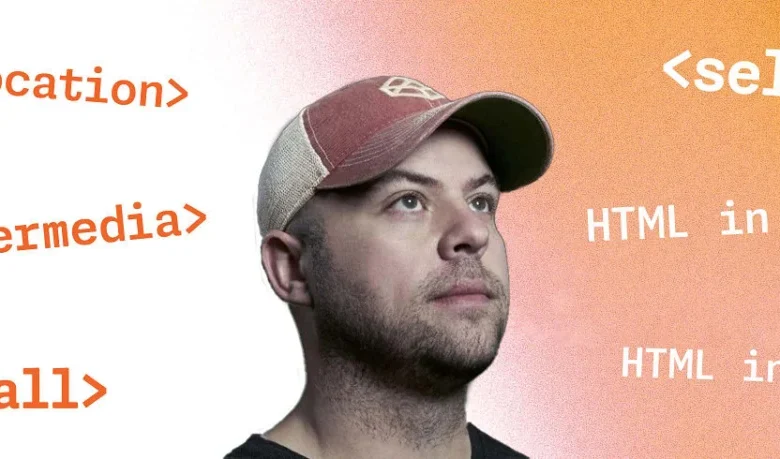
Prominent web developer Chris Coyier recently highlighted several groundbreaking elements entering the modern HTML specification. Among the most anticipated is the native geolocation element, which standardizes location-based interactions directly within the DOM. Additionally, the introduction of HTML-in-Canvas aims to bridge the gap between declarative markup and high-performance rendering graphics, while native camera and microphone management via the usermedia attribute streamlines media capture workflows. Furthermore, the newly introduced model element signals a direct nod to the growing integration of three-dimensional assets in standard web pages, reflecting the broader push toward spatial computing and immersive web design.

Parallel to these advancements, the World Wide Web Consortium (W3C) has officially launched its 2026 community-wide survey. This initiative invites developers, enterprise stakeholders, and accessibility advocates to weigh in on the future trajectory of web standards and operational frameworks. The feedback gathered from this comprehensive survey is expected to dictate the prioritization of upcoming specifications, ensuring that the open web remains responsive to the practical demands of its global engineering community.
Amid this forward-looking momentum, industry maintainers are also engaged in a vigorous house-cleaning effort. Declan Chidlow recently published a critical examination of antiquated HTML snippets and legacy artifacts that continue to clutter modern codebases out of sheer habit. Code snippets such as conditional comments, legacy X-UA-Compatible meta tags, and outdated cleartype directives are frequently carried over from legacy projects despite offering zero utility in modern rendering engines. Eliminating these relics is becoming a standardized best practice for performance-conscious development teams looking to reduce payload bloat and improve parsing efficiency.
High-Performance UI Design and Main Thread Optimization
User interface engineering in 2026 is similarly characterized by a pivot toward native browser capabilities and rigorous performance budgets. Alexander Inkin recently detailed a modern methodology for constructing custom scrollbar components. Rather than relying on computationally expensive JavaScript arithmetic to track and manipulate scroll positions, modern developers are leveraging advanced CSS features to handle sizing, positioning, and visibility entirely within the stylesheet. This approach not only slashes JavaScript execution overhead but also guarantees high-frame-rate rendering across diverse client devices.
Complementing this focus on stylesheet-driven UI is a growing industry-wide concern regarding browser main thread bottlenecks. In a detailed technical breakdown supported by empirical benchmarks, engineer Sunhyoup Lee illustrated the heavy computational toll placed on the browser’s main thread by complex single-page applications. Lee emphasized the necessity of smart task scheduling—advocating for techniques such as task splitting, batching, prioritizing, and deferring non-critical operations. Furthermore, the analysis underscores the importance of offloading intensive computations to Web Workers entirely, preserving smooth user interactions and maintaining optimal Core Web Vitals metrics.

Security Vulnerabilities: CSS as an Attack Vector
While UI performance and standards dominate day-to-day engineering conversations, web security researchers continue to uncover alarming vulnerabilities stemming from unexpected features. In a high-profile disclosure, security researcher Gareth Heyes demonstrated how Cascading Style Sheets can be weaponized against popular webmail providers.
The research revealed that carefully crafted CSS payloads could be exploited within email clients to execute malicious behaviors previously thought impossible. These include UI defacement, the bypassing of standard image proxies to track user engagement without consent, and even the rudimentary construction of a CSS-based keylogger. The findings have sent shockwaves through the cybersecurity community, prompting email service providers to rapidly tighten their HTML and CSS sanitization pipelines to mitigate the risk of stylesheet-based injection attacks.
Infrastructure and Domain Shifts
Infrastructure changes are also impacting the digital identity landscape. Neil Fraser outlined the impending operational termination of the .name top-level domain’s third-party offerings. This administrative sunset forces individuals and entities who have historically relied on .name subdomains for personal branding and online portfolios to migrate their digital footprints to alternative extensions. The transition highlights the inherent vulnerabilities of relying on niche or legacy domain structures for long-term digital preservation.
Innovative Tooling and Accessibility Enhancements
Despite these complex infrastructural and security challenges, the developer tooling ecosystem continues to produce creative and practical resources designed to streamline web production.

Among the standout releases is Drawably, a specialized collection of hand-drawn UI controls created by Daniel White. Designed with zero external dependencies, the library weighs in at approximately 7 kilobytes of gzipped JavaScript paired with a compact 3-kilobyte stylesheet. Utilizing seeded randomness, the library dynamically renders animated pen sketches for user interface components, offering a charming, handcrafted aesthetic for creative web projects without compromising performance.
In the realm of web accessibility, Proper Access B.V. introduced WCAG Radar, a specialized bookmarklet and browser extension designed to evaluate web pages against WCAG 2.1 and 2.2 AA accessibility standards. Operating locally within the browser, the tool runs diagnostics and visually highlights compliance violations directly on the active webpage. While a base set of checks is provided free of charge, the tool utilizes a tiered model offering advanced verification checks for professional auditors.
Broader Impact and Industry Implications
The convergence of these developments paints a clear picture of an industry maturing under the weight of heightened expectations. The introduction of robust native HTML features indicates a concerted effort by browser vendors to reduce framework fatigue by baking common functionalities directly into the platform. Simultaneously, the stark security warnings issued regarding CSS weaponization serve as a sobering reminder that every stylistic and structural tool introduced to the web carries potential security implications.
As standards bodies like the W3C gather community input through their 2026 surveys, the collective focus of the web development community remains firmly fixed on building a faster, more accessible, and fundamentally secure digital infrastructure. Engineering teams that proactively adapt to these evolving standards—refactoring legacy code, optimizing main thread utilization, and maintaining rigorous security postures—will be best positioned to navigate the challenges and opportunities defining the web engineering landscape today.
Related posts: