Web Development Landscape in 2026: Modern HTML Evolution, Security Vulnerabilities, and Developer Tools

The rapid evolution of web technologies has reached a significant juncture, characterized by major shifts in HTML specifications, heightened awareness of browser performance bottlenecks, and emerging security concerns regarding legacy code and CSS capabilities. As developers navigate the mid-2026 landscape, the industry is witnessing a concerted effort by standards organizations, security researchers, and independent creators to refine the tools and protocols that underpin the modern internet. From the introduction of cutting-edge HTML elements and streamlined CSS-based UI components to sobering discoveries about browser thread management and webmail security flaws, the web ecosystem is undergoing a period of profound technical introspection.
The Evolution of HTML Standards and the W3C Roadmap
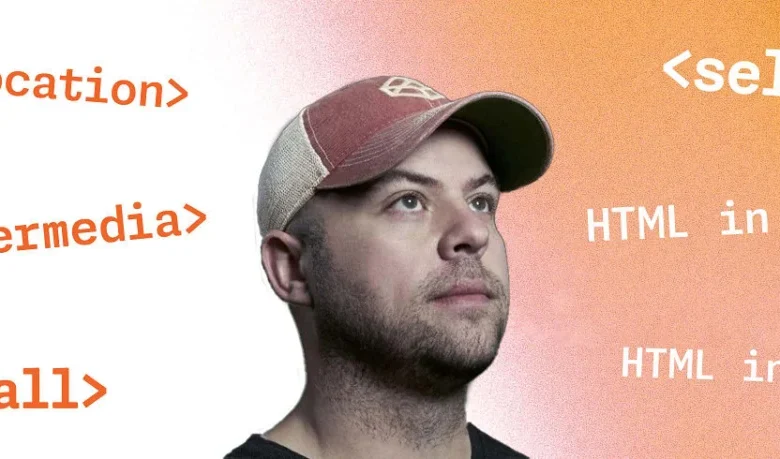
HTML has historically progressed at a more measured pace compared to its dynamic companions, CSS and JavaScript. However, the mid-2026 ecosystem introduces several transformative capabilities designed to bridge the gap between native application performance and web-based implementations. Industry expert Chris Coyier recently highlighted a series of emerging HTML features that are reshaping frontend development. Among these is the formalization of the geolocation element, which standardizes location-based interactions directly within the markup layer rather than relying exclusively on imperative JavaScript APIs.
Furthermore, the introduction of HTML-in-Canvas capabilities, advanced camera and microphone management via streamlined usermedia integrations, and the highly anticipated model element signal a shift toward native 3D and multimedia support. These additions allow developers to render interactive 3D assets and manage media streams with reduced boilerplate code, minimizing reliance on heavy external libraries.
In parallel with these technical advancements, institutional governance of the web is adapting to the needs of the modern developer community. The World Wide Web Consortium (W3C) has officially launched its 2026 community-wide survey. This initiative is designed to gather comprehensive empirical data, feedback, and strategic direction from global developers, enterprise stakeholders, and accessibility advocates. The W3C aims to align its future standardization roadmap with the practical realities of modern application architecture, ensuring that forthcoming specifications address real-world performance and interoperability challenges.

Deconstructing Antiquated Code: The Push to Purge HTML Artefacts
While new features expand the capabilities of modern browsers, the persistent presence of legacy code remains a major friction point for web performance and maintainability. In a recent analysis by developer Declan Chidlow, the web community was urged to systematically audit and remove antiquated HTML snippets and artefacts that continue to circulate in modern codebases.
For decades, developers have inherited boilerplate code templates containing conditional comments, X-UA-Compatible meta tags, and ClearType directives. Originally introduced to manage quirks in legacy versions of Internet Explorer and early mobile viewports, these elements are entirely obsolete in modern browser environments. Security researchers and browser vendors note that retaining these legacy snippets not only clutters codebases but can occasionally introduce parsing overheads and unintended edge cases in contemporary rendering engines. The movement to purge these relics reflects a broader industry push toward lean, standards-compliant markup that prioritizes execution speed and long-term maintainability.
Performance Optimization and the Cost of the Browser’s Main Thread
As web applications grow increasingly complex, frontend architecture is under intense scrutiny regarding resource utilization. A comprehensive technical deep-dive published by developer Sunhyoup Lee tackles a fundamental bottleneck in modern web engineering: the browser’s main thread is inherently expensive.
When single-page applications and complex dashboards execute heavy JavaScript computations, user interface rendering, and DOM manipulation concurrently on the main thread, users experience jank, unresponsive input handling, and degraded scrolling performance. Lee’s research emphasizes the necessity of strategic workload management, advocating for techniques such as task splitting, execution batching, prioritization, and deferral. By leveraging modern browser APIs to offload intensive tasks to Web Workers entirely, developers can maintain a consistent 60-frames-per-second experience.

This performance-first philosophy extends into UI component design. Alexander Inkin recently detailed a modern approach to constructing custom scrollbar components. Historically, custom scrollbars required complex, resource-heavy JavaScript arithmetic to calculate thumb size, track offsets, and handle drag events. By leveraging advanced CSS features introduced over recent development cycles, developers can now handle sizing, positioning, and visibility entirely within the stylesheet. This CSS-first approach eliminates unnecessary JavaScript execution loops, resulting in high-performance custom scrollbars that operate smoothly even on lower-powered mobile devices.
Security Vulnerabilities: When CSS Becomes a Weapon
Beneath the surface of aesthetic improvements and performance optimizations, the security landscape of the web continues to face sophisticated threats. In a startling research disclosure, security expert Gareth Heyes demonstrated how Cascading Style Sheets—traditionally viewed as a safe, stylistic layer—can be weaponized against popular webmail providers and email clients.
The research reveals that maliciously crafted CSS payloads can bypass standard email security mitigations, circumvent image proxies, deface complex user interfaces, and even function as a rudimentary keylogger within the inbox environment. By exploiting parser inconsistencies and advanced selector mechanics, attackers can manipulate the Document Object Model in unauthorized ways without executing traditional JavaScript. This vulnerability highlights a critical blind spot in current email sanitization pipelines, prompting major webmail operators to reevaluate how they parse and render untrusted style sheets within user inboxes.
Infrastructure Shifts: The Impending Termination of .name Domains
Beyond browser-level mechanics and styling languages, foundational internet infrastructure is also experiencing closures. Neil Fraser recently highlighted the impending termination and sunset of third-party .name top-level domain structures. For years, the .name TLD served as a specialized namespace for individuals seeking a personalized online identity.

The phase-out of these specific naming structures carries significant implications for digital preservation, email routing, and legacy web routing. Domain owners utilizing this extension are forced to migrate their digital footprints to alternative TLDs, illustrating the transient nature of early domain-name expansions and the ongoing consolidation of internet real estate.
Emerging Developer Tools and Resource Ecosystems
To support the demands of modern web engineering, the ecosystem of developer tools continues to expand, offering innovative solutions for UI design, accessibility compliance, and minimalist browser environments.
Hand-Drawn UI Controls and Zero-Dependency Libraries
A notable addition to the open-source resource landscape is Drawably, a specialized collection of hand-drawn UI controls created by Daniel White. Designed for projects requiring an organic, sketched aesthetic, the library features animated pen sketches generated via seeded randomness. Crucially, the entire package maintains zero external dependencies, boasting a gzipped JavaScript footprint of approximately 7 kilobytes alongside a remarkably lean 3-kilobyte stylesheet. This balance of aesthetic uniqueness and performance efficiency underscores a growing market demand for lightweight, specialized UI toolkits.
Automated Accessibility Auditing with WCAG Radar
Accessibility compliance remains a central pillar of professional web development, governed by the Web Content Accessibility Guidelines (WCAG). To streamline compliance testing, Proper Access B.V. introduced WCAG Radar, a local-first browser extension and bookmarklet designed to execute WCAG 2.1 and 2.2 AA audits against live web pages.
Unlike cloud-based scanning tools that require external data transmission, WCAG Radar performs evaluations locally within the browser instance, highlighting accessibility failures directly within the markup overlay. While the tool operates on a freemium model—offering twenty-eight core checks free of charge alongside an expanded suite via paid upgrades—its local-first execution model addresses growing enterprise concerns regarding data privacy during quality assurance testing.

Minimalist Browsing Environments for macOS
Rounding out the mid-2026 developer resource landscape is the continued emergence of minimalist software architectures, exemplified by new experimental browser projects on macOS such as Confectionery. Designed to strip away the bloat associated with modern, multi-process desktop browsers, these minimal environments cater to power users, developers, and writers seeking distraction-free web consumption with reduced memory footprints and streamlined user interfaces.
Broader Industry Implications and Future Outlook
The convergence of these developments—spanning HTML standard evolution, legacy code eradication, thread optimization, email-based CSS security threats, and lightweight tooling—paints a clear picture of the web’s current trajectory. The industry is actively maturing, moving away from brute-force JavaScript execution and heavy third-party dependencies toward native browser capabilities, strict performance budgets, and heightened security vigilance.
As the W3C processes feedback from its 2026 community survey and browser vendors adopt emerging standards, frontend architecture will continue to demand rigorous technical discipline. Developers are tasked with balancing the excitement of new native elements like the model and geolocation elements with the sobering responsibility of neutralizing legacy vulnerabilities and optimizing thread execution. Ultimately, the mid-2026 web ecosystem demonstrates that progress is defined not only by the new features introduced to the platform, but equally by the rigorous elimination of technical debt and security blind spots that threaten the stability of the modern digital realm.