Breaking the Agile Bottleneck: Why Design Systems are Essential for Modern Product Development

One of the most pervasive challenges facing design professionals in contemporary technology organizations is the persistent sense of time scarcity inherent in agile workflows. As software development cycles compress and the pressure to deliver continuous value increases, designers frequently find themselves trapped in a cycle of endless feature production. A sprint concludes, yet the momentum demands immediate attention to the next ticket, the next interface requirement, and the next user story. While the agile methodology, rooted in the 2001 Manifesto for Agile Software Development, emphasizes iterative progress and customer feedback, the practical execution often forces designers into a reactive state where visual production consumes the majority of their bandwidth.
The Evolution of the Agile Design Paradox
The conflict between traditional design craftsmanship and agile speed has been a subject of intense debate for over a decade. When agile methodologies were first adopted at scale by the software industry in the mid-2000s, the focus was heavily skewed toward engineering velocity. Designers, who often work on longer timelines to ensure usability and aesthetic cohesion, struggled to align their output with the two-week sprint cadence.
Historical data from industry research firms, such as the Nielsen Norman Group, suggest that teams failing to integrate design into the early stages of the development lifecycle suffer from a 30% to 50% increase in rework costs. This "agile trap" occurs when design is treated as a downstream activity—a process known as the "Waterfall-in-Agile" phenomenon. In this model, designers produce high-fidelity mockups that are handed off to engineers, effectively recreating the silos that agile was intended to dissolve. By the time design flaws or usability issues are identified in the testing phase, the cost of change has spiked, and the team is already committed to the next iteration.
The Hidden Economic Cost of Visual Re-creation
A significant portion of a designer’s time is currently allocated to "visual housekeeping." This includes the granular tasks of defining button radii, padding, font weights, and navigation spacing for every new interface component. In a typical enterprise environment, a single UI designer may spend up to 40% of their working hours reconstructing standard elements that have already been designed dozens of times.
This redundancy is not merely a productivity issue; it is a financial one. When highly skilled design talent is tasked with repetitive pixel-pushing, the organization loses the opportunity to leverage that same talent for high-level user research, complex interaction design, and behavioral psychology analysis. In an era where product differentiation is increasingly driven by user experience (UX) quality, this misallocation of human capital represents a significant strategic oversight.
The Rise of Design Systems as a Strategic Asset
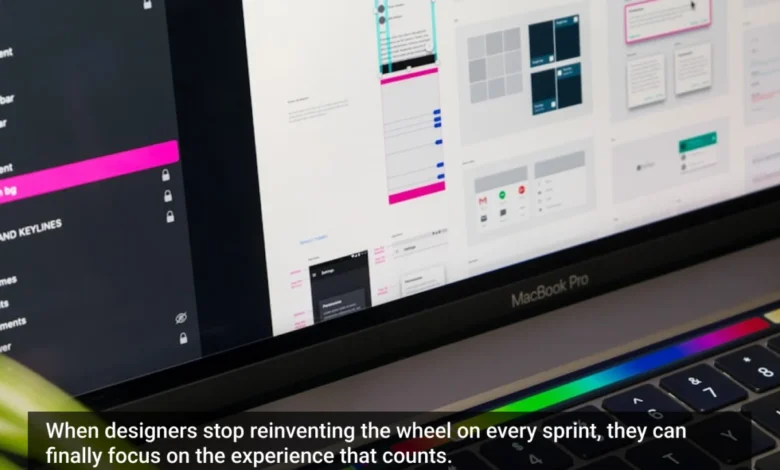
Design systems have emerged as the standard industry solution to this bottleneck. Defined as a collection of reusable components, patterns, and documentation, these systems provide a "single source of truth" for product teams. By codifying visual language—such as color palettes, typography, and grid systems—designers and developers can move away from one-off creation toward assembly-based workflows.
Industry leaders, including companies like Salesforce, Shopify, and IBM, have documented the massive scaling benefits of implementing robust design systems. According to internal reports from these organizations, the adoption of a unified design system has reduced the time to market for new features by an average of 25% to 40%. This efficiency is achieved by allowing engineers to pull pre-vetted, coded components directly from a library, rather than waiting for custom CSS and layout specifications for every minor update.
Chronology of Integration: Moving from Handoff to Collaboration
The traditional design handoff, characterized by static files being "thrown over the wall" to developers, is increasingly viewed as an obsolete practice. Modern product development cycles now favor a model of "co-design."
- Phase 1: Discovery and Definition (Sprints 0-1): The product team establishes the foundational elements of the design system, ensuring that the visual language aligns with the brand strategy.
- Phase 2: Pattern Assembly (Ongoing): As features are developed, designers reference the system. When a new pattern is required, it is designed once, documented, and added to the repository for future use.
- Phase 3: Continuous Evolution: The system acts as a living document. Feedback from user testing is used to update components, which are then pushed across the entire product ecosystem simultaneously.
This transition requires a shift in organizational culture. Designers must move away from the mindset of being the "sole guardian" of visuals and toward being the "architect" of the system. Engineers, conversely, become active contributors to the library, ensuring that the code behind the components is as robust as the visual design.
Technical Implications and Quality Assurance
Beyond the speed of development, design systems serve as a critical quality assurance tool. In large-scale, incremental product releases, visual drift is a common ailment. Over several years, a product may develop multiple variations of the same button or input field, leading to a fragmented user experience. This fragmentation erodes user trust and increases the cognitive load on the customer.
Design systems mitigate this risk by enforcing consistency by default. When every team pulls from the same repository, the visual integrity of the product remains intact regardless of which squad is working on a specific feature. This is particularly vital in complex ecosystems like SaaS platforms, where a user might interact with dozens of different sub-applications under one brand identity.
Expert Perspectives on Agile Alignment
Leading design authorities, including Laura Klein, have frequently noted that the true value of a design system lies not in the components themselves, but in the collaborative space they create. By removing the need to debate the "look" of a component, teams are freed to debate the "function" of the feature.
"When you remove the friction of basic visual decisions, you gain the clarity to focus on user outcomes," says a senior product lead at a major tech firm. "The goal of agile isn’t to build fast; it’s to learn fast. Design systems allow us to build the skeleton of an idea in hours rather than days, giving us more time to test whether that idea actually solves the user’s problem."
The Broader Impact on Product Culture
The implementation of a design system represents a fundamental shift in how organizations view the role of the designer. By automating the routine aspects of visual design, the organization effectively elevates the designer from a production role to a strategic one. This creates a "design-led" culture where user research, accessibility, and edge-case testing receive the attention they deserve.
Furthermore, this approach addresses the burnout issues prevalent in agile teams. When designers are no longer chasing an infinite backlog of minor visual tickets, they can dedicate time to professional development, user advocacy, and the long-term design vision of the product. This leads to higher retention rates and a more cohesive team dynamic.
Conclusion: A New Standard for Agile Excellence
As the digital landscape becomes increasingly competitive, the ability to iterate without sacrificing quality is a decisive advantage. The integration of design systems into the agile workflow is no longer an optional luxury; it is a fundamental requirement for any team attempting to deliver high-quality software at scale.
By streamlining the visual design process, teams can reclaim their time, focus on the user experience, and ensure that their products remain consistent even as they grow. The future of agile development rests on the ability to balance speed with substance, and design systems provide the necessary infrastructure to bridge that gap. As teams continue to refine their methodologies, the focus will likely remain on reducing the distance between an idea and its manifestation in the hands of the user, ensuring that development remains a process of meaningful innovation rather than endless iteration.