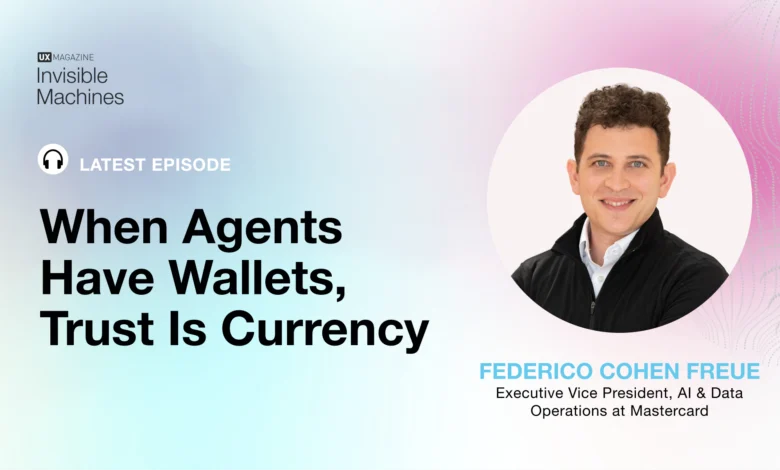
Federico Cohen Freue, the lead for AI and data strategy at Mastercard, currently oversees one of the most high-pressure innovation pipelines in the global financial sector. Each year, his office receives approximately 1,000 formal requests for AI integration, ranging from small-scale automation proposals to enterprise-wide data transformation projects. These submissions serve as a diagnostic tool for the company’s internal digital maturity. In previous years, the vast majority of these requests focused on simple chatbots—systems designed to field basic queries. Today, that trend has shifted dramatically; over 50% of incoming proposals now advocate for the deployment of AI agents.
This shift marks a significant evolution in the corporate perception of artificial intelligence. While chatbots were largely viewed as efficiency tools for basic information retrieval, agents are perceived as active participants in workflows. They are expected to autonomously navigate systems, execute tasks, and make decisions on behalf of users. However, Cohen Freue warns that this enthusiasm for "agentic" capabilities often outpaces the structural readiness of the underlying enterprise systems.
The Engineering Challenge: The Ball Bearing Analogy
To understand the risks associated with rapid, unvetted AI deployment, Mastercard’s leadership frequently points to the "ball bearing" analogy. In manufacturing, two ball bearings may appear visually identical, yet possess vastly different tolerances, material compositions, and structural integrities. If a substandard bearing is placed in an airplane engine, the component will fail under stress, potentially leading to catastrophic failure.
In the context of AI, a polished, high-performing demo is not necessarily a functional enterprise solution. Many organizations fall into the trap of confusing the visual success of a prototype with the robustness of a production-grade system. Cohen Freue emphasizes that the visual interface of an AI agent often obscures the underlying fragility of its decision-making logic. Consequently, Mastercard has prioritized internal training and "fluency" initiatives. By educating staff on the specific engineering conditions required for AI reliability, the firm aims to ensure that teams can distinguish between a superficial demo and a production-ready application before capital and time are wasted.
Establishing a Strategic Framework
Prioritizing a thousand competing AI ideas requires a rigid, yet simple, strategic framework. Mastercard utilizes a four-pillar approach to evaluate every proposal: does the project make commerce more secure, smarter, more personal, and does it demonstrably strengthen the Mastercard network?
This simplicity is intentional. By providing a clear, non-negotiable set of criteria, leadership has transformed the process of prioritization from a protracted, subjective negotiation into a streamlined, objective conversation. This framework does not function as a set of compliance guardrails, but rather as a strategic lens. It forces stakeholders to articulate the business value of their AI projects before the technical development phase begins. This ensures that resources are allocated toward projects that align with the core mission of the financial services provider, rather than simply pursuing technological novelty for its own sake.
The Emergence of Agentic Payments
The most pressing frontier in this space is the integration of AI agents into the payment ecosystem. The transition from LLM-mediated search to autonomous, agent-led financial transactions is already underway. As consumers increasingly rely on AI assistants to handle complex tasks like travel booking or supply chain replenishment, these agents will inevitably require the authority to execute payments.
Mastercard is currently prioritizing the "base case" of this reality: the creation of a secure rules infrastructure. Before the firm focuses on consumer-facing applications, it is building the foundational layers necessary for agent identity verification, delegated authority protocols, and merchant acceptance standards.
In a world where agents execute transactions autonomously, "trust" acts as the fundamental currency. As transactions increase in complexity—involving dynamic pricing, multi-party negotiation, and cross-border variables—the necessity for a trusted, neutral intermediary becomes more, not less, critical. The industry’s shift toward agent-based commerce suggests that the role of the payment network will evolve from a simple transaction processor into a critical verification node that ensures the integrity of autonomous interactions.
Redefining Knowledge Management: From Reactive to Proactive
Mastercard is also exploring a radical departure from traditional enterprise knowledge management. The standard model of AI adoption—where a company builds a vast, static knowledge base and waits for a user to query it—is increasingly viewed as inefficient. This reactive model places the burden of inquiry on the employee, who must know exactly what questions to ask to find the necessary information.
The alternative approach, currently being piloted by Mastercard, involves a "proactive" system designed to bridge the gap between employee performance and organizational expertise. The architecture rests on a "knowledge map"—a structured, canonical source of truth where information is interconnected rather than stored in isolated, duplicate documents.
Using this map, the system constructs a "learning twin" for each user, which assesses the individual’s current knowledge gaps. The system then solves a logistical challenge similar to the "traveling salesman problem," calculating the most efficient path for the user to reach a specific level of expertise. It provides turn-by-turn guidance, rerouting the learning path if the domain or the user’s needs change.
Cohen Freue acknowledges that this represents a major cultural hurdle. Organizations are accustomed to "one-and-done" training modules. Moving toward a dynamic, ongoing learning environment requires a fundamental shift in how corporations reward readiness and competency. If the technology is ready before the corporate culture is, the project is likely to encounter significant resistance regardless of its technical brilliance.
Implications for Enterprise Transformation
The common thread in Mastercard’s current AI strategy is the rigid adherence to sequence: understanding must precede action. This principle applies to every layer of the business, from technical development to organizational culture.
Analysis of current industry trends suggests that the majority of enterprise AI failures are misidentified as "technology problems" when they are, in fact, "knowledge problems." When a system fails to execute a task reliably, the issue rarely lies with the underlying model; rather, it lies in the failure of the organization to define, structure, and verify the knowledge the model requires to function.
As businesses move forward, the most successful organizations will be those that treat institutional knowledge as critical infrastructure. Before an organization asks what its AI agents can do, it must first audit what the organization actually knows. The performance of an agent is mathematically tethered to the quality and structure of the data it is built upon.
In summary, the transition toward an AI-driven enterprise is not merely a software upgrade. It is an exercise in structural discipline. By prioritizing verification over velocity, and infrastructure over interfaces, Mastercard is attempting to build a sustainable model for the next generation of financial technology. As the role of AI continues to expand, the ability to maintain trust and operational clarity within these autonomous systems will likely define the future of the global financial landscape.