DuckLake Sets a New Benchmark in Data Lake Architecture with Unprecedented Transactional Performance

The modern data engineering landscape has long been weighed down by the structural overhead of traditional open table formats. On many conventional data lakes, executing a query requires traversing multiple layers of JSON manifests, Avro files, and complex metadata hierarchies simply to determine which underlying Parquet files are relevant to the operation. This multi-step process introduces significant latency and computational waste, frustrating data architects and analysts alike. Enter DuckLake, a streamlined open table format that fundamentally reimagines how data lake metadata is organized, indexed, and queried. By anchoring its metadata in a real, ACID-compliant relational database while leaving the core data in plain Apache Parquet files, DuckLake eliminates unnecessary file traversal, replacing convoluted multi-file discovery loops with a single, highly optimized SQL query.
The architectural philosophy behind DuckLake represents a radical departure from established frameworks like Apache Iceberg and Delta Lake. While those legacy systems evolved to layer complex transactional guarantees on top of distributed object storage—resulting in nested directories of metadata manifests—DuckLake leverages the native transactional integrity of established relational databases. Whether backed by PostgreSQL, SQLite, DuckDB, or the newly introduced Quack protocol, DuckLake reduces the metadata overhead to a clean, queryable database schema. The raw data remains entirely transparent and portable in standard Parquet files on cloud object storage such as Amazon S3, Google Cloud Storage, or Azure Blob Storage, ensuring that organizations avoid vendor lock-in while drastically simplifying their storage architecture.
The Evolution of DuckDB and the Genesis of DuckLake
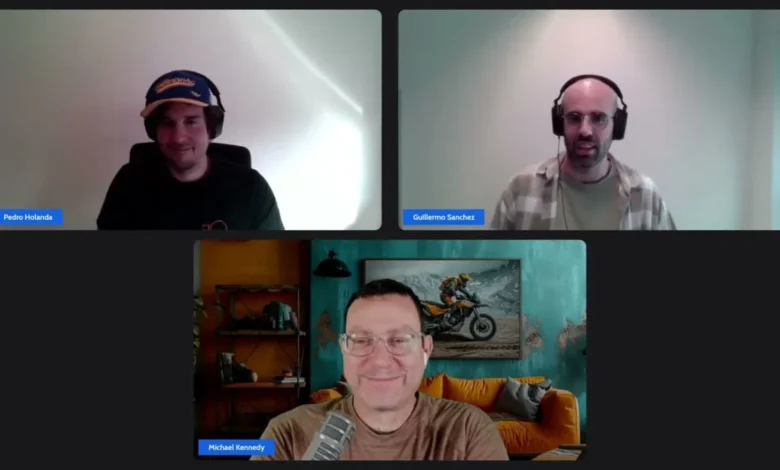
The roots of DuckLake trace back to the academic and research origins of DuckDB. Pedro Holanda joined the DuckDB project in 2018 when it was still operating as a research prototype within the Database Architectures Group at CWI (Centrum Wiskunde & Informatica) in the Netherlands. Collaborating closely with co-creators Hannes Mühleisen and Mark Raasveldt, Holanda initially focused on foundational database mechanics, including the architecture of robust CSV readers and vectorized query execution engines. Over the subsequent years, DuckDB evolved rapidly from an unreleased academic sandbox into the premier in-process analytical database for data scientists and developers worldwide.
As adoption scaled into enterprise production environments, the DuckDB team observed a recurring bottleneck. While DuckDB excelled at in-process analytical processing (OLAP), modern data architectures required seamless integration with cloud data lakes. Traditional table formats fell short of the performance and simplicity standards that the DuckDB ecosystem championed. This realization catalyzed the development of DuckLake, with Holanda stepping in as the lead developer of the project. Concurrently, software and data engineer Guillermo Sanchez Dionis joined the core team, contributing heavily to DuckLake’s product development and spearheading the architectural design of Quack, DuckDB’s new high-performance client-server protocol.
Overcoming High-Contention Workloads With the Quack Protocol
One of the most profound limitations of traditional open table formats is their historical inadequacy when confronted with heavy concurrent transactional workloads. Formats like Iceberg and Delta Lake were engineered primarily for large-scale, batch-oriented data warehousing operations. Consequently, executing frequent, concurrent transactional insertions—such as real-time streaming data ingestion or high-contention OLTP-style updates—often leads to severe lock contention, exponential retry overhead, and degraded throughput.
DuckLake fundamentally changes this dynamic through its deep integration with the Quack protocol. When utilizing a standard relational catalog like PostgreSQL in high-contention environments with numerous concurrent writers, snapshot ID conflicts frequently force application loops to abort and retry from scratch, limiting throughput to roughly five transactions per second. However, by deploying Quack as the underlying catalog service, DuckLake leverages server-side transaction management and native DuckDB execution semantics.
Under heavy write contention, a DuckLake architecture powered by the Quack protocol successfully handles up to 200 transactions per second. This performance metric outpaces comparable open table formats by orders of magnitude, effectively bridging the historical divide between analytical data lakes and transactional data stores. By shifting transaction retries and conflict resolution directly to the server side, DuckLake eliminates expensive network round-trips and keeps data pipelines flowing smoothly even under extreme enterprise loads.
Eliminating the Small File Problem via Data Inlining
A persistent engineering hurdle in distributed data architectures is the "small file problem." When data pipelines ingest streaming records or perform frequent micro-batch updates, they frequently generate thousands of minuscule Parquet and metadata files on object storage. The cumulative latency of issuing individual HTTP GET requests for countless tiny files severely degrades query performance.
DuckLake addresses this structural inefficiency through an innovative feature known as data inlining. Instead of immediately writing tiny datasets out to fragmented object storage files, DuckLake can temporarily inline small incoming insertions directly into a structured table within the relational catalog database. These inlined rows track necessary snapshot identifiers, lifecycle markers, and deletion vectors natively inside the database.
Once the accumulated data volume crosses a configured threshold, DuckLake flushes and compacts the records into properly sized, optimized Parquet files on object storage (typically targeting half-gigabyte boundaries). This intelligent staging mechanism prevents the proliferation of metadata clutter, delivering up to a thousandfold performance improvement in query initialization times compared to traditional raw table formats handling high-frequency streaming ingest.
Production Readiness and Industry Adoption
With the release of DuckLake version 1.0, the core engineering team deliberately instituted a feature freeze to focus entirely on codebase stability, edge-case remediation, and robust checkpointing workflows. The resulting framework provides comprehensive support for data compaction, orphan file garbage collection, and historical snapshot management. This rigorous stabilization phase has already inspired widespread enterprise confidence. Forward-thinking data infrastructure companies and software platforms—including MotherDuck, Firebolt, and various data tooling startups—have begun integrating DuckLake into their core product offerings.
Furthermore, DuckLake’s design philosophy emphasizes interoperability and openness. Although optimized for the DuckDB runtime, the underlying specification is intentionally engine-agnostic. Open-source contributors have already developed community integrations for alternative compute engines such as Apache DataFusion and Apache Spark, validating that DuckLake can function as a universal open table format across heterogeneous data stacks.
Implications for the Future of Data Infrastructure
The rise of DuckLake signifies a broader industry shift toward architectural minimalism and operational simplicity. For over a decade, enterprise data teams have accepted the immense operational complexity and financial cost of managing massive, distributed data lakehouse infrastructures. DuckLake demonstrates that by intelligently combining proven relational database technology for metadata management with immutable, columnar data files on cloud storage, organizations can achieve superior performance at a fraction of the infrastructure cost.
As upcoming iterations of DuckDB and the Quack protocol introduce asynchronous I/O optimizations and expanded ecosystem connectors, DuckLake is positioned to become a foundational standard for modern data architectures. By eliminating unnecessary metadata round-trips, supporting high-throughput transactional concurrency, and maintaining strict file portability, DuckLake offers a compelling blueprint for the next generation of data management systems.