The Rise of the Researcher-Maker: Why User Experts are Building Their Own Products

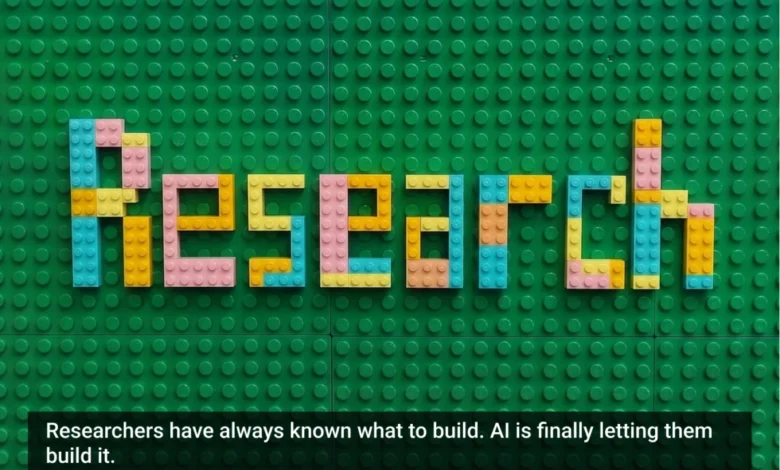
From freeze-dried backpacking provisions to AI-powered personal finance applications and bespoke community installations at the Victoria & Albert Museum, a quiet transformation is unfolding across the professional landscape. Traditionally, researchers in fields such as user experience (UX), anthropology, and behavioral science have operated in an advisory capacity—influencing product roadmaps and strategic decisions through reports and insights. Today, however, that paradigm is shifting. A growing cadre of professionals is bypassing the conventional gatekeepers, leveraging emerging technologies to transition from passive advisors to active "researcher-makers."
This movement represents a fundamental pivot in the professional identity of researchers. While many organizations are now mandating that researchers adopt maker-like workflows—prototyping, coding, and shipping—a significant number of individuals are independently embracing this evolution as a way to reclaim autonomy over their work.
The Catalyst for Change: From Influence to Ownership
The shift toward the "researcher-maker" identity is not occurring in a vacuum. For years, research departments were positioned one step removed from product delivery, often serving as the "voice of the customer" in boardroom discussions. However, the maturation of generative AI tools, low-code/no-code platforms, and accessible manufacturing technologies has democratized the ability to build.
For many, the transition was accelerated by the recent volatility in the technology sector. As job security in corporate innovation labs wavered, the "you can always get a job" mantra dissolved, forcing researchers to re-evaluate their professional utility. Data from industry labor reports suggests that the demand for "full-stack" research capabilities—where the individual can both define the problem and prototype the solution—has increased by approximately 25% over the last 24 months.
A Chronology of the Maker Evolution
The evolution of the researcher-maker can be categorized into three distinct phases over the last decade:
- The Advisory Era (2014–2019): Research was strictly siloed. Success was measured by the adoption of insights by product managers and engineers. The "maker" identity was largely discouraged as it was viewed as a potential conflict of interest or a distraction from core analytical duties.
- The Experimental Phase (2020–2022): The rise of remote-first work culture and the proliferation of accessible software-as-a-service (SaaS) tools allowed researchers to experiment with side projects. During this period, the concept of the "researcher-founder" began to gain traction in niche communities, though it remained largely undocumented in mainstream professional circles.
- The Integration Era (2023–Present): With the integration of AI-driven coding assistants and automated research operations, the technical barrier to entry for building a functional product has plummeted. This has turned the "could" of building into a "must" for many corporate employees, while simultaneously empowering independent researchers to launch viable businesses with minimal overhead.
Case Studies in Professional Transition
The transition is rarely linear, as evidenced by the stories of those navigating this space. Neha Vadrevu, who founded the personal finance app Incluya, represents the shift from corporate innovation to founder-led development. By applying anthropological principles to financial technology, she discovered that the researcher’s innate tendency to "weigh every angle" often conflicted with the startup world’s need for speed. Her solution was to "time-box" evidence-based decisions, allowing her to maintain research rigor while meeting the cadence required for product growth.
Similarly, Jen Romano, founder of a specialized photo booth rental business, highlights how research methodology can optimize business models. By continuously iterating based on direct user feedback—an activity she performed while standing at the back of her own events—she pivoted her business model from a self-service rental to a managed service. Her experience reflects a growing trend: using the researcher’s core competency—active, observational listening—as a competitive advantage in the marketplace.
Data and Economic Implications
The transition to becoming a maker carries distinct economic risks. Unlike traditional employment, which provides a steady salary and benefits, the researcher-founder path often requires self-funding or the navigation of early-stage investment.
Analysis of independent makers indicates that those who maintain a "hybrid" model—retaining freelance research work while building their own products—experience significantly lower rates of burnout compared to those who transition to full-time founding. This "two flowers on one stem" approach, as described by practitioners like Sarah Bowlin of Bowl & Kettle, allows for a financial runway that reduces the pressure to compromise on product quality or ethical standards.
The Conflict of Identity: A Psychological Barrier
Despite the tools now available, the primary barrier to becoming a maker remains identity, not technical capability. Many researchers have spent years internalizing a specific professional definition that separates them from the "builder" or "founder" persona.
Organizational psychologist Herminia Ibarra’s work on "provisional selves" suggests that professional identity transitions require a cycle of exploration and testing. Researchers who are successful in this transition often engage in "identity play"—testing the waters with small-scale projects (like building a simple app or designing a physical tool) before fully committing to a new professional title. The struggle arises because these individuals often feel "tribeless" during the transition, as they move away from the established community of researchers and into the disparate, often volatile, world of entrepreneurship.
The Role of AI in Democratizing Production
AI has become the primary enabler for this demographic shift. It acts as a force multiplier, allowing researchers to generate code, draft business documentation, and automate administrative tasks that would have previously required a multi-person team. However, experts warn against the "AI-dependency trap."
Matthieu Guilloux, who is building a financial planning tool, emphasizes that while AI can assist in the creation of a product, it cannot replace the researcher’s critical faculty. He noted that when he relied too heavily on AI to validate his designs, he missed fundamental structural flaws that a human peer review would have immediately identified. The takeaway is clear: AI is a tool for expansion, not a substitute for the human-centric rigor that defines the research discipline.
Challenges and Hazards: The Reality of the Path
The path of the researcher-maker is not without significant hazards:
- Isolation: The removal of the collaborative office environment, combined with the solitary nature of AI-driven development, has led to increased reports of professional loneliness.
- Skill Gaps: The transition necessitates the acquisition of skills that were historically undervalued in research, such as sales, cash flow management, and legal compliance.
- Regulatory Pressures: As researchers move from the abstract world of insights to the material world of goods and services, they must contend with tangible risks, such as supply chain logistics, health and safety regulations, and tax liabilities.
Future Outlook and Industry Impact
As we look toward the future, the integration of research and making will likely become a permanent fixture of the innovation landscape. Companies that encourage their researchers to build—providing the necessary resources and risk tolerance—are likely to see more robust, user-centric product cycles.
For the individual researcher, the ability to append "maker" or "founder" to their professional title is more than a career move; it is a fundamental expansion of their agency. While this path is not for everyone, it offers a compelling alternative for those who wish to bridge the gap between understanding the world and changing it. The "hyphenated identity"—the researcher-maker—serves as the bridge to this future, allowing professionals to retain their commitment to evidence and empathy while embracing the power to create.