The Unmet Demand for AI: Why Users Aren’t Craving More Artificial Intelligence

A pervasive assumption within the technology sector posits that consumers and professionals alike are clamoring for an ever-increasing integration of artificial intelligence (AI) into their daily lives and work. Companies are investing heavily in developing and deploying new AI features, often with the belief that these advancements will seamlessly replace existing, perceived as outdated, practices. However, emerging evidence and user behavior suggest a starkly different reality: a significant portion of the population does not desire more AI, at least not in the manner currently envisioned and implemented by many AI leaders. This disconnect is leading to low adoption rates for AI features, despite substantial development costs and potential reputational risks for businesses.
The AI Paradox: More Features, Less Enthusiasm
The prevailing narrative in many corporate boardrooms is that the market is hungry for AI-driven solutions. This belief fuels a relentless pursuit of new AI products and workflows, presented as the inevitable evolution of work and life. Yet, on the ground, the adoption and retention rates for many AI-powered features remain surprisingly low. Studies and industry analyses, such as those highlighting an "AI adoption gap," indicate that the perceived value proposition of AI is often not translating into widespread user engagement.
This phenomenon is not merely a matter of user resistance to new technology; it stems from fundamental misalignments between how AI is being developed and what users actually need and desire. AI is frequently introduced as an add-on, a separate tool that disrupts established workflows rather than enhancing them. This can pull individuals away from their natural working processes, creating friction and demanding a steep learning curve for often unproven benefits.
Furthermore, AI has a tendency to amplify existing organizational shortcomings. Issues such as poor data quality, flawed decision-making processes, accumulated technical debt, and internal political complexities are not magically resolved by AI. Instead, AI can expose these inconsistencies and conflicting priorities more starkly, often presenting the resulting "mess" directly to end-users who are then left to navigate the complexities. In environments characterized by fragmented systems and constant context-switching, introducing yet another AI tool can exacerbate these challenges, leading to increased workload without proportional reward.
The cost associated with identifying and rectifying AI-generated errors, often referred to as "hallucinations," is another significant deterrent. While the prospect of generating content or solutions with AI might seem easier than starting from scratch, the subsequent effort required to verify, correct, and integrate these outputs can negate any initial time savings. This burden falls squarely on the user, diminishing the perceived efficiency of the AI tool.
The Value Proposition Gap: AI as a Tool, Not a Solution
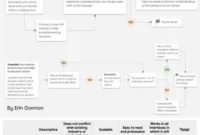
A critical observation from user experience research is that "AI is not a value proposition" in itself. Simply labeling a feature as "AI-powered" does not automatically generate user excitement or translate into tangible benefits. The image of a Business Model Canvas annotated to show AI fitting into "Key Activities" and "Key Resources" but explicitly excluded from "Value Propositions" underscores this point. The true value lies in how AI can solve a user’s problem or improve their experience, not in the underlying technology itself.
The introduction of AI features is often dictated by corporate roadmaps rather than user needs. AI arrives uninvited, at a pace set by developers and product managers, not by individuals seeking to integrate it into their lives. Compounding this is the prevalent discourse surrounding AI, which frequently emphasizes fears of job displacement. This narrative fosters anxiety and resistance, making users perceive AI not as an opportunity, but as a threat to their livelihoods and sense of security. The result is a widespread perception of AI as a disruptive force, leading to cautious skepticism and a general resistance to change.

Recent studies, such as one highlighted by NBC News, Wall Street Journal, and Harvard Business Review, have begun to quantify the unintended consequences of AI integration in the workplace. These findings suggest that rather than reducing work, AI can intensify it. For instance, an increase in email time by 104%, chat and messaging by 145%, and business tool usage by 95% have been observed, alongside a rise in working Saturdays and Sundays. Conversely, focus time has decreased, and the burden of dealing with "AI slop" and costly mistakes has significantly increased. This data paints a picture of AI adoption leading to a net increase in workload and cognitive load for many employees.
Consequently, AI features are often met with apprehension, doubt, and a healthy dose of skepticism. The inherent unpredictability and unreliability of AI, when compared to traditional, deterministic software features, further solidify its perception as a potential liability. Users are not fantasizing about AI-generated art museums, AI-powered refrigerators, or AI hotel receptionists. They are also not envisioning romantic AI partners for themselves or their children, nor are they eager to manage a complex network of AI agents acting on their behalf in financial matters. The desire for constant interaction with a "magical box" for every task is largely absent.
The AI Users Truly Need: Reliability, Augmentation, and Integration
The comparison of AI capabilities to human unreliability is often misplaced. Users do not compare software features to human fallibility; they compare them to other software features. If one product’s AI feature is unreliable while a similar feature in another product functions flawlessly, users will naturally gravitate towards the latter. The critical factor is consistent and dependable performance, irrespective of whether the underlying technology is AI or not.
Discussions around AI often prioritize the speed of delivery. However, for many users, increased speed is of little value if it compromises quality or the ability to make thoughtful decisions. There is a growing sentiment that the joy and sense of accomplishment derived from work are being eroded by a constant push for faster output, often driven by AI implementations that prioritize velocity over user experience and satisfaction.

The fundamental desires of users have remained remarkably consistent over time: they seek features that are fast, accessible, reliable, predictable, and useful, every single time. The ideal AI, in this context, is not one that replaces entire workflows, but one that augments existing processes, taking over the most mundane, tedious, and unenjoyable tasks. This allows individuals to focus on the more engaging, creative, and rewarding aspects of their work.
The impact of AI on the job market is a complex and evolving issue. While many jobs are indeed exposed to automation, numerous roles also contain inherently human elements requiring taste, perspective, intuition, and creativity. When AI can effectively automate the more monotonous and mentally taxing components of these jobs, it presents a clear advantage, enhancing productivity and potentially leading to greater job satisfaction.
Seamless Integration: The Key to AI Acceptance
The true value of AI becomes apparent when it automates tedious and mentally exhausting tasks. For this to be effective, AI should not feel like an afterthought or a bolted-on feature. Instead, it must be deeply integrated into users’ existing workflows and align with their established mental models – the ingrained ways of thinking and decision-making developed over years or even decades. AI should adapt to human cognitive processes, rather than demanding that users fundamentally alter their own.
Whether these integrated features are branded as "AI," "smart," or "automation" is secondary. The paramount concern is their functionality and efficacy for the end-user. This necessitates clear communication about use cases where AI demonstrably helps and fosters an environment where users are inspired to discover further applications.

The most successful AI tools are often not "AI-first," but rather "AI-second." They operate subtly, humbly, and ambiently in the background, providing supportive functionality for tasks that are otherwise dull and unnecessary. This approach minimizes disruption and maximizes utility, aligning with the user’s primary objectives.
A poignant perspective from Bo Young Lee articulates this sentiment effectively: "I don’t want to read books written by AI. I don’t want to gaze upon paintings by AI. I don’t want AI to teach my children. I don’t want to have an AI therapist. I don’t want AI making my medical decisions. I want AI to do all the physical and mental labor that taxes me so I can read books written by humans and go to art galleries to engage with art made by humans. I want AI that makes my life easier rather than forces me to change myself." This highlights a desire for AI to alleviate burdens, freeing up human capacity for more meaningful and enriching activities.
Conclusion: The Human Element in an AI-Driven Future
While the allure of advanced AI capabilities is undeniable, the current trajectory of its implementation often overlooks a fundamental truth: people value human connection and experience. The enthusiasm, stories, emotions, and interactions that define human relationships are irreplaceable. AI can be a powerful aid, but it cannot substitute for the richness of human engagement.
Ultimately, the need is not for more AI in people’s lives, but for AI that intelligently automates the drudgery and tedium of daily tasks. This frees up valuable time and mental energy, allowing individuals to pursue activities they genuinely enjoy and fostering deeper connections with loved ones. The goal of AI should be to enhance human lives, not to demand constant interaction with technology, but to enable more fulfilling human experiences.

In this context, the development of user-centric AI interfaces becomes paramount. Courses and resources focused on "Design Patterns For AI Interfaces," such as those offered by Vitaly Friedman, emphasize practical examples and UX principles to ensure AI is integrated thoughtfully and effectively. This approach recognizes that the success of AI lies not in its technological sophistication, but in its ability to seamlessly and beneficially serve human needs. The future of AI adoption hinges on a pivot from technology-led innovation to human-centered design, ensuring that artificial intelligence truly augments, rather than overwhelms, the human experience.