The Landscape of Browser Interoperability
The web platform is maintained through a complex ecosystem of standards bodies, browser vendors, and the open-source community. The concept of "Baseline"—a collaborative effort to define a set of features that are stable and interoperable across the major browser engines (Chrome, Edge, Firefox, and Safari)—serves as the benchmark for this progress. April 2026 saw the official migration of the contrast-color() function into this Baseline status. This shift is not merely cosmetic; it represents a major win for the W3C’s Web Accessibility Initiative (WAI). By allowing developers to programmatically determine whether text should be black or white based on a background color, the platform reduces the burden on designers to manually calculate contrast ratios, thereby lowering the barrier for entry into WCAG-compliant design.
Chronology of April 2026 Browser Developments
The month began with the release of Chrome 147, which arrived alongside Firefox 150 in the latter half of the month. This release cycle was marked by a heavy emphasis on CSS capabilities and performance optimizations.
- Early April: Discussions within the developer community centered on the anticipation of
Math.sumPreciseand the potential for new CSS layout properties. - Mid-April: The deployment of Chrome 147 and Firefox 150 provided the necessary infrastructure for these features to reach production environments.
- Late April: Beta versions for the next cycle—Chrome 148, Firefox 151, and Safari 26.5—were pushed to developer channels, signaling a transition toward container-based layout paradigms and advanced pseudo-class management.
Enhancing Accessibility and Responsive Design
Firefox 150 has made substantial strides in how the web interacts with assistive technologies. The introduction of the ariaNotify() method is a direct response to the limitations of traditional ARIA live regions. Historically, developers relied on DOM-heavy approaches to trigger screen reader announcements, which often led to synchronization issues and performance overhead. By allowing developers to queue announcements directly via the Document and Element interfaces, ariaNotify() provides a more ergonomic and reliable pathway for dynamic content delivery.
Simultaneously, the addition of the "auto" keyword to the sizes attribute of <img> elements in Firefox 150 streamlines responsive image architecture. Previously, developers were required to define explicit widths or use complex calculations to ensure that browsers downloaded the most efficient image source. The "auto" keyword allows the browser to utilize its internal layout engine to perform this selection automatically, reducing the likelihood of "layout shift"—a key metric in Google’s Core Web Vitals—and improving page load performance across mobile devices.
Advancements in Visual and Functional CSS
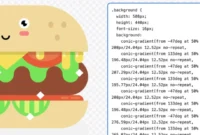
Chrome 147 brought a wave of visual capabilities that challenge the "rectangular" dominance of web layouts. The introduction of the border-shape property is perhaps the most visually disruptive feature of the month. By enabling non-rectangular borders, such as circles, ellipses, and complex polygons, developers can move away from traditional box-model design limitations without resorting to cumbersome image masking or SVG overlays.
This is complemented by the inclusion of the path attribute for SVG <textPath> elements, which allows for dynamic, inline geometry definitions. Previously, binding text to a path required referencing external SVG elements, which could lead to fragmented codebases. With the path attribute now supported directly, the integration of typography into complex vector graphics becomes significantly more maintainable.
Data Processing and Architectural Efficiency
From a performance and architectural perspective, the addition of Math.sumPrecise in Chrome 147 is a crucial development for data-heavy applications, such as financial dashboards and scientific visualization tools. Floating-point errors in JavaScript have long been a source of frustration for developers dealing with high-precision calculations. By implementing a standardized method to return an accurate sum of iterables, the TC39 committee has addressed a long-standing pain point in the language’s utility library.

Furthermore, the expansion of modulepreload to include JSON and style modules reflects the industry’s move toward modular, high-performance web applications. By preloading non-script assets, developers can ensure that critical resources are fetched and parsed before the main execution thread is blocked, which is essential for minimizing Time to Interactive (TTI) in complex web applications.
Future Perspectives: Insights from Beta Releases
The beta releases for the upcoming cycle provide a glimpse into the next phase of web development. Chrome 148 is poised to introduce name-only container queries, a feature that will allow developers to query the state of a container without needing to explicitly define its size, further decoupling layout from screen dimensions. Firefox 151, meanwhile, is focusing on CSS container style queries, which will allow for even more granular control over component styling based on state changes.
Safari 26.5’s inclusion of the :open pseudo-class across various interactive elements is particularly notable. This standardizes how developers detect the state of disclosure widgets and selects, simplifying the logic required to create accessible, custom-styled interface components.
Broader Implications and Industry Impact
The rapid adoption of these features signifies a broader shift toward "platform-native" development. As browser engines continue to integrate functionality that previously required third-party libraries—such as complex state management for UI components or high-precision math—the reliance on heavy JavaScript frameworks may diminish.
This trend is welcomed by performance engineers who advocate for "zero-dependency" architectures. By moving logic into the browser’s native C++ or Rust-based rendering engines, developers can achieve performance levels that are difficult to replicate in the user-space of a JavaScript virtual machine.
However, this rapid pace of innovation also creates a challenge: the "compatibility gap." While Baseline features provide a safe harbor, developers must still balance the desire for cutting-edge design against the need to support legacy browsers. The continued usage of tools like PostCSS and Babel remains essential, as these allow developers to write code using the latest syntax while providing fallbacks for environments that have not yet caught up to the current browser versioning cadence.
Conclusion
The developments of April 2026 represent a balanced approach to web evolution. By addressing both the aesthetic needs of designers through features like border-shape and the functional needs of engineers through Math.sumPrecise and ariaNotify(), the browser vendors are ensuring that the web remains a robust and inclusive platform. As the industry looks toward the next stable releases, the focus remains on closing the gap between the capabilities of desktop applications and the dynamic, accessible, and high-performance reality of the modern web. The commitment to interoperability, as evidenced by the strengthening of the Baseline set, remains the most vital component in maintaining the health and longevity of the open web.