The rapid evolution of artificial intelligence has transitioned from static, single-turn interactions to sophisticated autonomous agents capable of reasoning, utilizing external tools, and executing complex workflows. Despite these advancements, a significant architectural limitation remains: the "tabula rasa" problem. Most AI agents operate in isolated sessions, effectively suffering from amnesia the moment a connection is severed. This lack of persistent context forces users to repeatedly input preferences, project constraints, and historical data, creating a friction-heavy user experience that hinders the development of truly personalized digital assistants.
The Architectural Shift Toward Persistent Context
In the current landscape of Large Language Model (LLM) deployment, memory is the primary bridge between a generic chatbot and a specialized assistant. Agent memory systems provide a mechanism for an AI to encode, store, and retrieve information across temporal boundaries. By integrating memory layers, developers are shifting the paradigm from ephemeral interactions to continuous, evolving relationships between software and user.
Industry research suggests that context-aware agents can improve task completion rates by as much as 40% in coding and administrative workflows. Without memory, every new session requires the user to prime the model with necessary metadata. With memory, the agent functions as a persistent entity that understands the user’s trajectory, development habits, and specific technical requirements.
Chronology of AI Memory Development
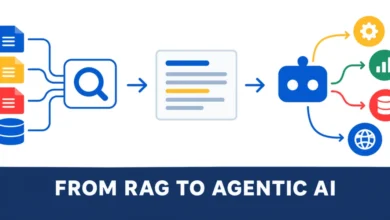
The trajectory of AI memory has evolved alongside the development of RAG (Retrieval-Augmented Generation) architectures. Historically, AI models relied solely on the prompt provided in a single chat window. The introduction of Vector Databases enabled models to search through large knowledge bases, but this was largely static—focused on querying documents rather than personal history.
In the last 18 months, the emergence of specialized memory layers like Mem0 has redefined this process. Unlike simple vector storage, these systems are designed to extract entities and preferences from natural language. This evolution follows a clear progression:
- Phase 1 (2022–2023): Reliance on static system prompts and manual context pasting.
- Phase 2 (2023–Early 2024): Implementation of RAG pipelines for document retrieval.
- Phase 3 (Mid-2024–Present): The rise of dedicated agentic memory layers that dynamically update, delete, and categorize user facts in real-time.
Technical Implementation: Bridging OpenAI Agents and Mem0
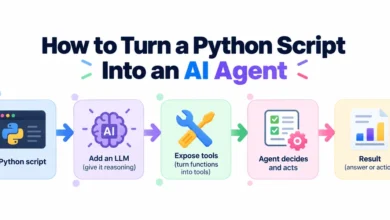
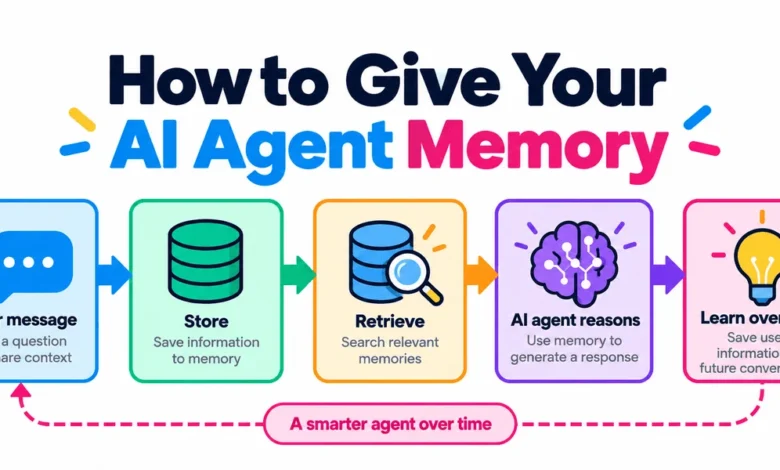
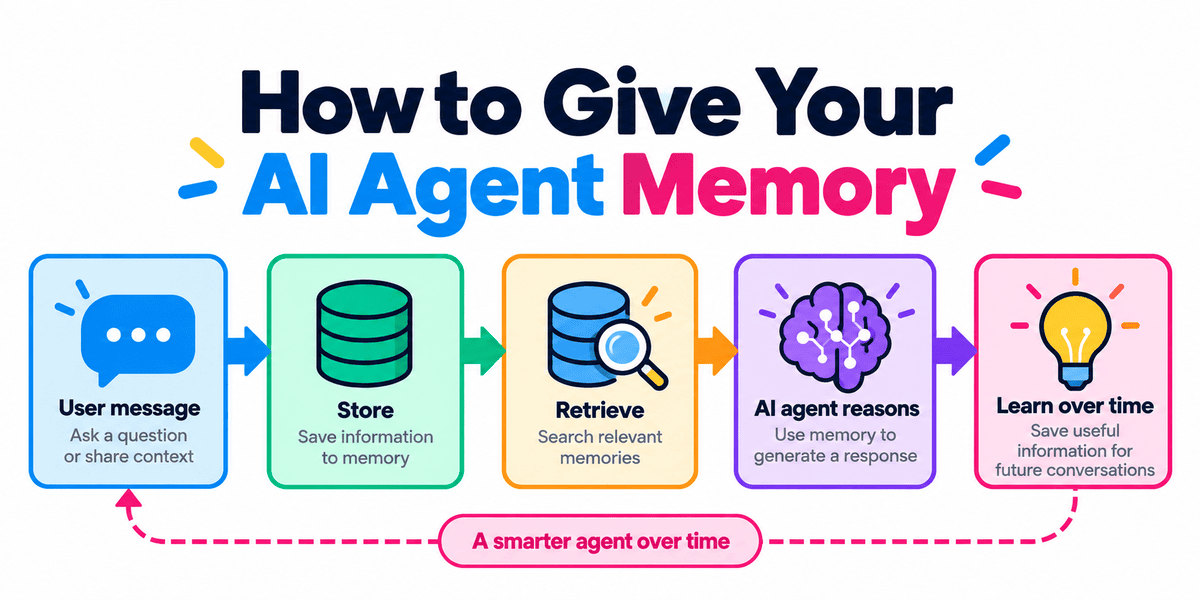
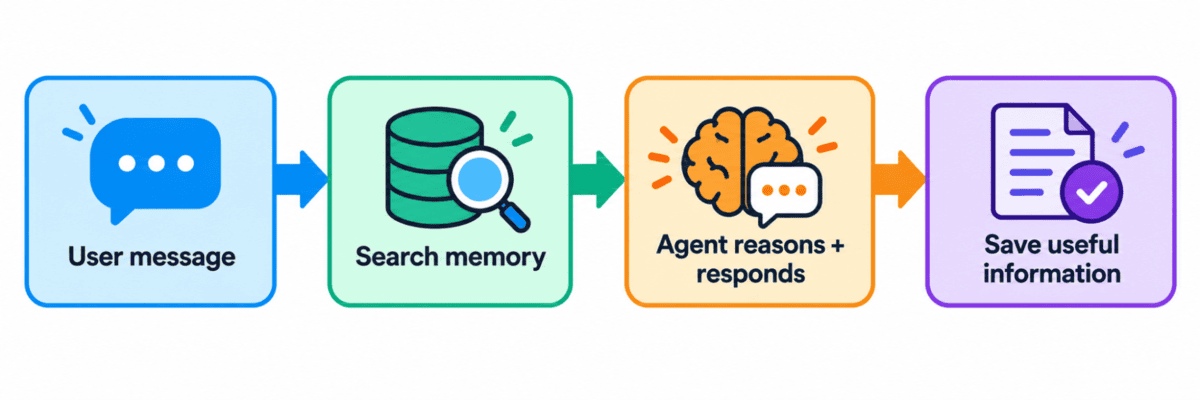
To overcome the inherent forgetfulness of standard agents, developers are increasingly turning to the OpenAI Agents SDK in tandem with specialized memory infrastructure. The objective is to create a closed-loop system: the user submits a query, the agent performs a semantic search against the memory store, integrates the findings into its reasoning process, and updates the memory store with new, relevant insights.
The implementation requires a MemoryClient initialization. By assigning a unique USER_ID, developers ensure that data silos are maintained, providing both security and relevance. The process involves two critical tool-based functions: search_memory and save_memory.
The Retrieval and Storage Logic
The search_memory tool utilizes semantic search to bypass the need for exact keyword matching. If a user asks a question, the agent performs a top-k lookup to find the most relevant historical context. This keeps the prompt window small—a vital consideration for maintaining efficiency and minimizing token costs—while providing the illusion of comprehensive recall.
Conversely, the save_memory tool is configured to be selective. An effective agent must not store every word of a conversation. It should filter for "durable" information, such as:
- Project-specific technical preferences (e.g., "Use uv instead of pip").
- Explicit user goals or long-term objectives.
- Confirmed facts or established constraints.
Broadening the Scope: MCP and OpenCode Integration
The integration of the Model Context Protocol (MCP) marks a significant step toward standardizing how AI agents interact with data sources. By utilizing the Mem0 MCP server, developers can now extend memory capabilities to various coding environments, such as OpenCode, without reinventing the underlying infrastructure.
This interoperability is crucial. By treating memory as a plug-and-play service via MCP, developers can ensure that a coding agent in one environment shares the same historical context as a research agent in another. When an agent is initialized within OpenCode, it gains the ability to execute commands like add_memory or search_memories directly, enabling a seamless transition from one development session to the next.

Implications for the AI Ecosystem
The transition to persistent agent memory has profound implications for both individual productivity and enterprise software development.
1. Personalization at Scale: For individual users, this technology eliminates the "re-introduction" phase of every chat. The agent effectively learns the user’s coding style, preferred libraries, and documentation habits, resulting in higher-quality, more relevant suggestions.
2. Enterprise Knowledge Management: Within organizations, agents with long-term memory can act as institutional repositories. By storing decision-making logs and project-wide constraints, these agents ensure that institutional knowledge is not lost when team members rotate or sessions expire.
3. Reduced Latency and Cost: By focusing on semantic retrieval rather than re-sending entire conversation histories, developers can maintain shorter, more focused prompts. This optimization reduces the computational load on the LLM, lowering latency and operational costs while maintaining high-fidelity outputs.

Fact-Based Analysis of Future Trends
While the current implementation of AI memory is impressive, the field faces several challenges. The primary concern is data hygiene: how to ensure the agent does not store outdated or contradictory information. As memory layers evolve, we expect to see more robust "forgetting" mechanisms—automated processes that identify when a memory is no longer valid or when it conflicts with newer, more accurate data.
Furthermore, privacy concerns remain at the forefront. As agents become more capable of "remembering" the user, the security of the underlying database becomes paramount. Developers must ensure that memory stores are encrypted, access-controlled, and transparent, allowing users to inspect or delete their own stored histories at any time.
Conclusion
The integration of long-term memory into AI agents marks the end of the "disposable conversation" era. By leveraging the OpenAI Agents SDK and specialized tools like Mem0, developers are creating a new generation of assistants that do not just process data, but retain experience. This shift—from ephemeral, reactive models to persistent, proactive agents—is a fundamental milestone in the development of artificial intelligence, bringing us closer to systems that truly act as extensions of human intent and institutional knowledge. As these tools continue to mature, the focus will likely shift from the mechanics of storage to the nuance of reasoning—ensuring that the right memories are retrieved at the exact moment they are needed.