AI is Your New Intern, Not Your Replacement: The Designer’s Untapped Skill in Prompt Engineering

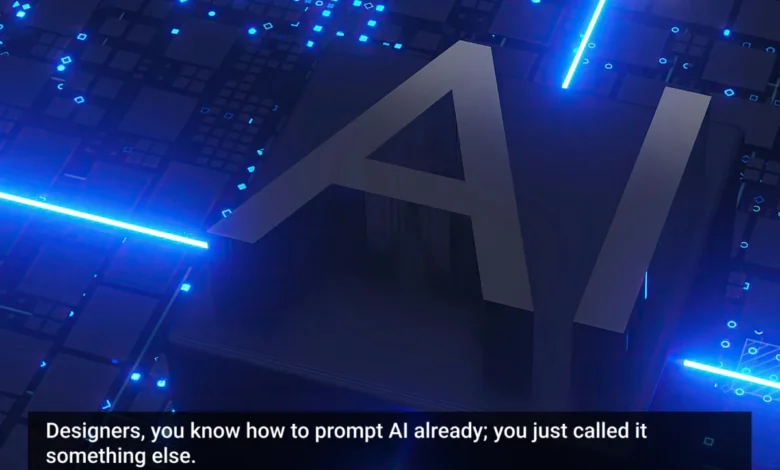
The design community is grappling with a pervasive myth: that artificial intelligence is poised to render human designers obsolete. This notion, however, is being challenged and reframed by a more accurate and pragmatic perspective: AI is not a replacement, but rather a powerful new intern. This intern is characterized by speed, tireless dedication, and extensive knowledge, but crucially, it requires clear direction, judgment, and accountability – qualities inherent to skilled designers.
This article delves deeper into the second part of the "UX & AI" series, exploring the critical role of the prompt as the AI’s equivalent of a creative brief. Designers who grasp this concept not as a mere metaphor but as a practical framework for AI interaction possess a significant advantage over those who approach prompting as a purely technical skill. The underlying truth is that this capability is not entirely new; it is an existing, honed skill that designers already possess and apply daily.
The Designer’s Existing Competency: Brief-Writing as Prompt Engineering
Consider a professional scenario familiar to many designers: being tasked with generating creative output through another party. Before this individual can begin, a comprehensive understanding of the desired outcome is essential. This includes defining the overarching goal, the target audience, any limitations or constraints, the desired tone, and the specific format. Crucially, sufficient context must be provided to empower the recipient to make sound decisions without constant oversight. The directive must be precise enough to ensure relevance but flexible enough to allow for the incorporation of novel contributions. This communication must be documented clearly, concisely, and with a structure that enables someone unfamiliar with the project’s full mental model to produce genuinely valuable results.
Every designer who has ever drafted a design brief, a research brief, a creative direction document, or a content strategy brief has engaged in precisely this activity. Similarly, UX researchers who have developed discussion guides and design leads who have briefed copywriters, illustrators, or junior designers have all exercised this fundamental skill.
The act of prompting an AI is not a novel skill being introduced to the design world. Instead, it is an established competency—brief-writing—being applied to a new medium. While the surface of interaction differs, the underlying expertise remains consistent. This is a vital insight for the entire series, as it signifies that designers and researchers who have invested in the craft of clear, specific, and contextually rich communication are already far more proficient at prompting than they might realize. While the broader discourse around AI is often dominated by the term "prompt engineering"—a phrase borrowed from software development that positions prompting as a technical capability—the reality is that prompting is fundamentally a communication and design skill, one that design professionals have been cultivating for years.
As Smashing Magazine (2025) aptly stated, "If AI is like an intern, then the prompt is your creative brief—it frames the task, sets the tone, and clarifies what good looks like. It is also your conversation script that guides how the interaction flows and how ambiguity is handled." This analogy underscores the strategic importance of the prompt.
The Structural Parallels Between Design Briefs and AI Prompts
The parallels between effective brief-writing and successful AI prompting are not superficial; they are structurally profound and highly instructive. When examining what constitutes an effective design brief and what makes a prompt impactful, striking similarities emerge.
A robust design brief clearly articulates the goal, focusing on the desired outcome rather than merely dictating the deliverable. A vague directive like "We need a homepage redesign" is insufficient. A more effective goal would be: "We need a homepage that converts first-time visitors from paid search into newsletter subscribers for a financial planning product targeting working professionals aged 28 to 40." The specificity of the goal directly correlates with the utility of the resulting output.
A well-crafted prompt mirrors this approach. A generic request such as "Write me some onboarding copy" will likely yield generic results. In contrast, a more detailed prompt like: "Write three variations of a welcome message for a financial planning app. The user is a working professional in their early thirties who has just connected their first bank account. The tone should be encouraging but not patronizing. Maximum 40 words per variation," provides actionable parameters for evaluation.
Furthermore, a strong design brief defines the audience with enough detail to enable the recipient to make informed design decisions that cater to that specific group. Moving beyond a broad descriptor like "urban professionals," a more effective brief might specify: "first-generation professionals in Tier 2 Indian cities, primarily mobile-first, with moderate financial literacy and a high degree of trust skepticism toward financial institutions."
A powerful prompt achieves a similar outcome. The more precisely an AI is informed about the intended recipient of the output—their background, context, knowledge level, and specific situation—the more relevant the generated content will be. The AI has no inherent understanding of a designer’s users unless that information is explicitly included in the prompt.
A critical component of any strong design brief is the inclusion of constraints. These can encompass budget limitations, timelines, technical restrictions, brand guidelines, and regulatory requirements. Far from being impediments to creativity, constraints are the essential conditions that channel creativity into useful solutions. An unconstrained brief often leads to unconstrained output that serves no practical purpose.
Similarly, a well-formed prompt incorporates constraints. These can include format limitations, length restrictions, and tonal guidelines, specifying both what the output must do and what it must not do. Just as a junior designer performs significantly better when understanding the boundaries of the problem space, an AI functions more effectively when provided with these defined parameters.
Finally, a strong design brief offers crucial context. This includes the narrative of the project’s inception, past attempts, the organizational landscape, and the assumptions being challenged. Context empowers the recipient to make intelligent decisions in areas where the brief might not provide explicit guidance.
An effective prompt also provides this essential context. The AI has no prior knowledge of a designer’s project, organization, users, or past decisions. Each prompt represents a fresh context. Designers who supply rich context—treating the prompt as a document that establishes a situation rather than a mere command—consistently achieve superior results compared to those who treat it as a simple search query.
The Anatomy of an Effective Brief-Prompt Structure
Drawing from over 25 years of professional experience, the ability to communicate design intent with precision, specificity, and contextual richness stands out as the most valuable skill a UX professional can cultivate. This competence transcends proficiency with any specific tool or certification in a particular methodology. While this ability has always been important, AI has amplified its significance, making its impact immediate and visible.
The following structure serves as a practical framework for designing prompts that directly apply brief-writing principles. This approach has been consistently applied across various AI tools for tasks ranging from research synthesis and microcopy generation to user flow mapping and competitive analysis, yielding demonstrably better outputs.
- Role/Persona: Define the AI’s role (e.g., "You are a senior UX writer," "Act as a user research assistant").
- Task/Objective: Clearly state what the AI needs to accomplish.
- Context/Background: Provide essential project details, user information, and organizational goals.
- Audience: Specify who the output is intended for.
- Constraints/Requirements: Detail format, length, tone, and any "do not" instructions.
- Deliverables/Format: Specify the desired output structure and any specific elements to include.
- Evaluation Criteria: Outline what constitutes success for the output.
This structure is not a rigid formula but rather a guide for thoughtful consideration of what the AI needs to comprehend, mirroring the process of crafting a sound design brief. As articulated by Parallel HQ (2026), "At its core, prompt engineering is about intentional communication. The designer who can articulate intent with precision—who has spent years crafting design briefs, research briefs, and creative direction documents—is already building this skill."
Designers’ Innate Strengths in AI Prompting
The design community often approaches AI prompting with an unwarranted degree of apprehension, failing to recognize the inherent capabilities designers bring to this domain.
Designers are adept at ambiguity management. A fundamental aspect of design practice involves making informed decisions with incomplete information, understanding a problem sufficiently to progress without resolving every uncertainty. Prompting an AI presents a similar challenge. Complete knowledge of the AI’s internal processes is often unattainable. Designers must exercise judgment in determining the most crucial context, identifying the most binding constraints, and anticipating potential failure modes of the output. These are judgment skills that designers consistently apply.
The iterative nature of design practice is also directly transferable to prompting. Design is inherently iterative: creating, evaluating against criteria, identifying shortcomings, and producing revised versions. Prompting functions in precisely the same manner. The initial prompt rarely yields the optimal output. Practitioners who treat the first output as a starting point—critically evaluating it, identifying specific areas of deficiency and their causes, and using that analysis to refine the prompt—achieve consistently superior results compared to those who either accept the initial output or abandon the tool due to inadequate first attempts.
Furthermore, designers are trained in audience empathy. The core discipline of UX involves understanding the end-user—their mental models, context, and needs. Applied to prompting, this translates to comprehending the AI as a system with specific capabilities and limitations, and designing prompts that leverage those capabilities while compensating for the deficiencies. Designers who approach AI with the same curiosity and analytical rigor they apply to user research—seeking to understand how the system processes information and what inputs are necessary for useful outputs—develop prompting fluency more rapidly than those who view it as a mere command-line interaction.
Finally, designers excel in specification. Whether it involves UI specifications, interaction specifications, or content specifications, the ability to describe an intended output with sufficient precision for another person or system to accurately reproduce it is paramount. Prompting is, in essence, a form of specification applied to AI. The more precisely a designer can articulate their requirements and anticipate potential misinterpretations by the AI, the better the resulting outputs will be.
Common Failure Modes in Prompting and Their Design Parallels
Understanding why prompts fail is as valuable as understanding why they succeed. The failure modes of prompting closely mirror those of design briefs, providing designers with a significant advantage in diagnosing and rectifying them.
- Vague Objectives: Just as a design brief lacking a clear goal leads to unfocused deliverables, a vague AI prompt results in irrelevant or unhelpful output.
- Undefined Audience: Failing to specify the intended audience for a design means the output may not resonate. Similarly, without audience context, AI-generated content will lack specificity.
- Missing Constraints: Without defined boundaries, creative endeavors can become unwieldy. For AI, this can lead to outputs that are too broad, inappropriate in tone, or technically unfeasible.
- Insufficient Context: A lack of background information hinders effective decision-making. For AI, this means it operates with limited understanding, leading to generic or inaccurate responses.
- Unclear Deliverables: Ambiguity about the desired format or structure of a design output can lead to confusion. For AI, this can result in outputs that are not readily usable or integrated into existing workflows.
The Strategic Implication for AI Integration in Organizations
The insight that prompting is akin to brief-writing carries significant practical implications beyond individual productivity. It fundamentally alters the conversation about who should lead AI integration within product organizations, a conversation in which design professionals must actively participate.
The prevailing assumption, driven by the "prompt engineering" framing, is that AI fluency is primarily a technical capability, best wielded by those closest to the technology—engineers, data scientists, and technical product managers. This assumption is demonstrably flawed within the UX context and is leading organizations to make AI adoption decisions that underutilize their design teams’ capabilities.
In most product organizations, the individuals best positioned to craft effective prompts for design and research tasks are the designers and researchers themselves. They possess an intrinsic understanding of the user, the design problem, and what constitutes a successful outcome. They have dedicated their careers to developing the brief-writing skills that are essential for effective prompting. UX professionals who remain on the periphery of their team’s AI adoption discussions, passively awaiting instructions on tool usage rather than actively shaping how these tools are employed, are relinquishing ground that rightfully belongs to them.
The World Economic Forum’s Future of Jobs Report 2025 projects that AI and big data fluency will be the fastest-growing skills demanded by employers between now and 2030, with a significant 39% of core skills expected to undergo substantial change within that period. Designers who recognize that their existing brief-writing competence directly translates to AI prompting fluency, and who actively build upon this foundation, are strategically positioned to thrive amidst this evolving landscape.
Applying the LucyUX Framework to Prompt Design
The LucyUX framework—Listen, Understand, Conceptualize, Yield—can be rigorously applied to the design of AI prompts, just as it is to any other design challenge:
- Listen: Understand the user’s (or your own) need for AI assistance. What problem are you trying to solve? What task needs to be accomplished?
- Understand: Deeply comprehend the AI’s capabilities and limitations. What kind of information does it process best? What are its known biases or weaknesses?
- Conceptualize: Develop the prompt. This involves defining the role, task, context, audience, constraints, and desired output format, much like conceptualizing a design solution.
- Yield: Generate the AI output. Evaluate it against your conceptualized criteria, identify areas for improvement, and iterate on the prompt.
As the UX Studio Team (2025) noted, "The foundation of a great prompt is how well you can describe the task the AI needs to do. It sounds simple, but a single missed step or poorly chosen word can make or break the prompt."
The Peril of Prompting as a Purely Technical Skill
A significant risk associated with framing AI prompting solely as "prompt engineering" is its potential to marginalize design professionals. When prompting is positioned as a technical skill, it naturally falls under the purview of technical roles. Engineers may then assume responsibility for system prompts that shape AI products, and product managers might define AI workflows. Designers, often relegated to the role of "creative" counterparts to "technical" AI work, may find themselves tasked with making AI-generated outputs aesthetically pleasing rather than being involved in defining their fundamental purpose and structure.
This division risks perpetuating a persistent structural problem in product development: the separation of technical execution from user understanding. An AI system designed without UX involvement at the prompting and workflow levels is more likely to optimize for technical feasibility rather than genuine user utility.
The role of UX professionals in AI product development is not merely to refine AI outputs; it is to shape the AI’s behavior from its inception. This includes designing system prompts that dictate AI presentation, architecting workflows that define AI tasks and timing, and establishing evaluation frameworks that ensure AI outputs genuinely serve users. These are all inherently brief-writing and UX challenges, and they rightfully belong to UX professionals.
Research from the Nielsen Norman Group on AI integration into design workflows highlights this point: the designers adding the most value in AI-integrated product teams are not necessarily those who use AI tools most fluently. Instead, they are the ones who apply UX thinking to critical questions about AI behavior, output generation, and user experience. Tool fluency is a baseline requirement; shaping what the tools do represents the strategic opportunity.
Actionable Steps for Designers This Week
To solidify this understanding, take a piece of work from your current workflow—something produced in the past week that required communicating design direction to a collaborator or client. This could be a research discussion guide, a set of microcopy, a user flow diagram, or a competitive analysis.
Analyze what you produced and identify the implicit brief behind it. What goal was it serving? Who was the intended audience? What constraints were in play? What defined "good" in this context?
Now, explicitly write out this brief as if you were briefing a junior designer joining your team who has no prior knowledge of the project.
Use this detailed brief as a prompt for an AI tool of your choice. Compare the AI’s output to the work you actually produced. This comparison will offer invaluable insights specific to your practice. Where does the AI’s output match the quality of your work? Where does it fall short, and what does that shortfall reveal about the knowledge and judgment you brought that the brief did not fully capture? Does the AI suggest a direction or variation you hadn’t considered?
The latter question is particularly significant. A prompt written with sufficient clarity to yield genuinely useful AI output is one that also reveals something new. It might highlight AI capabilities that free up your time, underscore the unique value you bring that the AI cannot replicate, or illuminate an unforeseen creative direction. Any of these outcomes is valuable; none occur with vague prompts.
My Perspective: A Call for Strategic Ambition
The design community faces a critical juncture, risking an approach to AI characterized by both excessive intimidation and insufficient strategic ambition. Intimidation arises from the technical framing of prompting, making it appear as a skill requiring a complete overhaul, when in reality, it builds upon a foundation designers have spent their careers developing. Insufficient strategic ambition is evident in the ongoing focus on individual tool usage, overshadowing the more critical imperative of how UX professionals can shape the AI systems that will define the next generation of digital products.
Brief-writing is the prompt. Prompt design is UX. The interface between human intent and AI output is a design challenge, and it inherently belongs to designers.
Practitioners who internalize this understanding—who cease viewing AI prompting as a skill to be learned from engineers and instead recognize it as an extension of their established brief-writing and communication discipline—will experience a rapid acceleration in their AI fluency. This growth will stem not from mastering a technical trick, but from recognizing and leveraging a competence they already possess.
Your briefs have always been prompts; only the recipient has changed. The skill remains the same.
Read Part 3 of the “UX & AI” series: “Stop Calling It Empathy: AI Does Not Feel Anything.” The design industry has developed a tendency to describe AI in humanistic terms—AI that “understands” users, AI that “empathizes” with needs, and AI that “knows” what people want. This language is not just imprecise. It is dangerous because it shapes how design decisions are made in ways that consistently disadvantage the real human beings design is supposed to serve.
References & Further Reading
- World Economic Forum. (2025). Future of Jobs Report 2025.
- Nielsen Norman Group. (Ongoing Research). AI in Design Workflows.
- Smashing Magazine. (2025). AI as an Intern: The Future of Design Collaboration.
- Parallel HQ. (2026). Prompt Engineering: A Designer’s Perspective.
- UX Studio Team. (2025). Mastering AI Prompts for Creative Output.