Building a Data Foundation for Agentic AI: A Strategic Blueprint for Enterprise Success

As organizations race to deploy agentic AI—autonomous systems capable of reasoning, planning, and executing complex tasks—the reality of technical debt has begun to surface. While the promise of AI agents is transformative, recent industry data suggests a significant chasm between pilot programs and production-ready deployments. According to recent market analysis from Gartner, more than 40 percent of agentic AI projects are projected to be canceled by 2027 due to a failure to deliver tangible business value. This trend highlights a critical systemic failure: many enterprises are attempting to build sophisticated AI layers on top of fragmented, inconsistent, and poorly governed data foundations. For organizations operating within the Amazon Web Services (AWS) ecosystem, the path to successful deployment is no longer about patching isolated data pipelines, but rather establishing a unified, governed, and interoperable architecture.
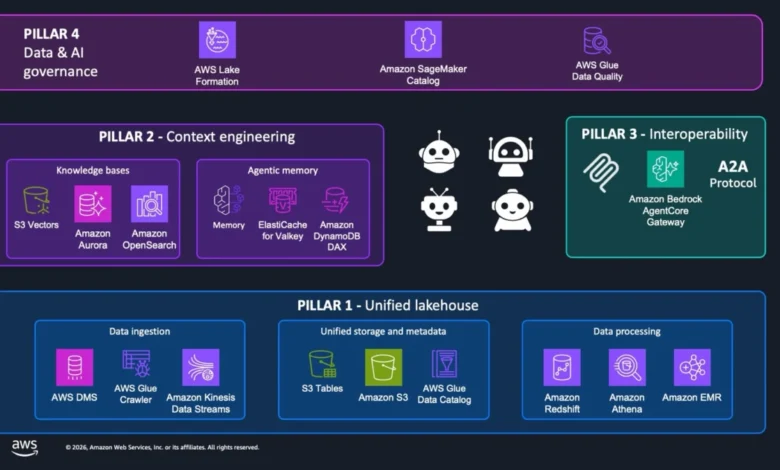
The core challenge facing chief data officers and engineering leads is the persistent struggle with data silos. When data is scattered across disparate storage systems, unstructured data remains inaccessible, and systems lack a common communication protocol, the resulting AI agents often suffer from "hallucinations"—generating inaccurate or unreliable outputs because their underlying data foundation is either incomplete or corrupted. Addressing this requires a four-pillar framework that shifts the focus from experimental agility to enterprise-grade architectural integrity.
The Evolution of the Data Lakehouse: Eliminating ETL Barriers
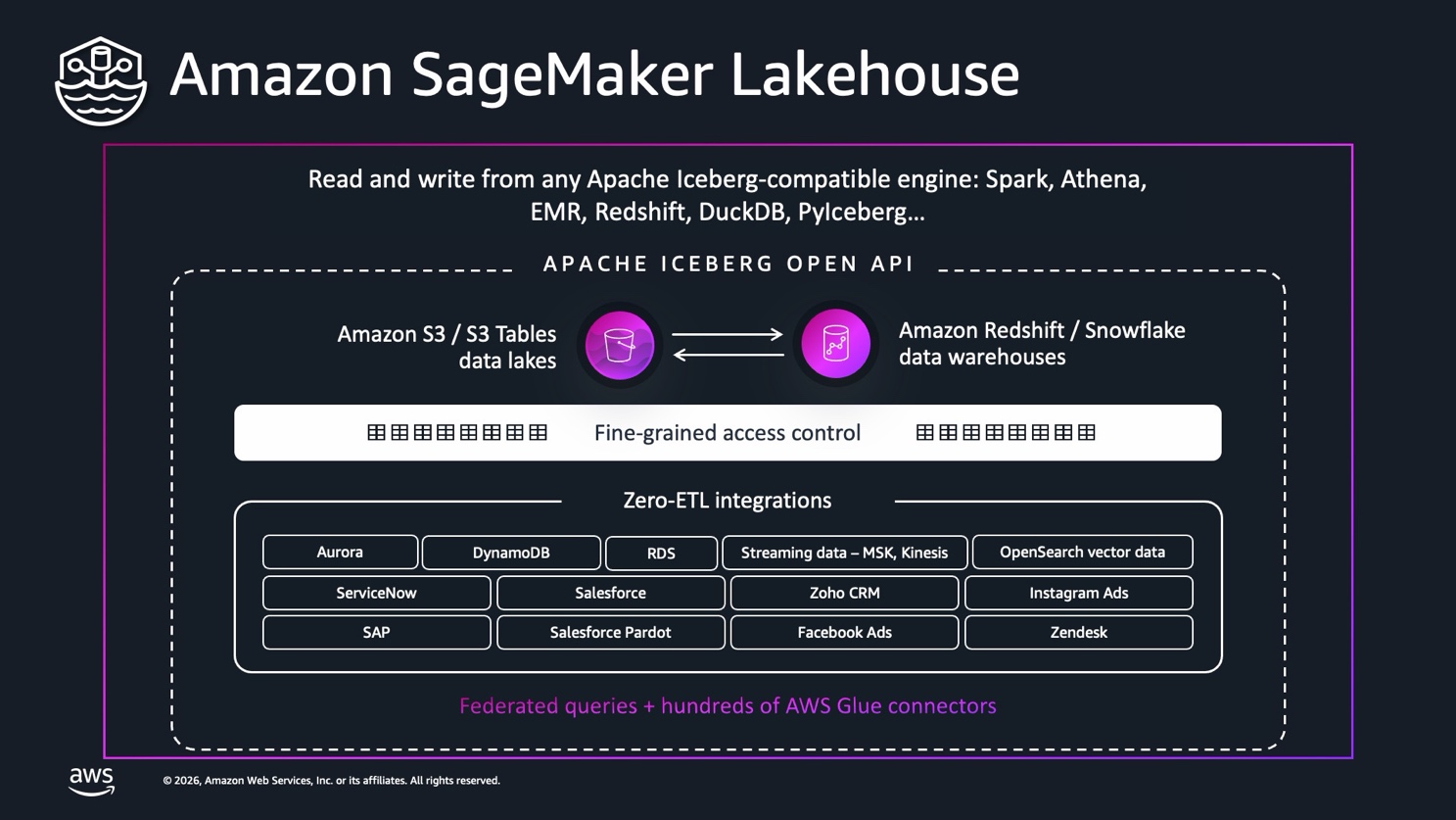
The foundation of any AI-ready enterprise rests on the integration of data storage and analytics. Historically, organizations were forced to choose between the flexibility of data lakes and the rigid, high-performance governance of data warehouses. Data lakes built on Amazon S3 offered the scale required for machine learning but often lacked the necessary guardrails for production. Conversely, data warehouses provided the ACID transactions and SQL efficiency required for business intelligence but struggled with the massive, unstructured datasets characteristic of modern AI workloads.
The modern solution, exemplified by the Amazon SageMaker Lakehouse, bridges this divide. By utilizing Amazon S3 Tables—which offer native support for the Apache Iceberg open-source format—organizations can now maintain a unified source of truth. This architecture allows developers to read and write data seamlessly across engines such as Amazon Athena, Amazon EMR, and Amazon Redshift. The critical shift here is the move toward "zero-ETL" (Extract, Transform, Load) ingestion. By removing the need to manage complex, brittle transformation pipelines, organizations can ensure that operational, analytical, and AI data reside in a single, governed environment. This removes the latency and potential for data drift that occurs when moving information between storage silos.
Context Engineering: Moving Beyond Basic Prompting
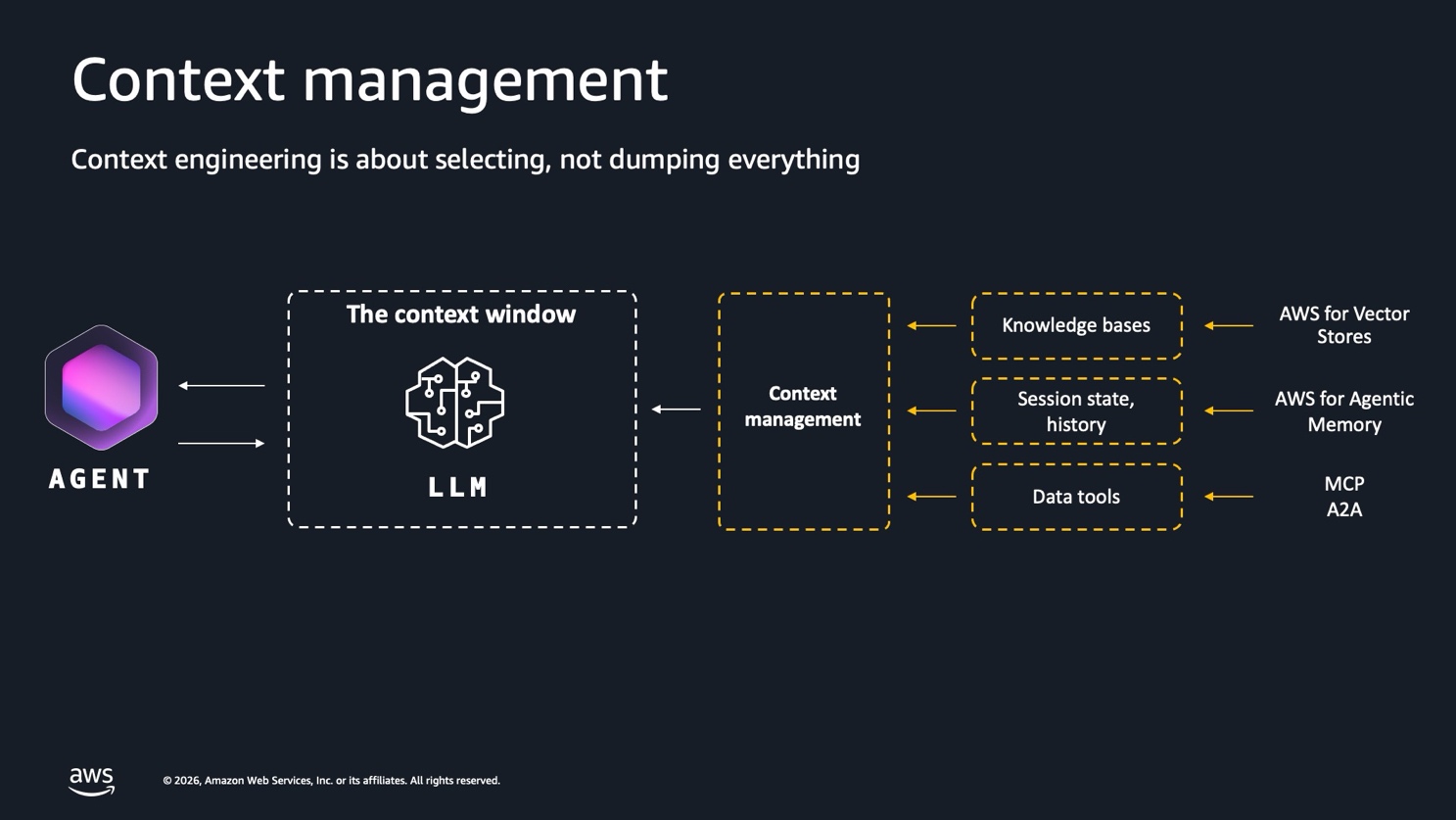
Even with a unified lakehouse, agents require curated context to perform effectively. Research into Large Language Models (LLMs) has identified the "lost in the middle" phenomenon, where models struggle to process information that is buried deep within long context windows. If an agent is fed excessive or irrelevant data, performance degrades and costs increase. To mitigate this, engineers are increasingly turning to context engineering.
This approach involves a tripartite management system: knowledge bases, session state and history, and data tools. By utilizing vector stores such as Amazon OpenSearch or Amazon Aurora PostgreSQL, organizations can create semantic indexes of their data. Specifically, Amazon S3 Vectors allow raw data and indexed embeddings to live in the same governed ecosystem, ensuring that the AI agent is always referencing the most current version of a document or dataset.
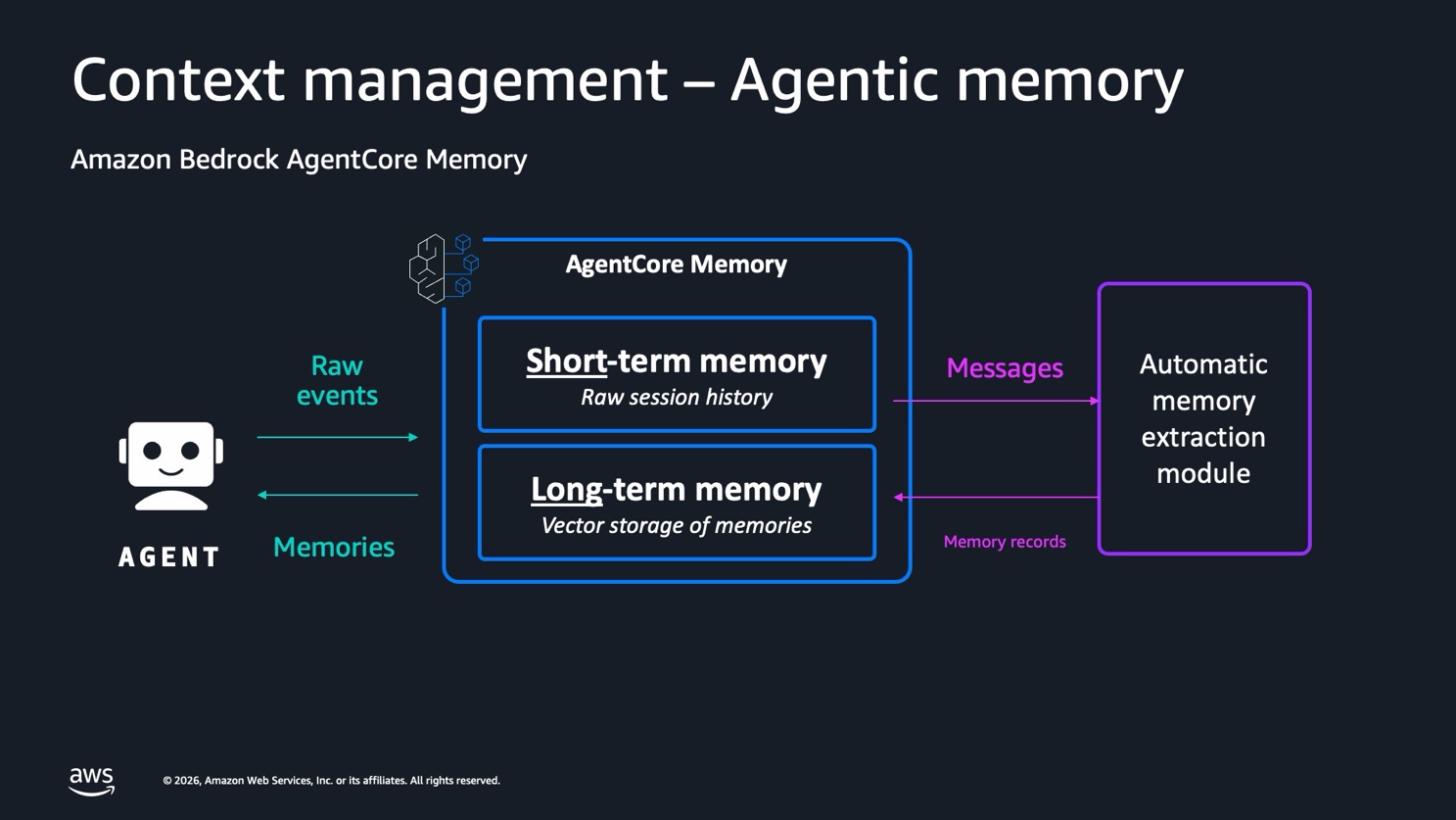
Furthermore, the implementation of memory modules—such as those found in Amazon Bedrock AgentCore—allows for dynamic, persistent context. These systems utilize an extraction module to identify and store key information, such as client names or project specifications, from raw events. By maintaining this long-term memory, agents can deliver personalized interactions while minimizing the frequency of hallucinations, as the agent is guided by historical, fact-based records rather than transient prompt data.
Standardizing Communication: The Role of MCP and Open Protocols
As organizations scale from a single AI agent to a multi-agent system, interoperability becomes the primary bottleneck. Research from the University of California and various AI labs suggests that multi-agent debate—where models review and refine each other’s work—can significantly increase the reliability of complex outputs. However, this requires a standardized language for agent-to-agent (A2A) communication.
The Model Context Protocol (MCP) has emerged as the industry standard for this task. MCP provides a consistent framework for agents to interact with resources (read-only data), tools (actionable functions), and prompts (instructions). By utilizing the Amazon Bedrock AgentCore Gateway, companies can centralize this access, ensuring that every interaction is authenticated, logged, and audited. This gateway also employs semantic search, which allows agents to discover and utilize tools based on natural language requests, ensuring that they are only granted access to the specific data and functions permitted by their defined IAM (Identity and Access Management) roles.
Governance as a Strategic Differentiator
The final pillar of an AI-ready foundation is governance. In an era where foundation models are commoditized, an organization’s proprietary data and the governance applied to it represent the true competitive advantage. The Amazon SageMaker Data Catalog plays a vital role here by automating the discovery and management of data. By generating metadata, data lineage, and quality indicators, the catalog provides a level of transparency that is essential for regulatory compliance and trust.
The adoption of a "publish-and-subscribe" model for data access ensures that data producers can maintain strict control over their assets. Through row-level and column-level filtering, organizations can ensure that sensitive information is never exposed to an agent that does not have the appropriate authorization. When combined with tools like Amazon SageMaker Unified Studio, which enables data scientists and analysts to collaborate in shared, auditable environments, the entire data lifecycle becomes a cohesive, traceable process.
Strategic Implications and Industry Outlook
The transition toward agentic AI is as much a cultural shift as it is a technological one. For enterprises, the sequence of implementation is critical. Attempting to build multi-agent orchestration before establishing a unified, governed lakehouse is akin to constructing a skyscraper on a shifting foundation. Data leaders must prioritize the unification of their data sources through zero-ETL integration as the immediate first step. Only once this foundation is secure should organizations invest in the context engineering and interoperability protocols that allow agents to function autonomously.
The long-term success of these initiatives will likely be measured by how well companies balance the autonomy of AI agents with the rigorous requirements of corporate governance. By treating governance as a parallel track from the onset—rather than a final hurdle—organizations can avoid the costly retrofitting of security protocols that has plagued earlier generations of digital transformation.
As of late 2026, industry experts note that the integration of open standards like MCP is accelerating the development of heterogeneous agent ecosystems, where specialized agents from different vendors can collaborate on complex workflows. This shift toward modularity means that the infrastructure built today must be flexible enough to accommodate the rapidly evolving AI landscape. Ultimately, the organizations that will succeed by 2027 are those that view their data foundation not as a static repository, but as an active, intelligent, and highly governed engine capable of powering the next generation of autonomous business processes. For those looking to implement these strategies, deep dives into the technical documentation for Amazon SageMaker and Amazon Bedrock offer a roadmap for moving from conceptual prototypes to high-value production environments.