Frontend Web Development Sees Major Shifts as Tooling Evolves for AI Agents, Responsive Design, and Bot Mitigation

The landscape of front-end web development is undergoing a period of rapid evolution, driven by the increasing integration of artificial
intelligence into coding workflows, the demand for more resilient responsive design practices, and the mounting challenge of managing web traffic dominated by automated bots. Recent developments across the industry highlight how developers are rethinking everything from how websites handle complex layout calculations to how they protect their infrastructure from aggressive web scrapers.
These shifts come at a time when the capabilities of web browsers have expanded dramatically. Modern web applications now routinely leverage advanced technologies such as WebAssembly, Web Crypto, WebGL, and Web Audio to deliver experiences that were once thought impossible outside of native desktop or mobile environments. As the web platform matures, the tooling ecosystem is adapting to meet the complex demands of modern engineers who must balance performance, accessibility, security, and the integration of AI-assisted development tools.

Enhancing Responsive Design Beyond the Viewport
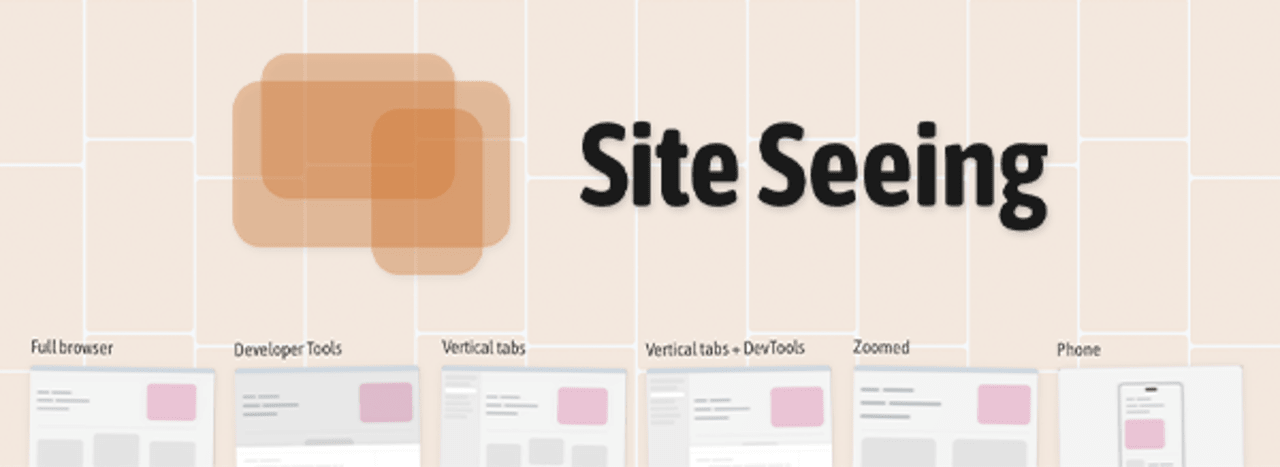
For years, responsive web design has primarily focused on adapting layouts to standard device widths and screen rotations. However, real-world user conditions are far more fragmented. Modern web users frequently navigate sites with on-screen software keyboards active, split-screen multi-tasking windows, docked browser developer tools, and oddly proportioned in-app browsers embedded within social media applications.
To address this gap, developer Ahmad Shadeed has introduced a new, free browser-based utility called Site Seeing. Designed to help developers preview layouts in these awkward and frequently overlooked contexts, the tool provides a more realistic simulation of how web interfaces behave under constrained or unconventional viewports. By moving beyond traditional resizing techniques, tools like Site Seeing aim to help frontend engineers catch layout bugs and CSS regressions before they impact end users operating under complex multitasking conditions.
Standardizing Web Expertise for AI Coding Agents
Artificial intelligence has fundamentally altered how software is written, with coding agents capable of generating functional HTML, CSS, and JavaScript at unprecedented speeds. However, a persistent challenge has been that these AI models frequently lag behind evolving web standards, modern best practices, and Baseline compatibility metrics.
To bridge this gap, the Chrome team has announced the stabilization of Modern Web Guidance 1.0, a comprehensive initiative aimed at providing structured web expertise directly to AI coding agents. Spearheaded by Philip Walton at Google, the project features contributions and oversight from prominent web standards advocates and browser engineers, including Lea Verou, Patrick Brosset of Microsoft Edge, and Jake Archibald of Mozilla Firefox.
The stable release of these skills enables developers to steer AI coding assistants toward modern, standards-compliant HTML and CSS patterns. By ensuring that automated agents adhere to current Baseline standards, the web development community hopes to curb the propagation of legacy code patterns and encourage the adoption of robust, forward-compatible web architecture.
Advanced Browser Capabilities and Computational CSS
The capabilities of the browser as an application platform continue to expand, prompting fresh discussions about the true boundaries of web development. In an encouraging assessment of the ecosystem, technologist Paul Ford highlighted the immense power currently available within the standard web platform. Advanced utilities such as WebAssembly for high-performance execution, Web Crypto for secure data handling, WebGL for hardware-accelerated graphics, and Web Audio for complex sound synthesis are increasingly accessible to everyday developers. These technologies empower teams to build sophisticated browser-based applications that rival traditional desktop software.
Concurrently, developers are finding novel ways to stretch the limits of native browser features. In the realm of styling, engineer Agustin Capeletto published an interactive exploration examining the computational power of CSS itself. By leveraging the inherent layout behaviors of CSS Grid, Flexbox, and modern calculation functions, developers can read CSS layout computations back as numerical values and apply them to practical interface elements, such as drawing dynamic, animated charts without relying heavily on JavaScript execution.
At the same time, maintaining visual consistency across varying browsers and operating systems remains a nuanced challenge. A cross-browser system color study conducted by Aaron Gustafson revealed significant discrepancies in contrast ratios among paired CSS system colors. For example, standard paired system colors such as HighlightText and Highlight achieved a contrast ratio of only 1.98:1 in Google Chrome on Android’s dark mode, falling well short of accessibility guidelines. Gustafson’s study maps out which color pairs successfully maintain readability across different browser engines and operating system environments, providing crucial data for developers building resilient dark-mode interfaces.

Frameworks, Libraries, and Ecosystem Updates
The open-source tooling ecosystem has also seen notable releases aimed at improving accessibility, utility, and maintenance.
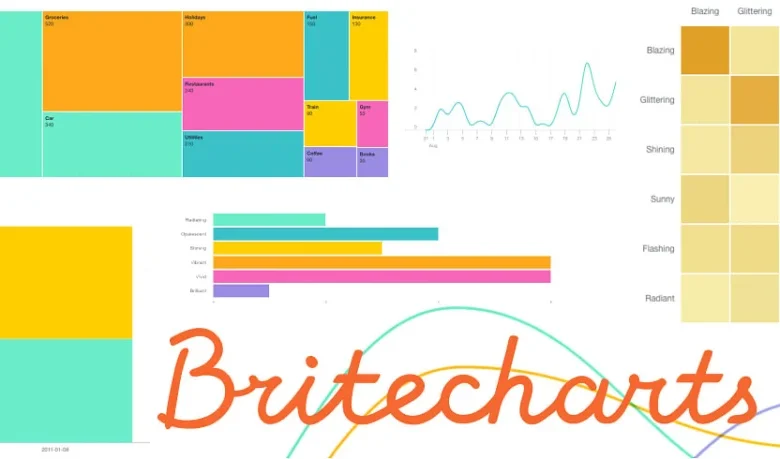
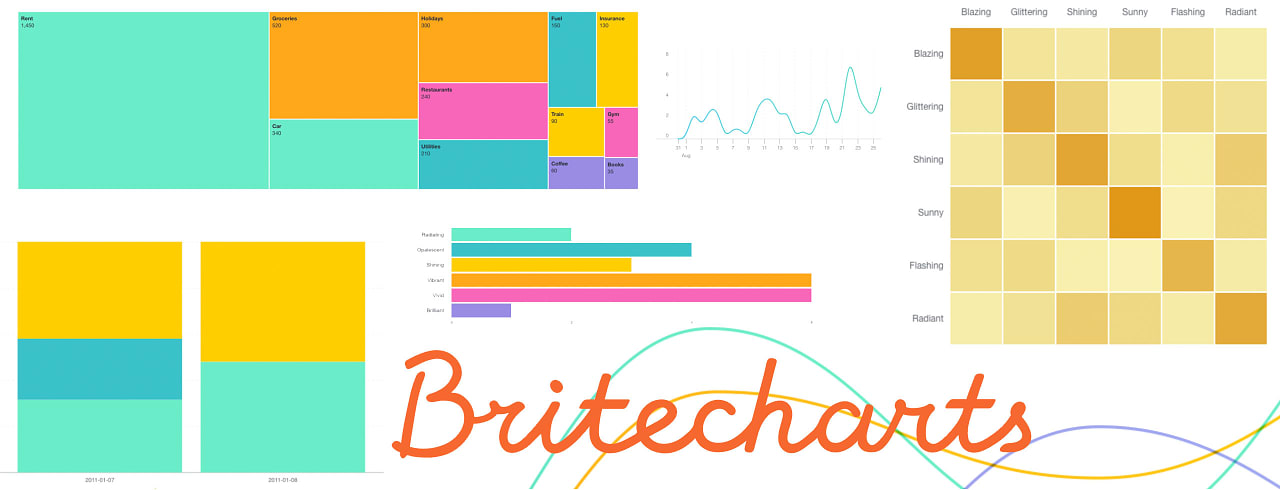
Marcos Iglesias announced the release of Britecharts 3.0, a major update to the popular library of reusable D3-based charts. The latest version introduces built-in accessibility features by default, including screen reader-compatible data tables and comprehensive keyboard navigation support. Additionally, Britecharts 3.0 adds native dark mode support, TypeScript definitions, and treemap visualizations, supported by newly overhauled documentation.
In the realm of utility CSS, Aoyue Design released Master CSS 2.0, a markup-driven CSS language and framework where individual class names can encapsulate values, selectors, and conditional states—such as fg-blue-70:hover@sm. Version 2.0 expands the framework’s capabilities by introducing design tokens defined directly in user stylesheets, a wide-gamut color palette, and enhanced linting and editor tooling to streamline development workflows.
Meanwhile, industry fixtures are undergoing modernization. Geoff Graham provided detailed insights into the transition of CSS-Tricks under new ownership, outlining extensive technical cleanups including the removal of legacy JavaScript, the reorganization of Sass stylesheets, and foundational updates to the site’s architecture to ensure long-term sustainability.
The Growing Crisis of Automated Web Traffic and Bot Mitigation
Perhaps one of the most pressing operational challenges facing website administrators is the exponential growth of automated bot traffic. Web scrapers, artificial intelligence training crawlers, and malicious scanning tools consume vast amounts of server bandwidth, often ignoring standard robots.txt directives and disrupting traffic analytics.
Recent analyses from various independent developers underscore the severity of the issue and highlight contrasting strategies for combating automated traffic:
- Aggressive Honeypots: Terence Eden documented the implementation of a custom honeypot designed to lure bots that ignore
robots.txtfiles and issue immediate network bans. The method resulted in an estimated 90% reduction in unauthorized bandwidth consumption, though Eden noted various operational tradeoffs associated with blunt-force access restrictions. - Cloud-Based Security Layers: For administrators preferring managed infrastructure, Nick Gray published a year-long retrospective detailing his experience utilizing Cloudflare firewall rules and security policies to mitigate scraper traffic, which routinely accounts for the vast majority of inbound hits.
- Linguistic Deterrents: In a more experimental approach, security researcher Utku Sen populated a test environment with specific "taboo" textual phrases and observed that automated AI agents frequently refused to interact with or scrape the content. While unlikely to serve as a primary security measure, such techniques offer insight into the behavioral patterns of large language model crawlers.
- Analytics Distortion: The prevalence of automated traffic has severe implications for site measurement. An investigation by Hugo Attal into server logs revealed that approximately 90% of visitors recorded as human traffic in standard analytics dashboards were actually automated bots, highlighting the growing difficulty of accurately measuring audience engagement on the modern web.
Broader Implications and Future Outlook
The convergence of these trends points toward a demanding yet highly capable era for frontend engineering. As AI coding agents become permanent fixtures in development pipelines, initiatives like Chrome’s Modern Web Guidance 1.0 will be critical in ensuring that generated code aligns with modern standards and accessibility requirements. Simultaneously, as browser platforms continue to absorb capabilities traditionally reserved for native applications, developers must navigate complex architectural considerations—ranging from precise layout calculations and system color accessibility to the heavy operational overhead introduced by automated bot traffic.
Ultimately, the web ecosystem is adapting to a dual reality: one where development velocity is supercharged by automation, and another where the underlying infrastructure requires heightened vigilance to maintain performance, security, and data integrity.