Frontend Development Weekly: Modern CSS Innovations, Tooling Updates, and the Evolution of Web Standards

The landscape of modern web development continues to evolve at a rapid pace, driven by a blend of historical reflection, groundbreaking CSS specifications, and the constant refinement of developer tooling. Recent developments highlighted across the frontend ecosystem shed light on both the nostalgic quirks of early browser styling and the sophisticated, JavaScript-free solutions available to contemporary developers. From the revitalization of classic CSS edge cases to advanced techniques in layout design, performance optimization, and DOM manipulation, engineers are finding new ways to push the boundaries of what is possible on the web platform without sacrificing maintainability or accessibility.
A Nostalgic Look at CSS Curiosities and Historic Quirks
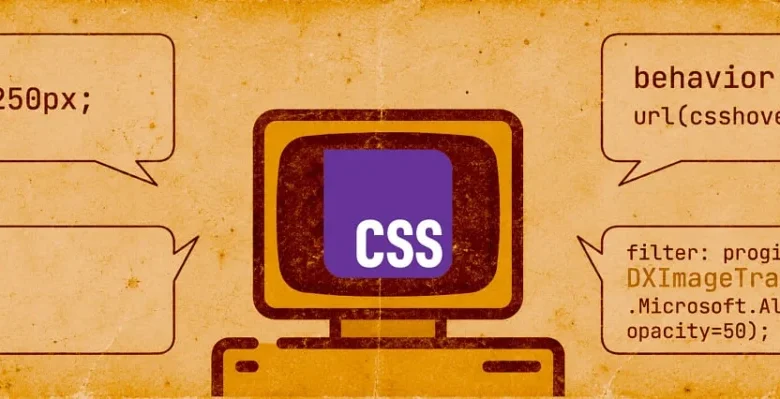
To understand where frontend engineering is heading, developers often look back at the arduous journey of cross-browser compatibility. A recent retrospective by Declan Chidlow titled "CSS Curiosities of the Past" offers a comprehensive tour of the non-standard styling quirks and hacks that developers once relied upon to force legacy browsers—most notably Internet Explorer—into compliance.

During the late 1990s and throughout the 2000s, building a website that rendered identically across Netscape, Internet Explorer, and early versions of Mozilla Firefox required an arsenal of unorthodox techniques. Among these was the infamous "star hack," which exploited parsing bugs unique to Internet Explorer to apply specific style rules intended only for that browser. Another widely utilized technique was the box model hack, engineered by Tantek Çelik, which addressed Internet Explorer’s erroneous implementation of the CSS box model where padding and borders were incorrectly included within the declared width of an element rather than added to it.
Perhaps even more controversial by modern security standards were CSS expressions, a proprietary Microsoft feature that allowed developers to execute arbitrary JavaScript code directly inside a stylesheet to dynamically calculate CSS properties. While powerful for its time, this capability introduced severe performance bottlenecks and security vulnerabilities. Similarly, Internet Explorer’s DirectX filters served as a precursor to modern CSS transforms and opacity controls, enabling gradients, drops shadows, and alpha transparency long before they were standardized in CSS3. Reviewing these historical relics provides contemporary developers with a renewed appreciation for modern CSS engines, which now offer robust, standardized features backed by the World Wide Web Consortium (W3C) and the Web Hypertext Application Technology Working Group (WHATWG).
Modern CSS Layout Innovations: Sidenotes and Alignment
Moving from historical workarounds to cutting-edge techniques, recent tutorials have showcased the immense power of modern CSS specifications. Vincent Bernat introduced a robust method for building Tufte-style sidenotes—margin notes traditionally found in academic publishing—using native CSS anchor positioning.
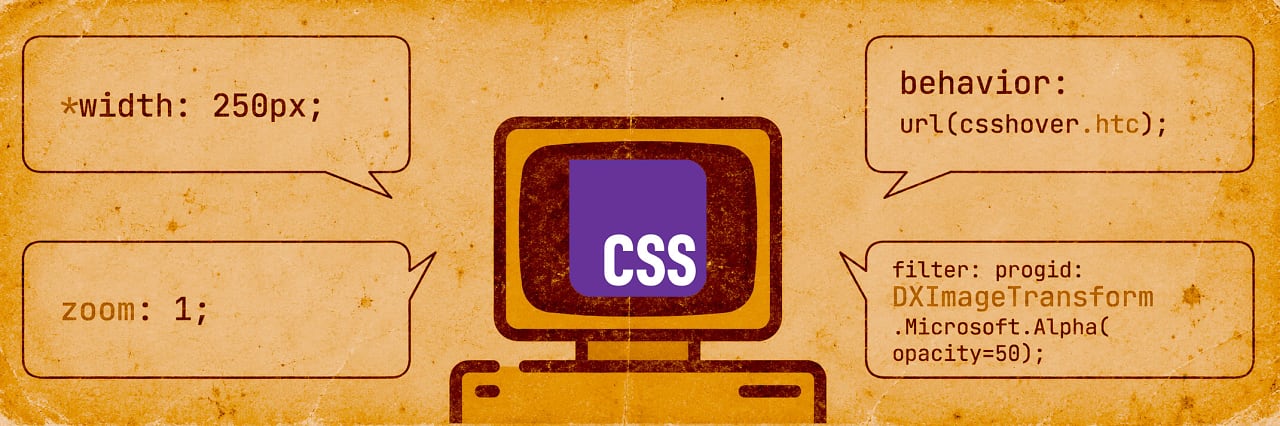
Historically, implementing margin notes required complex JavaScript calculations or rigid floating techniques that frequently broke on narrow viewports or mobile devices. By leveraging CSS anchor positioning, developers can now anchor inline elements directly to designated target elements in the margin. This approach operates entirely without JavaScript, supports multi-block content, and gracefully degrades on older browsers and narrow viewports. As CSS anchor positioning gains broader adoption across modern browser engines, it promises to simplify complex editorial layouts that previously demanded heavy scripting.
In a similar vein, Ahmad Shadeed addressed a persistent visual flaw in user interface design: the vertical alignment of icons alongside multi-line text labels. When a text label spans a single line, an accompanying icon can easily be vertically centered using standard flexbox or grid alignment. However, when the text wraps onto multiple lines, an icon centered relative to the entire text block often looks visibly misplaced or misaligned relative to the first line of text. Shadeed explored a modern CSS solution utilizing the lh unit—a relative length unit equal to the calculated line-height of the element—allowing precise control over icon positioning relative to typography, thereby enhancing the visual polish of lists, navigation menus, and form controls.
The Debate Over Image Formats and Browser Decoding
Performance optimization remains a critical pillar of frontend engineering, particularly regarding image delivery and asset compression. A recent critique by Gianni Rosato, an AV1 encoder developer and former supporter of the JPEG XL format, titled "The Case Against JPEG XL (in the Browser)," has reignited discussions surrounding next-generation image formats.

As browser vendors evaluate decoding implementations for JPEG XL in engines like Chrome and Firefox, Rosato argued that the format offers marginal, if any, discernible performance or compression advantages over AVIF for web use cases. While JPEG XL boasts impressive features for professional photography workflows and archival storage—such as lossless transcoding from legacy JPEG files—the web ecosystem has already invested heavily in AV1 and AVIF tooling. The ongoing debate underscores the delicate balance browser vendors must strike between supporting emerging codecs and preventing format fragmentation, which can introduce maintenance overhead and compatibility matrices for web developers.
Advancements in Styling Frameworks and Animation
The tooling ecosystem surrounding CSS continues to mature, with a particular focus on build-time performance and type-safe styling solutions. Flavio Copes recently published a deep dive into StyleX, a CSS-in-JS alternative developed at Meta. StyleX compiles JavaScript style objects into plain atomic CSS at build time, eliminating runtime performance overhead while preserving the developer experience of modular, component-scoped styling.
Copes highlighted that StyleX is particularly well-suited for integration with AI coding assistants and autonomous development agents. Because StyleX enforces strict constraints and maps cleanly to deterministic atomic classes, AI models can reason about and generate styling code with a lower probability of introducing invalid CSS or specificity conflicts.
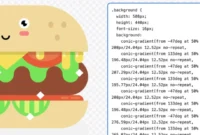
Complementing build-time styling improvements, developer Preethi Sam explored advanced animation techniques using the CSS border-image property. By animating border styles driven by gradients or complex image assets, developers can achieve sophisticated, eye-catching user interface effects—such as glowing gradient borders and dynamic loading states—entirely within the CSS layer, reducing reliance on heavy JavaScript animation libraries.
Quality Assurance, AI Integration, and DOM Conversion Tools
Maintaining high code quality across large-scale frontend codebases requires standardized checklists and automated auditing tools. The Front-End Checklist, maintained by David Dias, has reached a significant milestone by expanding its repository to include nearly 400 distinct frontend quality rules. These rules span accessibility (WCAG compliance), performance optimization, security best practices, and search engine optimization (SEO). Furthermore, the checklist now supports direct integration via the Model Context Protocol (MCP) with advanced AI tools such as Claude and Cursor, enabling automated code reviews against established industry standards.
In the realm of DOM manipulation and resource generation, Zumerlab released SnapDOM 3.0, a dependency-free alternative to html2canvas designed for converting DOM elements directly into downloadable images. Version 3.0 introduces an "incremental recapture" feature to accelerate repeat captures, automatic web font embedding to ensure visual fidelity, and a new fromString() method allowing raw HTML markup to be instantly parsed and rendered into image assets without being attached to the active document tree.
Broader Industry Implications and Future Outlook
The convergence of historical reflection and modern innovation signals a mature era for frontend development. As browsers implement advanced layout primitives like anchor positioning and logical units like lh, the reliance on fragile JavaScript polyfills and complex layout hacks continues to decline. Simultaneously, the integration of rigorous quality standards directly into AI-assisted development workflows promises to elevate baseline web performance and accessibility across the industry.
Ultimately, these developments demonstrate that while the web platform’s underlying foundations are deeply rooted in decades of backward compatibility, the tools available to modern engineers have never been more powerful, efficient, or standardized.