Optimizing Data Reliability: How Amazon Redshift Introduces Automatic Conflict Resolution for Apache Iceberg Tables

The management of concurrent data operations within large-scale analytics platforms has long been a significant hurdle for database administrators and data engineers. In production environments, where streaming pipelines, scheduled batch processes, and ad-hoc transformations frequently interact with the same underlying data sets, the integrity of these operations relies on the efficiency of concurrency controls. Amazon Redshift has recently addressed this challenge by introducing an automated conflict resolution mechanism for Apache Iceberg tables. This development marks a pivotal shift in how the platform handles concurrent writes, moving away from rigid, "all-or-nothing" commit protocols toward a more granular, intelligent system that preserves snapshot isolation while significantly boosting throughput.
The Evolution of Concurrency in Data Lakes
Apache Iceberg, an open table format for huge analytic datasets, has gained widespread adoption due to its ability to provide ACID (Atomicity, Consistency, Isolation, and Durability) guarantees. Central to its reliability is Optimistic Concurrency Control (OCC). Under this model, every writer prepares its changes against the current version of the table. To commit, the writer must advance the table version in the catalog, provided that no other writer has done so in the interim.
Historically, if a second writer attempted to commit after the first, the catalog would reject the second writer’s request, forcing a failure. This approach was designed to prevent the accidental overwriting of data, ensuring that snapshot isolation semantics remained intact. However, the limitation of this model lies in its lack of nuance. The system evaluates conflicts based on the table version rather than the specific data being modified. Consequently, two processes modifying entirely distinct segments of a massive table—such as one job appending new streaming records and another deleting legacy data—would be treated as conflicting if their execution windows overlapped. This forced developers to implement complex workarounds, such as serializing writes, partitioning tables into smaller silos, or building extensive application-side retry logic, all of which introduced latency and operational overhead.
A New Paradigm for Conflict Resolution
The latest update to Amazon Redshift replaces this blunt instrument with a multi-tiered, intelligent evaluation process. When a commit attempt encounters a version mismatch, the engine no longer defaults to an abort. Instead, it performs an automated analysis to determine if the changes are truly contradictory. If the engine determines that the two operations are logically independent—meaning they affect different partitions or individual files—it performs a rebase operation.
Similar to the concept of a "git rebase" in software development, Redshift replays the pending write onto the newly updated table version. This allows both transactions to persist without requiring the user to re-run the entire query or wait for a retry loop. This transformation is entirely transparent to the user, requiring no additional configuration or changes to existing SQL patterns. The system effectively shifts the burden of concurrency management from the end-user to the database engine, ensuring that data pipelines remain fluid even under high-load scenarios.
The Mechanics of Granular Evaluation
The efficiency of this resolution process is derived from its hierarchical escalation model. Redshift evaluates conflicts across three distinct layers, moving from the least resource-intensive to the most precise.
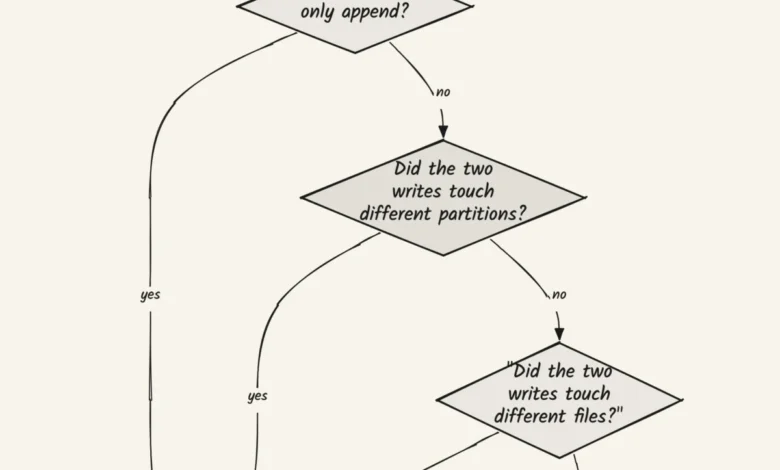
First, the system assesses the operation type. If one of the concurrent writes is a pure append (such as an INSERT from a streaming source), the engine recognizes that this operation cannot, by definition, have removed or altered data that another process relied upon. Consequently, appends are almost always rebased seamlessly against existing concurrent operations.
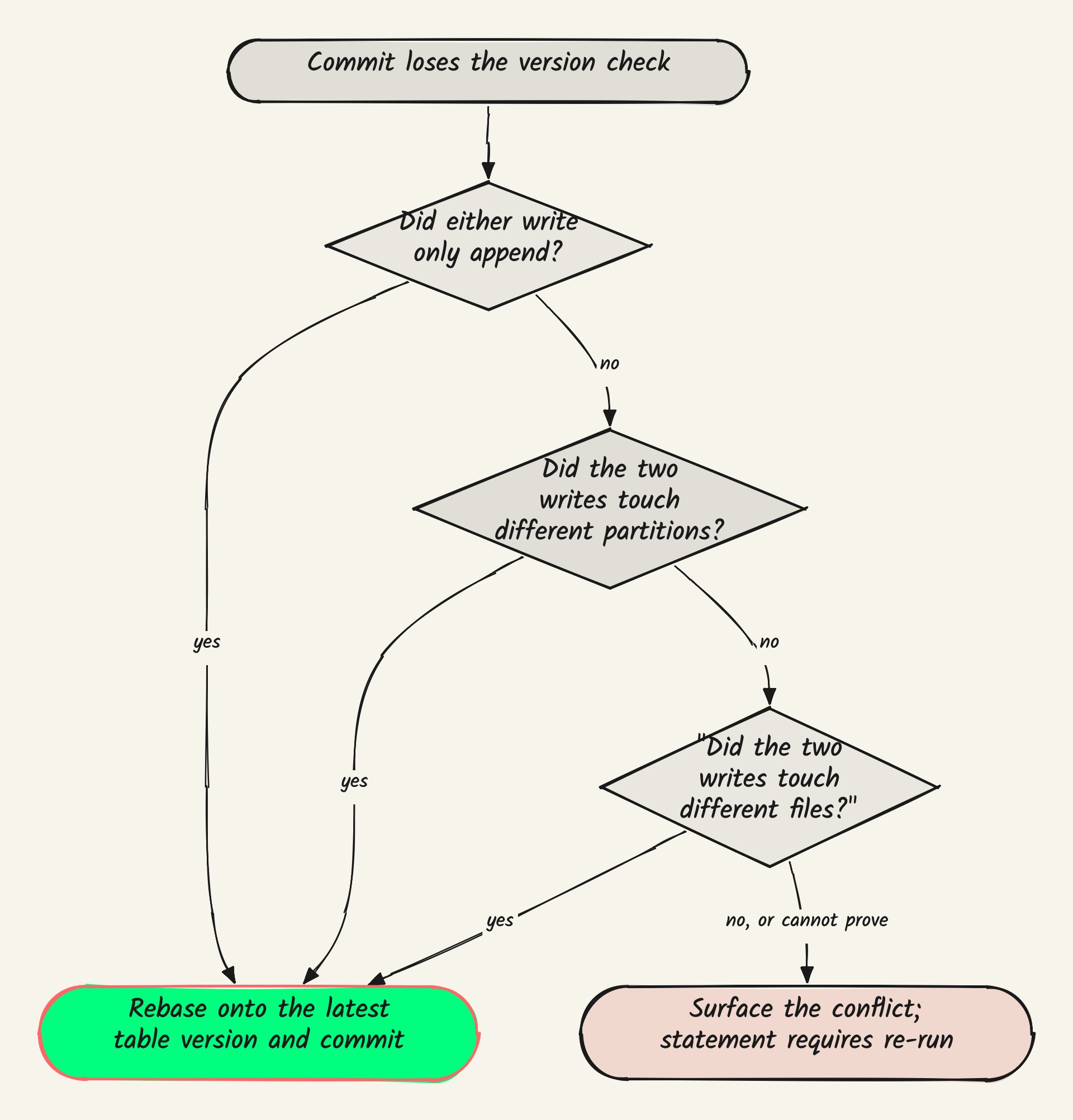
Second, if both operations involve data removal or modification, the engine evaluates the impacted partitions. If the two jobs are operating on distinct partitions—for instance, one job processing data from the current month while another performs maintenance on data from three years ago—the system recognizes the independence of the tasks and allows both to proceed.
Finally, in cases where both operations target the same partition, Redshift examines the individual data files involved. Only if the operations are found to be modifying the same specific file does the engine conclude that a genuine conflict exists. By limiting the scope of "conflicts" to only those instances where actual data overlap is detected, the engine maximizes concurrency while maintaining the strict ACID guarantees inherent to Iceberg.
Supporting Data and Performance Impact
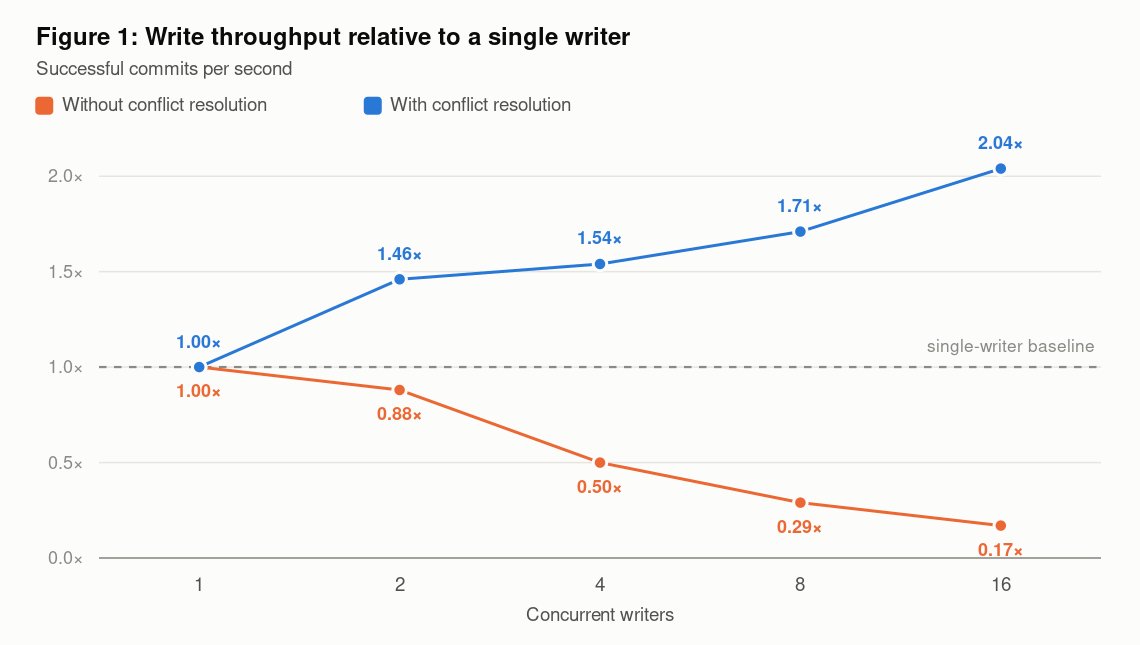
The impact of this enhancement on system performance is substantial. Internal benchmarks conducted by AWS on an unpartitioned Iceberg table demonstrate a dramatic shift in throughput. In a testing scenario involving 16 concurrent writers, the baseline optimistic concurrency model saw throughput plummet to approximately 17% of a single-writer baseline due to the high frequency of discarded, rejected commits. With the introduction of automatic conflict resolution, that same configuration saw throughput scale by a factor of 12 compared to the previous model, with zero rejected commits.
The failure rate, which historically scaled at a rate of (N-1)/N—where N is the number of concurrent writers—has been effectively neutralized in scenarios involving concurrent appends. This shift directly addresses what was previously the single largest cause of failed Iceberg write queries in the Amazon Redshift ecosystem, which accounted for roughly 20% of all write failures weekly prior to the rollout.
Broader Implications for Data Engineering
The implications of this update for the broader data ecosystem are profound. By reducing the frequency of retries, organizations can significantly lower their compute costs, as resources are no longer squandered on re-processing data that could have been committed in the first pass. Furthermore, the reduction in administrative friction allows for more agile data pipelines. Data engineers can focus on designing optimal schemas and transformation logic rather than orchestrating the timing of their write jobs to avoid collision.
From an industry perspective, this development aligns with the broader trend toward "self-healing" data infrastructure. As data volumes continue to grow and the complexity of real-time analytics increases, the ability for database engines to manage the minutiae of concurrency without human intervention becomes a competitive necessity. By integrating this intelligence into the Redshift engine, AWS is effectively commoditizing a sophisticated concurrency management layer that would otherwise require significant custom development for teams building on open-source frameworks.
Official Guidance and Future Outlook
While this feature operates automatically, Redshift continues to respect the write.*.isolation-level property inherent in the Apache Iceberg specification. For organizations requiring absolute serializability, the system provides a path to maintain the strictest possible contract. Furthermore, users can monitor the effectiveness of this resolution mechanism by querying the stl_iceberg_commit system table. This visibility allows teams to audit the frequency with which the engine intervenes, providing insights into potential bottlenecks or patterns of contention within their specific workloads.
As this feature reaches full deployment across the global fleet, the focus is expected to shift toward even more complex conflict scenarios. While the current implementation handles append-heavy workloads and multi-partition modifications effectively, ongoing refinements to the engine’s metadata analysis will likely continue to expand the scope of what can be resolved.
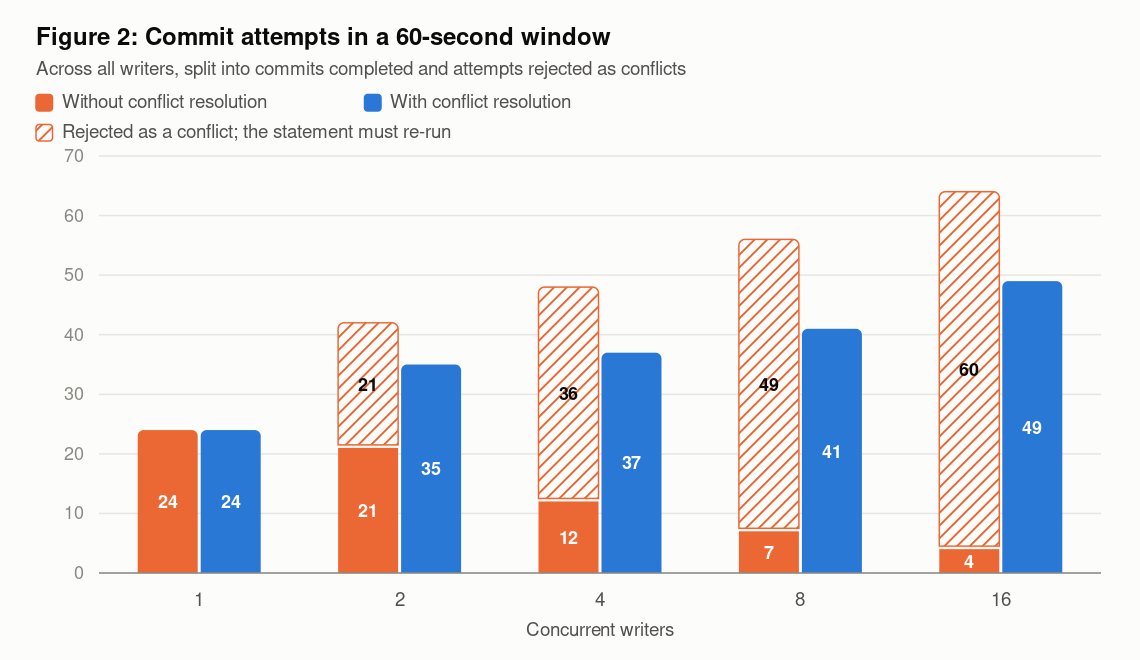
In summary, the transition to automatic conflict resolution represents a fundamental maturity milestone for Amazon Redshift’s support of the Apache Iceberg format. By effectively eliminating the "conflict tax" that previously hindered concurrent write performance, the platform has lowered the barrier to entry for complex, multi-writer data lake architectures. This evolution not only enhances current performance metrics but also provides a more robust foundation for the next generation of real-time, high-scale analytics.
Related posts: