Optimizing Time Series Data Management in Amazon OpenSearch Service with Data Streams and Index State Management

Amazon OpenSearch Service has become a cornerstone for organizations managing massive volumes of time series data, ranging from application logs and security telemetry to IoT sensor metrics. However, as these datasets grow exponentially, many enterprises encounter significant performance bottlenecks, characterized by high query latency, degraded indexing throughput, and spiraling storage costs. To address these systemic challenges, cloud architects are increasingly turning to a combination of OpenSearch data streams and Index State Management (ISM) to automate the data lifecycle and optimize resource utilization. This integrated approach allows organizations to distribute incoming data across multiple backing indices automatically, effectively eliminating the "hot index" problem while leveraging tiered storage to reduce costs without compromising data accessibility.
The Evolution of Time Series Data Challenges
In the modern digital economy, time series data is the lifeblood of observability and security. Whether it is a financial services firm monitoring transaction logs for fraud or a healthcare provider tracking patient telemetry, the ability to ingest and query data in real-time is critical. Historically, users of OpenSearch (and its predecessor, Elasticsearch) often relied on a single, massive index for a specific data source. As the volume of data grew, these indices became unwieldy.
A single large index often results in uneven shard distribution across a cluster. When one index grows too large, it creates a "hot spot" where a specific node in the cluster handles a disproportionate amount of the write and read load. This leads to increased CPU utilization, heap memory pressure, and eventually, a total degradation of service performance. Furthermore, retaining all data on high-performance "Hot" storage—typically backed by expensive NVMe SSDs—is financially unsustainable for historical data that is rarely accessed but must be kept for compliance or long-term trend analysis.
Understanding Data Streams: An Abstraction for Scalability
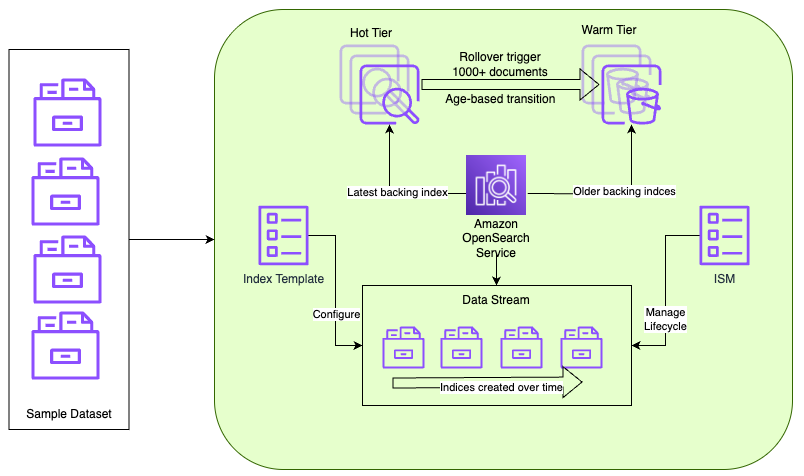
To solve these architectural hurdles, Amazon OpenSearch Service introduced data streams. A data stream is an abstraction layer that simplifies the management of time series data by providing a single, consistent endpoint for write operations. Instead of an application writing directly to a specific index (e.g., logs-2023-10-24), it writes to a named data stream (e.g., webserver-logs).
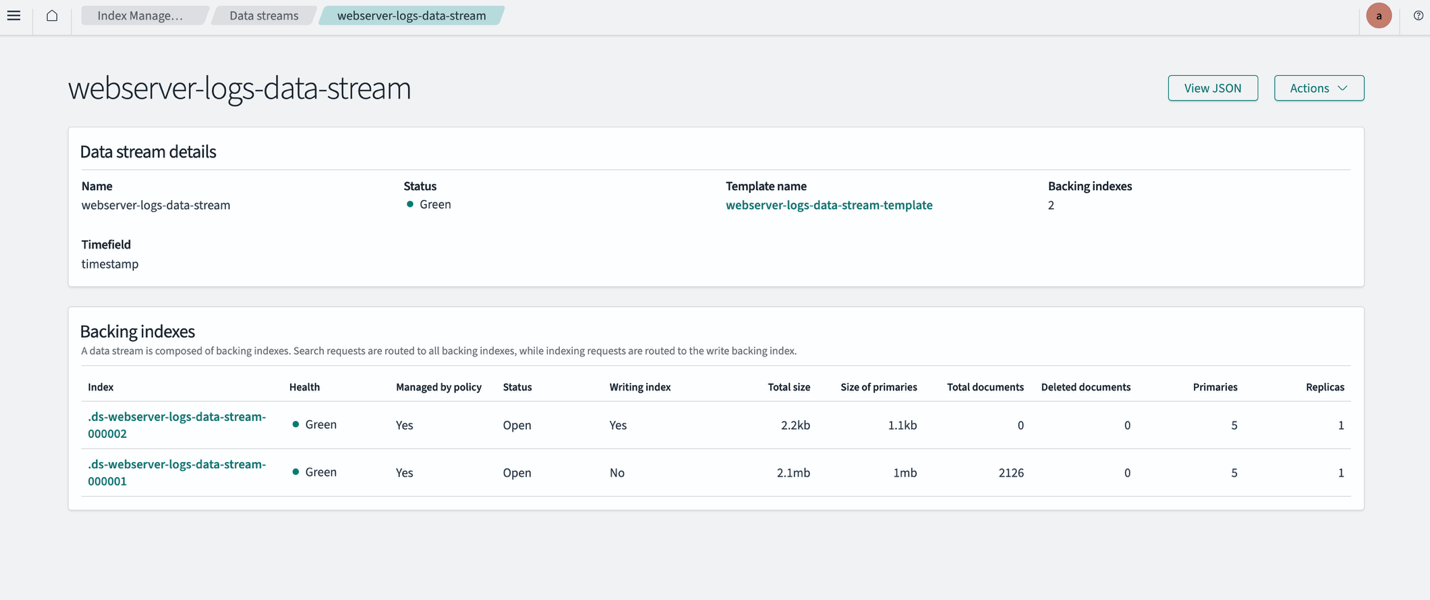
Behind the scenes, the data stream automatically manages a sequence of backing indices. When the current write index reaches a certain size or age, the system performs a "rollover," creating a new backing index for incoming data while keeping the older indices available for searches. This mechanism ensures that no single index becomes a bottleneck. From the user’s perspective, querying a data stream is seamless; a single search request across the data stream automatically spans all its hidden backing indices, allowing for efficient time-range filtering.
The Role of Index State Management (ISM)
While data streams handle the ingestion and organization of data, Index State Management (ISM) provides the "intelligence" required to manage those indices over time. ISM allows administrators to define custom policies that automate routine tasks based on the age, size, or document count of an index.
In a typical time series workflow, data follows a "Hot-Warm-Cold" architecture. New data is indexed into the Hot tier for maximum performance. As the data ages, its relevance for immediate troubleshooting decreases, and it can be moved to the UltraWarm tier. UltraWarm storage in Amazon OpenSearch Service utilizes Amazon S3 for cost-effective, long-term storage while maintaining the ability to query the data directly. Finally, data that is no longer needed can be automatically deleted or moved to "Cold" storage. ISM policies eliminate the need for manual intervention or custom "cron" jobs to manage these transitions, significantly reducing operational overhead for DevOps teams.
Chronology of a Managed Data Lifecycle
The implementation of an optimized time series solution follows a specific logical progression. This sequence ensures that the infrastructure is prepared to handle the data before the first byte is ever ingested.
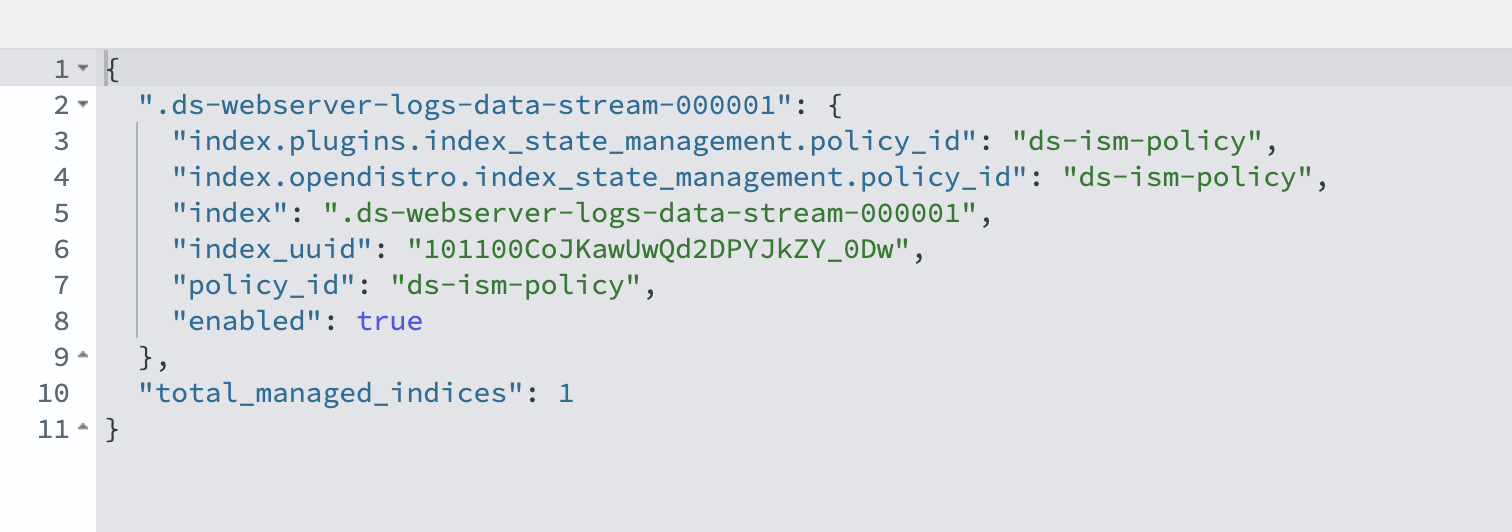
- Policy Definition: The process begins with the creation of an ISM policy. This policy acts as a blueprint, defining the "states" an index will pass through (e.g., Hot and Warm) and the "transitions" that trigger a move between states. For instance, a policy might dictate that an index should roll over after reaching 50GB and move to UltraWarm storage after seven days.
- Template Configuration: Once the policy is defined, an index template is created. This template uses regex patterns to match incoming data streams. It specifies the settings for the indices, such as the number of shards and replicas, and crucially, it links the indices to the previously created ISM policy.
- Data Stream Initialization: With the template in place, the data stream is initialized. At this point, OpenSearch creates the first backing index.
- Ingestion and Migration: Applications begin streaming data to the new endpoint. In many cases, organizations also migrate existing legacy data into the data stream using the
_reindexAPI. This ensures that historical data is also brought under the management of the new ISM policy. - Automated Maintenance: As data flows in, the ISM engine monitors the indices. When a rollover condition is met, a new index is generated. When a transition condition is met, the older index is migrated to a lower-cost storage tier.
Technical Deep Dive: A Web Server Log Example
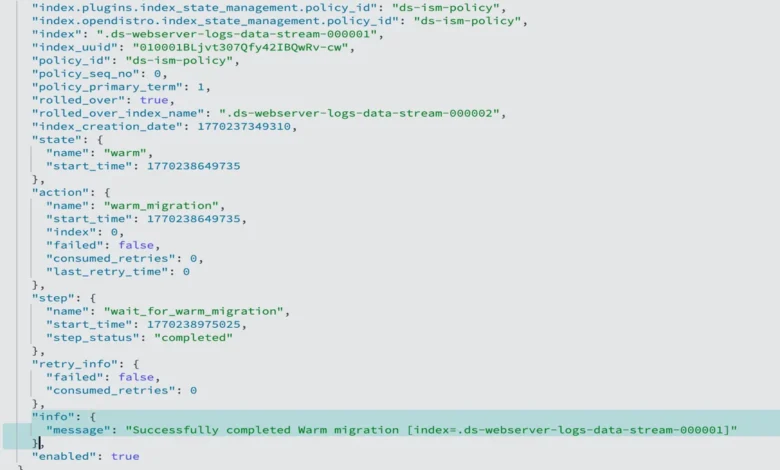
To illustrate the practical application of this technology, consider a standard web server log environment. An organization might process millions of logs per hour. By implementing a policy like the ds-ism-policy, the team can set a min_doc_count of 1,000 (for testing) or much higher for production, such as several million documents.
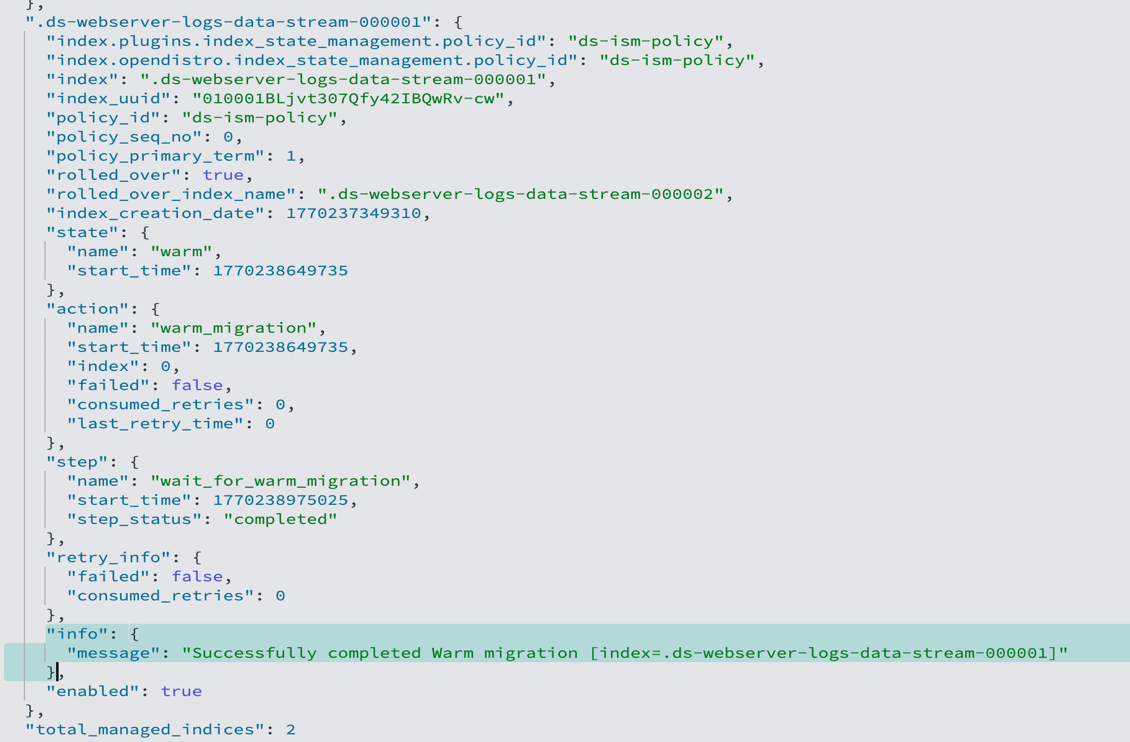
In the "Hot" state, the focus is on write performance. The policy might include a rollover action. Once the rollover occurs, the index enters a "Warm" state. In a production environment on AWS, the warm_migration action is used to move the index to UltraWarm nodes. This transition is critical for cost management. According to AWS data, UltraWarm storage can reduce the cost per gigabyte by up to 90% compared to standard Hot storage, while still providing a performant query experience for historical analysis.
The use of a timestamp field is mandatory for data streams. This field allows OpenSearch to partition data effectively. During a search, the engine uses the timestamp to prune indices that do not contain the requested time range, drastically reducing the number of shards that must be scanned and improving query response times for end-users.

Supporting Data and Industry Implications
The shift toward automated data lifecycle management reflects a broader trend in the cloud-native ecosystem. According to the International Data Corporation (IDC), the Global DataSphere is expected to grow to 175 zettabytes by 2025. A significant portion of this is machine-generated time series data. Without automation tools like ISM, the human cost of managing this data would become a limiting factor for business growth.
Industry experts note that the "set it and forget it" nature of ISM policies aligns with Site Reliability Engineering (SRE) principles. By codifying infrastructure and data management, teams can ensure consistency and reduce the risk of human error, such as accidentally deleting a critical production index or allowing a cluster to run out of disk space due to unmanaged growth.
Furthermore, the integration of data streams with Amazon OpenSearch Service’s security features—such as fine-grained access control and encryption at rest—ensures that as data moves through its lifecycle, it remains compliant with regulations like GDPR or HIPAA. This is particularly important when data is moved to UltraWarm or Cold storage tiers, where it might reside for years.
Broader Impact on Enterprise Strategy
The implementation of data streams and ISM is more than just a technical optimization; it is a strategic move for data-driven organizations. By lowering the cost and complexity of data retention, businesses can afford to keep more historical data online. This "data hoarding" is actually a competitive advantage when it applies to machine learning and predictive analytics. Longer historical datasets allow for more accurate trend forecasting, better anomaly detection, and more thorough post-mortem investigations following security incidents.
Moreover, the performance gains realized from distributing the load across backing indices mean that developers can build more responsive dashboards in OpenSearch Dashboards. When an executive or a security analyst runs a query, they receive results in milliseconds rather than minutes, leading to faster decision-making and quicker incident response.
Conclusion
The combination of data streams and Index State Management in Amazon OpenSearch Service represents a significant leap forward in the maturity of log and metric management. By abstracting the complexities of index management and automating the lifecycle of data, AWS has provided a path for organizations to scale their observability platforms infinitely.
As data volumes continue to surge, the ability to balance performance, cost, and operational simplicity will distinguish successful digital enterprises from those overwhelmed by their own data. Implementing these patterns ensures that the infrastructure remains resilient, the costs remain predictable, and the data remains a valuable asset rather than a mounting liability. For organizations still struggling with single-index bottlenecks and manual cleanup scripts, the migration to data streams and ISM is not just a recommendation—it is a necessity for modern cloud operations.