Optimizing Cloud Infrastructure Costs with New Amazon Kinesis Data Streams Warm Throughput Scale-Down Capabilities

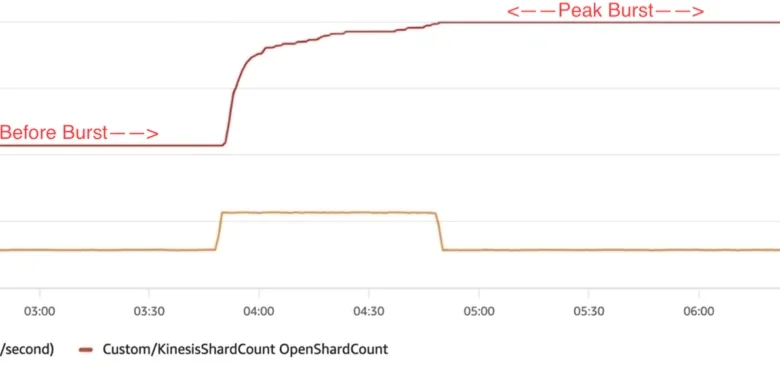
Amazon Kinesis Data Streams has introduced a significant enhancement to its On-demand Advantage (ODA) mode, providing users with the ability to proactively scale down ingest capacity following transient traffic spikes. This update addresses a long-standing challenge for cloud architects managing high-volume data pipelines: the persistence of excess shard capacity long after a surge in data ingestion has subsided. By allowing users to manually adjust the "warm throughput" setting, AWS provides a more granular level of control over both operational performance and the associated costs of downstream resources.
The Challenge of Transient Throughput Bursts
Cloud-native applications often face unpredictable, non-linear traffic patterns. Whether it is a global retailer hosting a flash sale, a logistics firm synchronizing IoT sensor telemetry, or a financial institution performing a bulk database migration, streaming workloads frequently experience intense, short-lived peaks. Under standard Amazon Kinesis On-demand mode, the service automatically scales to accommodate these bursts by splitting shards. While this ensures that no data is lost during peak periods, the architecture historically lacked an efficient mechanism to shrink that capacity once the traffic returned to baseline levels.
This "sticky" capacity creates several secondary challenges. For many organizations, the primary concern is not just the Kinesis stream itself, but the knock-on effect on downstream consumers. For example, AWS Lambda functions configured to consume data from Kinesis often utilize a parallelization factor linked directly to the number of shards. If a stream scales from 100 to 150 shards during a burst, the Lambda consumer footprint increases by 50 percent. When the traffic subsides, the Lambda function continues to scale with those 150 shards, leading to unnecessary compute expenses, increased competition for concurrency quotas, and inefficient processing of small batches.
Furthermore, the Kinesis Client Library (KCL) faces increased overhead. Because KCL maintains state via leases in Amazon DynamoDB—one lease per shard—the persistence of excess shards forces the library to perform unnecessary scans, renewals, and checkpoints. This operational tax can degrade the overall performance of the streaming application, adding latency to data processing cycles that are no longer benefiting from the high-throughput capacity.
Chronology and the Evolution of On-Demand Scaling
The trajectory of Amazon Kinesis has been defined by a transition from manual provisioning to automated, intelligent scaling. Historically, Kinesis streams required manual shard management, where engineers had to forecast capacity and adjust shards via the API or console. The introduction of On-demand mode was a major paradigm shift, offloading the burden of capacity management to AWS.
However, the "set it and forget it" nature of On-demand mode left power users desiring more control. In response, AWS introduced On-demand Advantage, a feature set designed for predictable traffic patterns that require instant throughput increases. The latest update, launched in July 2026, completes the bidirectional loop. By enabling the scale-down of warm throughput, AWS has finally bridged the gap between automated scaling and manual efficiency, giving developers the ability to treat stream capacity as a dynamic, rather than static, resource.
Mechanics of the Scale-Down Process
The implementation of warm throughput scale-down is designed to be both flexible and safe. When a user updates the warm throughput setting to a lower value, Kinesis Data Streams performs a validation check. The system calculates the required capacity as the greater of two values: the newly requested warm throughput value or the actual peak ingest throughput observed by the stream over the preceding 60 minutes.
This logic acts as a safety valve. If an engineer attempts to reduce capacity to a level insufficient for current traffic, the system rejects the reduction or maintains the minimum required to prevent data loss. This ensures that the stream remains resilient even if the user incorrectly estimates the required capacity. The process is asynchronous, meaning the stream remains available and continues to process data throughout the transition. Once the configuration is updated, the stream initiates the merging of shards to consolidate the infrastructure, eventually reaching the requested capacity.
Economic and Technical Implications
For enterprise-scale deployments, the financial implications are measurable. By reducing the number of shards, organizations can optimize their spending on downstream resources. The reduction in concurrent Lambda executions or EC2-based consumer instances directly translates into a lower monthly AWS bill. Additionally, the reduction in DynamoDB lease management activity minimizes the read/write unit consumption for metadata tracking, further lowering costs.
From a performance perspective, the implications are equally significant. Smaller shard counts often lead to more efficient batching in downstream analytics engines like Amazon Managed Service for Apache Flink or Amazon OpenSearch Service. When data is aggregated into fewer, more heavily utilized shards, consumers can process larger records per batch, reducing the overhead of per-request processing and improving overall system throughput.
Monitoring and Governance
Effective management of this feature relies heavily on observability. AWS has provided clear pathways for monitoring, primarily through Amazon CloudWatch. To manage the scale-down process, teams should prioritize three metrics: IncomingBytes, IncomingRecords, and WriteProvisionedThroughputExceeded.
A non-zero value for WriteProvisionedThroughputExceeded immediately following a scale-down operation is the primary indicator that the stream has been throttled due to insufficient capacity. This serves as a critical feedback loop for engineers. Furthermore, because OpenShardCount is not a standard CloudWatch metric, users are encouraged to utilize the DescribeStreamSummary API. Integrating this API into automated monitoring scripts or custom dashboards allows teams to visualize the relationship between traffic volume and shard count in real-time.
Best Practices for Implementation
To maximize the benefits of warm throughput scale-down, AWS recommends a systematic approach:
- Establish a Baseline: Before applying scale-down, observe your stream’s traffic patterns for at least 24 hours to understand the difference between sustained baseline traffic and transient spikes.
- Use Automation: Avoid manual intervention where possible. Integrate the
update-stream-modeAPI call into your CI/CD pipelines or event-driven automation (e.g., an EventBridge rule triggered by a CloudWatch Alarm) to scale down capacity during known low-traffic windows. - Monitor Throttling: Always monitor the
WriteProvisionedThroughputExceededmetric after any scale-down operation. If throttling occurs, increase the warm throughput immediately to restore performance. - Evaluate Downstream Costs: Analyze the cost-to-performance ratio of your consumers. If your consumer is not resource-constrained, the operational complexity of scaling down may outweigh the cost savings.
- Test in Non-Production: Validate the behavior of your specific consumer architecture (e.g., KCL or Lambda) in a staging environment to ensure that the shard-merging process does not trigger unnecessary consumer restarts or data processing gaps.
Official Perspective and Industry Context
While AWS has not issued a specific statement regarding the long-term roadmap for this feature, the release aligns with the company’s broader strategy of "finops" (financial operations) enablement. By providing tools that allow users to programmatically manage their cloud consumption, AWS is positioning itself to support more cost-sensitive enterprise environments.
Industry analysts suggest that this release is a direct response to the increasing complexity of serverless architectures. As companies move away from monolithic infrastructure toward granular, event-driven systems, the ability to fine-tune the "pipes" connecting these systems becomes critical. The warm throughput scale-down is viewed as a mature, necessary step in the evolution of managed streaming services, reducing the cognitive load on DevOps teams while simultaneously providing the levers required to optimize cloud spend.
Conclusion
The addition of warm throughput scale-down to Amazon Kinesis Data Streams is a vital upgrade for organizations managing dynamic data workloads. By providing a safe, automated way to reduce capacity, AWS has enabled users to maintain the agility of On-demand mode while reclaiming the efficiencies lost to over-provisioning. For organizations operating at scale, this feature offers a path toward more predictable, cost-efficient, and performant data pipelines. As cloud-native architectures continue to demand higher levels of granularity, such features will remain central to the ongoing optimization of distributed systems.