Amazon Web Services secures its sixteenth consecutive year as a leader in the 2026 Gartner Magic Quadrant for Strategic Cloud Platform Services

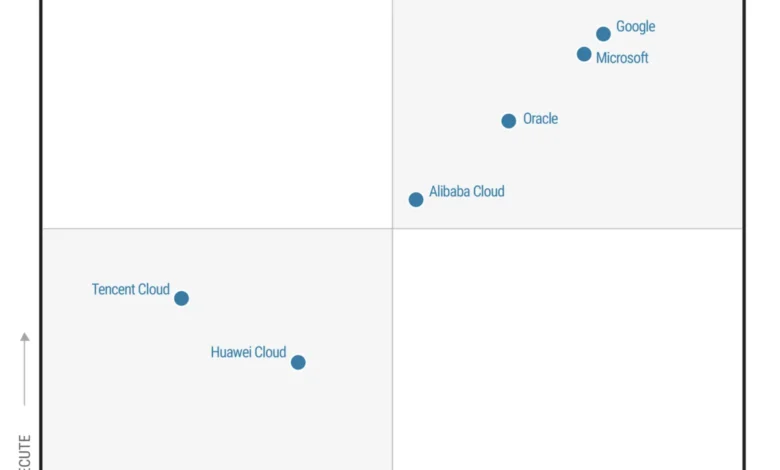
On September 1, 2026, research and advisory firm Gartner released its latest Magic Quadrant for Strategic Cloud Platform Services (SCPS), confirming Amazon Web Services (AWS) as a market leader for the sixteenth year in a row. This sustained positioning marks a significant milestone in the evolution of the cloud computing industry, with AWS once again securing the highest placement on the Ability to Execute axis. The report serves as a benchmark for enterprises evaluating the maturity, scalability, and strategic alignment of their cloud providers, particularly as the industry shifts from general-purpose cloud adoption to the intensive demands of agentic AI.
A Legacy of Market Leadership
The Magic Quadrant for Strategic Cloud Platform Services is widely regarded as the definitive evaluation of the global cloud landscape. AWS has maintained a continuous presence in the Leaders quadrant since the inception of this specific research series. This consistency underscores the company’s ability to pivot its infrastructure strategy to meet shifting technological paradigms—from the early days of basic compute and storage utility to the current era of complex, large-scale machine learning deployments.
The 2026 report evaluates vendors based on their completeness of vision and their ability to execute against that vision. Gartner’s assessment highlights the shift in what constitutes a "strategic" platform. Where previous years prioritized migration and cost-efficient scaling, the current research emphasizes data governance, interoperability, and the infrastructure requirements for autonomous AI agents. By placing AWS at the pinnacle of the Ability to Execute axis, Gartner acknowledges the company’s massive global footprint, its deep integration of open standards, and its aggressive expansion of services designed to support the next generation of generative AI.
Chronology of Cloud Evolution
To understand the significance of this 16-year run, one must look at the chronology of the cloud era. AWS launched its first services in 2006, effectively pioneering the public cloud model. By 2010, the industry began to solidify, with enterprises moving beyond experimental workloads to mission-critical applications. During the 2010s, AWS focused on building a global network of data centers, launching specialized database services like DynamoDB, and refining its serverless capabilities.
Entering the 2020s, the focus moved toward hybrid cloud and edge computing. The 2026 report marks a departure from these themes, focusing heavily on the "Agentic Era." Industry analysts note that we are currently in the third major phase of cloud computing: the transition from human-directed computing to machine-directed, or agentic, systems. In this model, AI agents perform tasks on behalf of users, requiring an underlying infrastructure that is not only high-performing but also capable of managing massive, context-rich data flows in real-time.
The Data Foundation Mandate
A critical finding in the 2026 report is the correlation between AI success and the robustness of an organization’s data strategy. Modern AI agents are not merely passive tools; they are active participants in business workflows. They generate between 10 and 100 times more queries than human operators, creating a significant strain on traditional database architectures.
AWS has responded to this challenge by pivoting its architecture toward an "open data foundation." This strategy is centered on Apache Iceberg, an open-table format that has become the de facto standard for data lakehouse architectures. By supporting Iceberg natively across its stack—including Amazon S3, Amazon Redshift, and AWS Glue—AWS is attempting to eliminate the data silos that historically hampered AI performance.
Industry data suggests that organizations relying on disjointed data lakes often face "contextual decay," where AI agents fail to retrieve accurate information because the data lacks shared governance. By integrating native Iceberg compatibility into every layer of its stack, AWS aims to provide a unified, governed environment where agents can discover and process information regardless of where it resides.
Technical Infrastructure and Agentic Readiness
The shift to agentic AI requires more than just storage; it requires new ways of interacting with data. AWS has introduced several key technologies to address this, most notably the AWS MCP (Model Context Protocol) Server. This component standardizes how agents discover and authenticate with organizational data, effectively providing a secure, governed bridge between the AI agent and the enterprise’s private data stores.
Furthermore, the introduction of "AWS Context" represents a strategic move to turn raw data into actionable knowledge. By mapping relationships between data points into a knowledge graph, the service provides agents with the semantic understanding necessary to make reliable decisions. This is complemented by advancements in storage, such as S3 Vectors and the SageMaker lakehouse architecture, which reduce the latency of vector search operations. The ability to perform vector search across billions of records at microsecond latency is no longer a luxury but a requirement for production-grade AI, and AWS’s integration of vector capabilities into Aurora, DynamoDB, and ElastiCache demonstrates an effort to move AI intelligence closer to the data source.
Broader Implications for the Enterprise
The recognition of AWS as a leader has broader implications for the CIO and the enterprise software market. Firstly, it reaffirms the dominance of hyperscale cloud providers in the AI race. Smaller, niche players face the significant challenge of replicating the scale of infrastructure that AWS has cultivated over two decades.
Secondly, the emphasis on open standards in the 2026 report signals a shift in enterprise preference. For years, "vendor lock-in" was a primary concern for cloud architects. AWS’s strategic shift toward Apache Iceberg, PostgreSQL, and other open-source protocols reflects a pragmatic approach to satisfying enterprise demands for flexibility. By allowing customers to build on open foundations, AWS reduces the risk of long-term dependency while maintaining the competitive advantage of its proprietary, high-performance engines.
However, the report also serves as a warning to enterprises: infrastructure is only part of the equation. Even with a world-class platform, the burden of governance remains with the user. The report highlights the importance of AWS Lake Formation and Glue Data Quality, tools that provide the necessary security, lineage, and access controls required for production AI. Companies that fail to implement these governance layers at the outset of their AI initiatives are likely to encounter significant performance and compliance roadblocks.
Looking Ahead
The 2026 Gartner Magic Quadrant for Strategic Cloud Platform Services is a testament to the maturation of the cloud market. While the foundational services—compute, storage, and networking—remain the bedrock of the internet, the competitive edge in the coming years will be defined by how well a provider manages the intersection of data, governance, and AI.
For AWS, the challenge over the next several years will be maintaining this leadership position in an increasingly fragmented market. As enterprises move toward multi-cloud and sovereign cloud models, the company must continue to offer interoperability without compromising the performance of its own native services. The 16-year leadership streak suggests that AWS has the operational discipline to handle this transition, but the speed of AI innovation means that the margin for error is narrower than ever.
As Gartner noted, their publications consist of professional opinions and should be evaluated within the context of the entire research document. Users are encouraged to conduct their own due diligence, as the "Leader" designation is a measure of market position rather than a guarantee of suitability for every specific organizational requirement. Nevertheless, for stakeholders involved in digital transformation, the 2026 report provides a clear roadmap of where the industry is heading: toward a future where data is fluid, intelligent, and, above all, the primary driver of enterprise value.