Talk Python To Me Episode 553 Features Special Crossover with Python Bytes to Unveil Essential Developer and Business Owner Toolchains

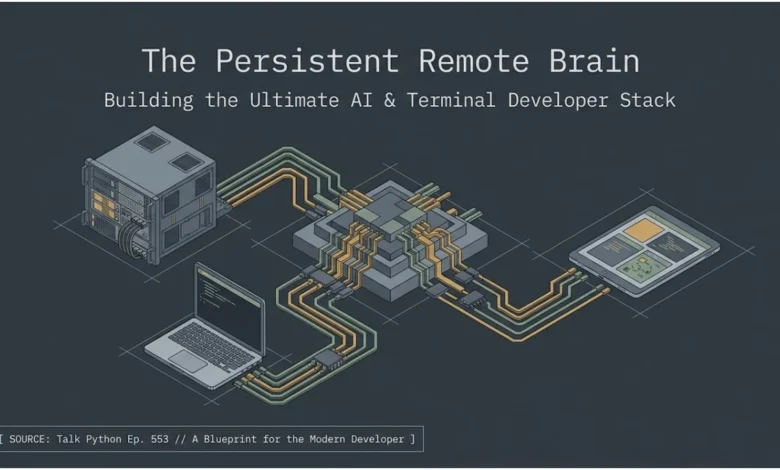
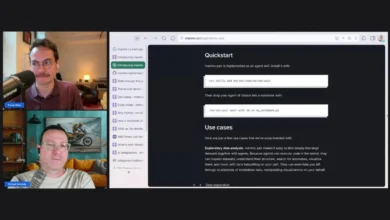
In a special crossover episode, Michael Kennedy, host of the long-running podcast Talk Python To Me, welcomed Calvin Hendryx-Parker as the newly appointed co-founder and co-host of the companion show Python Bytes. Broadcast as episode 553 of Talk Python To Me and originating from Python Bytes episode 484, the transition marks a significant milestone for the popular programming and data science audio network following the departure of longtime co-host Brian Okken. To commemorate the new era of the podcast, the hosts curated an extended, introspective episode titled "All Our Tools," focusing on the indispensable utility software, command-line interfaces, artificial intelligence agents, and networking infrastructure they rely on for daily software engineering and business operations.
The Evolution of the Python Bytes Co-Hosting Team
The transition brings Hendryx-Parker, a prominent figure in the Python ecosystem and software consultancy space, into a permanent co-hosting role alongside Kennedy. The pair decided to forgo traditional news aggregation for the milestone episode, opting instead for a deeper dive into their personal and professional developer workflows. Both hosts noted that selecting a definitive list of favorite utilities proved challenging, given the endless proliferation of modern developer tooling. However, the resulting conversation highlighted a clear thematic consensus: a heavy emphasis on terminal-first workflows, robust AI agent harnesses, secure remote connectivity, and high-performance system configuration.
Terminal-First Development and Advanced Agentic Harnesses
A primary focus of the discussion centered on the resurgence of terminal-centric workflows augmented by modern artificial intelligence. Hendryx-Parker introduced "Pi," an open-source, terminal-first coding agent harness designed to provide developers with complete control over their programming workflows. Unlike heavily opinionated integrated development environments (IDEs) or managed cloud platforms, Pi allows users to bring their own language models—ranging from Anthropic Claude and OpenAI offerings to local open-weights models running via Ollama—while offering first-class session management, including branching and time-travel capabilities to backtrack from unproductive code generations.
To complement Pi, Hendryx-Parker detailed his adoption of "Superpowers," a lightweight specification-driven development framework built upon markdown-based skills. The tool orchestrates a structured software development life cycle encompassing brainstorming, planning, test-driven development (TDD) with automated red-green verification, code review, and git integration. By keeping the underlying components transparent and customizable on the local file system, the combination of Pi and Superpowers offers power users an unconstrained environment for rapid prototyping and personal utility development, such as custom CRM synchronization tools.
Kennedy expanded on the terminal discussion by highlighting "Warp" (warp.dev), a GPU-accelerated, modern terminal emulator featuring built-in predictive line completion and team collaboration capabilities. While acknowledging the growing trend of integrating AI features directly into terminal emulators, Kennedy emphasized that many developers continue to rely on foundational layers like Oh My Zsh and Starship for cross-shell prompt customization, git status tracking, and virtual environment awareness. The hosts also praised "pls," a modern, prettier alternative to the standard ls command that incorporates rich file type icons and git status indicators directly into directory listings.
Modernizing the Workstation: Performance, Dictation, and Markdown
Performance emerged as a critical metric for maintaining engineering velocity. Drawing parallels to high-performance Python tooling like uv and Ruff, the hosts argued that minimizing latency in fundamental tools—such as GPU-accelerated terminal emulators like Kitty—prevents cognitive friction during complex problem-solving. Kitty’s built-in window multiplexing and cross-platform consistency across macOS, Linux, and Windows allow engineers to maintain identical workspace environments regardless of hardware.
For mobile and remote workflows, Hendryx-Parker recommended "Blink Shell," an advanced terminal and Mosh (Mobile Shell) client for iOS and iPadOS. Combined with "tmux" for session persistence and detachment, Mosh enables developers to maintain stable SSH connections across unreliable Wi-Fi networks, putting devices to sleep, and transitioning between hardware form factors like a primary desktop and an iPad.
Another major operational efficiency highlighted during the episode was the integration of voice dictation and local speech-to-text processing. Hendryx-Parker detailed his daily reliance on "MacWhisper," a macOS application powered by OpenAI’s Whisper models and NVIDIA’s Parakeet speech recognition engines. Operating locally for complete privacy, the software supports push-to-text dictation across any application field, batch transcription of audio and video files, and LLM-powered post-processing to automatically format dictated text into polished emails or documentation. For cross-platform users seeking open-source alternatives, "Handy" provides similar Whisper-based dictation capabilities across Windows, Linux, and macOS.
For document management, Kennedy and Hendryx-Parker discussed the friction-free viewing of Markdown files. While Kennedy favors Typora for its seamless WYSIWYG toggling, the conversation underscored how technical documentation has evolved to support modern publishing frameworks. Kennedy highlighted his recent migration of personal open-source library documentation to structured sites built with Quarto and the "Great Docs" framework, emphasizing the importance of providing comprehensive API references, changelogs, and LLM-friendly documentation structures to train coding agents effectively.
Secure Remote Access and Infrastructure Security
Addressing the security implications of maintaining powerful local development servers, the hosts explored the role of overlay networks in modern infrastructure management. Hendryx-Parker and Kennedy advocated for tools like Tailscale to establish secure, encrypted mesh networks across disparate workstations, home servers, and cloud instances without exposing vulnerable ports—such as SSH port 22—to the public internet. By utilizing secure exit nodes and avoiding direct port forwarding, developers can safely access resource-intensive local hardware running large language models (LLMs) or databases from remote locations while maintaining strict perimeter security.
Industry Implications and the Rapid Pace of AI Tooling
The conversation concluded with a broader reflection on the rapidly shifting landscape of artificial intelligence in software engineering. Discussing recent industry developments, including the high-profile release and subsequent accessibility constraints surrounding advanced reasoning models like Anthropic’s Fable and Mythos, the hosts debated the balance between safety regulations and developer access. While acknowledging the profound capabilities of state-of-the-art AI systems in identifying vulnerabilities and accelerating complex migrations, both hosts agreed that the software engineering industry is entering a transitional phase. This phase increasingly relies on specialized small language models, rigorous specification-driven workflows, and highly optimized, privacy-conscious local toolchains to empower developers without sacrificing control or security.
Related posts: