The Python Toolchain in 2026: How Artificial Intelligence Has Completely Rewritten the Development Stack

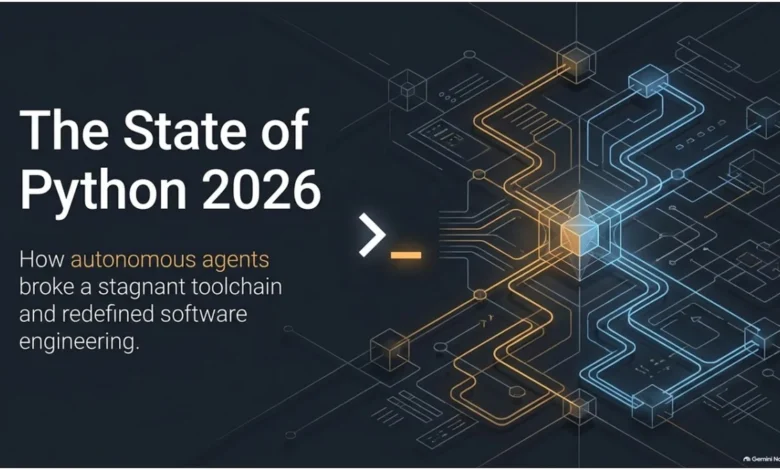
For decades, the Python developer ecosystem possessed a comfortable, well-established equilibrium. Whether a programmer was building enterprise web applications, data science pipelines, or cloud infrastructure, the choices for frameworks, package managers, and editors felt settled. A developer typically chose PyCharm or VS Code, relied on pip or poetry for dependency management, and turned to PostgreSQL or MongoDB for data persistence. Today, artificial intelligence has fundamentally upended nearly every one of those long-standing choices, creating a volatile yet incredibly productive landscape for software engineers.
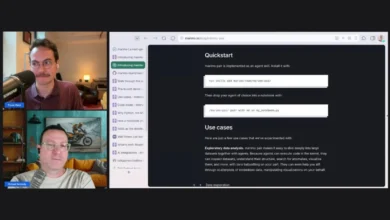
On a recent episode of Talk Python To Me (Episode 566, recorded October 1, 2026), host Michael Kennedy convened a panel of industry experts to take stock of the state of the art in Python development for 2026. The panel featured Calvin Hendryx-Parker, CTO and co-founder of Six Feet Up; Pat Decker, a DevOps engineer at Hibu; Reuven Lerner, a veteran Python trainer with 15 years of experience; and Sydney Runkle, open-source product manager at LangChain. Their conversation illuminated how generative AI and autonomous agents have transformed foundational developer tooling, shifting the paradigm from manual syntax authoring to AI-driven orchestration.
The Evolution of Development Environments and the Rise of Agentic Coding
The most dramatic shift in the modern Python stack revolves around where and how code is actually written. Traditional integrated development environments (IDEs) like PyCharm and VS Code, which dominated developer surveys for years, now share space—and in some cases, are being bypassed entirely—by terminal-native AI harnesses and agent-driven workflows.
During the panel discussion, Sydney Runkle revealed a workflow shift that highlights just how far the industry has evolved. While she previously relied heavily on PyCharm and standard IDEs, the majority of her daily development work now happens directly inside Slack. By utilizing integrated coding agents, Runkle can dispatch tasks, review updates in GitHub, and manage open-source maintenance without ever opening a traditional code editor.
This sentiment was echoed by other panelists who have embraced terminal-centric AI tools like Claude Code, which allows developers to interact with large language models directly in the command line while maintaining full contextual awareness of a codebase. The traditional boundaries of text editing have blurred, with tools like Kitty, Ghostty, and CMUX providing GPU-accelerated performance and multiplexing capabilities tailored specifically to manage multiple concurrent AI agent sessions.
Packaging and Dependency Management: The Omnipresence of uv
While editors and development environments have diversified into conversational and terminal interfaces, dependency management has seen a remarkable consolidation. The introduction of Astral’s uv tool has fundamentally transformed how Python packages, virtual environments, and Python versions are managed.
Historically, Python packaging was notoriously fragmented, prompting countless conference talks and blog posts detailing the complexities of managing pip, pipenv, poetry, and virtual environments. uv, written in Rust, solved these pain points by offering unprecedented speed and a unified interface that operates independently of the local Python installation.
Panelists noted that uv has effectively become the default standard across both enterprise and independent projects. Its ability to handle inline dependency declarations—adhering to standards like PEP 723 for single-file scripts—allows developers and AI agents alike to execute complex Python scripts instantly without manually configuring virtual environments. Furthermore, because uv operates outside the standard Python runtime and can bootstrap Python installations on demand, it has become an indispensable primitive for AI agents that need to dynamically spin up execution environments to test and verify code.
The Shifting Dynamics of Web Frameworks and Type Safety
In the realm of web development, the debate between rapid, typed API development and full-featured traditional frameworks continues to evolve. While Django remains a powerhouse for large-scale enterprise applications with complex relational data models, FastAPI has solidified its position as a go-to framework for high-performance APIs, heavily driven by its native integration with Pydantic.
Pydantic’s data validation and parsing capabilities have found a natural second home in the era of generative AI. Because large language models inherently output unstructured text, Pydantic acts as the crucial deterministic bridge, validating LLM outputs against strict schemas and converting them into structured data models consumable by applications.
Concurrently, type hinting in Python has transitioned from an optional, debated feature to an essential guardrail. With the advent of lightning-fast type checkers like Astral’s ty and Meta’s Pyrefly, static analysis has become instantaneous. Panelists emphasized that while some veteran developers initially resisted type hints in favor of Python’s traditional duck-typing flexibility, type annotations are now vital for keeping autonomous AI agents "on a short leash." Enforcing strict type checking and zero-warning policies during automated agent runs ensures that AI-generated code adheres to robust architectural standards before human review.
Looking Ahead: The Autonomous Development Era
The 2026 Python landscape reflects a maturing industry where the bottlenecks of the past—slow package managers, tedious boilerplate, and manual environment configuration—have been largely automated away. As developers increasingly delegate implementation details to autonomous agents, the core skills of a Python engineer are shifting toward architecture, prompt orchestration, rigorous testing, and system observability.
The conversation on Talk Python To Me underscores a broader industry truth: while the underlying syntax of Python remains as clean and accessible as ever, the ecosystem surrounding it has entered a hyper-accelerated phase. For both seasoned enterprise teams and independent developers, embracing these modern, AI-native tools is no longer optional—it is the baseline for staying competitive in a rapidly accelerating technological world.
Related posts: