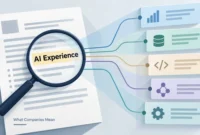
The modern labor market has reached a critical inflection point where artificial intelligence has transitioned from a niche technological curiosity to a fundamental requirement for professional viability. As of mid-2026, data from over 360,000 job postings reveals that AI is the second most requested skill globally, trailing only fundamental communication. This shift represents a seismic change in hiring practices, where the ability to leverage machine learning, prompt engineering, and agentic workflows is no longer reserved for software engineers but has become a baseline expectation across diverse sectors including finance, healthcare, and marketing.
A Historical Perspective on the AI Hiring Surge
The rapid integration of AI into job requirements can be traced back to the widespread public adoption of generative AI tools in early 2023. By January 2024, AI-related skill requirements appeared in approximately 15% of technical job postings. However, the trajectory of this demand accelerated exponentially over the next eighteen months. According to comprehensive analysis by Dice, which reviewed seven million U.S. tech job postings, that figure surged to 75% by mid-2026.
This 144% year-over-year increase, cited in reports from the Bipartisan Policy Center, highlights a frantic scramble among employers to modernize their workforces. The transition has been characterized by a move from experimental pilot programs to full-scale enterprise integration. As companies invest heavily in AI infrastructure, they are finding that their existing human capital often lacks the necessary "AI fluency" to operationalize these tools effectively.
Categorizing the Demand: The Four Pillars of AI Competency
To understand the current hiring landscape, it is necessary to categorize the specific skills employers are prioritizing. These fall into four distinct domains: AI Literacy and Prompt Engineering, Agentic AI and Workflow Automation, Machine Learning Foundations, and AI Governance and Ethics.
AI Literacy and Prompt Engineering represent the most expansive category. It is a baseline expectation for general knowledge workers. It is not merely the ability to interact with chatbots like ChatGPT, but the capacity to evaluate, refine, and critique the outputs generated by these models. Data from LinkedIn’s 2026 labor market report indicates that demand for these skills grew by 70% in the last year. Notably, prompt engineering alone saw a 253% surge in demand. Analysts suggest that the market is currently moving toward a "prompting plus" model, where the value of a candidate lies in their ability to combine AI assistance with deep, existing domain expertise.
The second category, Agentic AI and Workflow Automation, represents the fastest-growing sector of the tech job market. According to the Stanford 2026 AI Index, the share of job postings explicitly mentioning "agentic AI"—systems capable of taking sequences of actions autonomously—rose from under 1% to nearly 19% in a single year. This demand is driven by the rise of Retrieval-Augmented Generation (RAG) and complex agent orchestration frameworks. In this context, employers are seeking professionals who can bridge the gap between technical infrastructure and business requirements, ensuring that automated agents provide measurable value rather than just technical novelty.
Machine Learning Foundations continue to anchor the technical side of the labor market. While these roles are predominantly found in data science and engineering, the focus has shifted toward the machine learning lifecycle. Employers are less concerned with theoretical knowledge and more focused on practical application: model evaluation, fine-tuning, and MLOps. SignalHire’s recruiter data identifies "data engineering" as a top-tier priority, reflecting a reality where firms are struggling with the data pipelines necessary to support their AI ambitions before they can even reach the modeling stage.
Finally, the domain of AI Governance, Ethics, and Responsible AI remains a nascent but critical area of growth. Despite the clear strategic importance of compliance in an era of automated decision-making, it currently appears in only 1.5% of total job postings. This discrepancy suggests a potential "hiring lag," where organizational strategy has not yet caught up to the operational reality of AI deployment. However, at the principal and senior management levels, these skills are increasingly vital, appearing in nearly 40% of leadership-level postings.
The Cross-Functional Shift: AI Beyond the IT Department
One of the most profound revelations of the 2026 data is the decentralization of AI skills. Lightcast research indicates that 51% of job postings requiring AI expertise are located outside of the traditional technology sector. This underscores the normalization of AI as a general-purpose productivity tool.
In fields such as product management, nearly 37% of postings explicitly list AI as a core competency. Similarly, design roles now require AI proficiency in over 23% of cases. The implication for professionals in these non-technical roles is significant: the goal is not to become an AI researcher or developer, but to become an "AI-enabled professional." Employers are searching for individuals who can define the value proposition of AI within their specific industry, effectively acting as the architects of AI-driven business processes.
Financial Implications and Salary Premiums
The market value of AI fluency is clearly reflected in compensation data. Multiple hiring platforms report that positions requiring AI skills command a 28% salary premium over comparable roles without such requirements. For non-technical professionals who successfully integrate AI proficiency into their existing skill set, that premium can reach between 35% and 43%.
Data engineering remains the most lucrative niche, with midpoint salaries hovering around $153,750 in the U.S. market. However, hiring experts caution that these premiums are tied to "outcomes, not tools." Simply listing proficiency in a specific model is rarely sufficient to secure a high-salary role. Instead, successful candidates are those who can demonstrate quantifiable impact—such as using an AI-driven workflow to reduce operational costs or decrease the time required for complex analysis.
Clearing the Misconceptions
Several persistent myths continue to hinder workforce development. The first is the belief that AI proficiency is synonymous with computer programming. While technical roles do require coding, the vast majority of AI-related hiring is focused on literacy, governance, and workflow optimization—skills that do not require an engineering degree. Research suggests that fundamental AI literacy can be achieved through approximately 30 hours of structured, focused practice.
The second misconception is the reliance on standalone certifications. The data consistently shows that employers view AI as an amplifier of existing expertise, not a replacement. A professional with twenty years of experience in supply chain management who learns to use AI for predictive logistics is significantly more marketable than a candidate with an AI certificate but no domain knowledge.
The third, and perhaps most dangerous, misconception is that there is time to wait. The transition from 15% to 75% of technical job postings requiring AI in just 18 months serves as a stark warning. The period during which AI skills act as a "differentiator" is closing rapidly. As the industry matures, these skills are expected to move from a premium qualification to a mandatory baseline, similar to how basic digital literacy or office software proficiency evolved in the late 1990s.
Strategic Recommendations for the Evolving Market
For professionals looking to future-proof their careers, the path forward is clear but requires intentionality. Technical staff should prioritize the development of MLOps, RAG implementation, and agentic framework design. For those in business, management, or creative roles, the focus should be on AI-augmented decision-making, governance, and domain-specific workflow integration.
Ultimately, the 2026 labor market is favoring the "hybrid professional"—the individual who possesses a deep, nuanced understanding of their industry and the technical aptitude to leverage AI to solve complex problems within it. As organizations continue to integrate these systems into their core operations, the demand for this specific combination of human expertise and machine-driven speed will only intensify. The challenge for the modern workforce is to view AI not as an external force to be feared, but as an essential, high-leverage tool that can be mastered to elevate their existing professional contributions.