The landscape of frontend development is in constant flux, with advancements in browser capabilities and evolving best practices continually reshaping how we build web applications. A recent discourse, amplified by an audit of build tool functionalities, questions the continued necessity of traditional build tools for frontend development in the year 2026. While certain historical justifications for these tools, such as vendor prefixing and ES5 transpilation, are rapidly becoming obsolete, others like bundling and minification, remain pertinent. This examination delves into the diminishing role of some build tool features while highlighting those that continue to hold significant value in the modern development workflow, exploring the practical limitations of "no-build" approaches.
The Shifting Sands of Frontend Tooling
For years, build tools have been the bedrock of frontend development. Bundlers like Webpack, Rollup, and Parcel, along with transpilers such as Babel, have enabled developers to write modern JavaScript, utilize CSS preprocessors, optimize assets, and manage complex project dependencies. These tools have been instrumental in abstracting away browser inconsistencies and performance bottlenecks, allowing developers to focus on building features rather than wrestling with the intricacies of browser implementations.
However, the web platform itself has matured considerably. Native browser support for many JavaScript features, once requiring transpilation to older versions like ES5, is now widespread. ECMAScript specifications are adopted more rapidly, reducing the need for tools like Babel to transpile down to universally compatible syntax. Similarly, the complexities of CSS vendor prefixes, a significant pain point in the past, are largely managed by autoprefixers within build pipelines or, increasingly, by browser vendors themselves. Furthermore, CSS features that were once exclusive to preprocessors like Sass, such as nesting and variables, have been incorporated into the CSS specification itself, diminishing the reliance on separate preprocessor tools.

The Enduring Relevance of Bundling and Minification
Despite the obsolescence of some of their functions, build tools continue to offer critical advantages, primarily in the realms of bundling and minification.
Bundling: In the context of frontend development, bundling refers to the process of concatenating multiple JavaScript, CSS, or other asset files into fewer, larger files. This is crucial for performance. Browsers typically have a limit on the number of concurrent HTTP requests they can make. By reducing the number of individual files that need to be fetched, bundling significantly speeds up page load times. This is particularly important for large applications with numerous modules and dependencies. Without bundling, a user’s browser would have to initiate hundreds, if not thousands, of individual requests to download all the necessary code and styles, leading to a drastically slower initial rendering of the page.
Minification: This process involves removing all unnecessary characters from code, such as whitespace, comments, and line breaks, without altering its functionality. The primary goal of minification is to reduce the file size of assets. Smaller files mean faster downloads, which directly translates to a better user experience and improved performance metrics like Time to Interactive (TTI) and First Contentful Paint (FCP). For instance, a minified JavaScript file can be 20-50% smaller than its unminified counterpart, a substantial saving that compounds across multiple files and for users on slower internet connections.
Code Splitting and Tree Shaking: Modern build tools also facilitate advanced optimization techniques like code splitting and tree shaking. Code splitting allows developers to break down their JavaScript bundles into smaller chunks that can be loaded on demand. This means that only the code necessary for the current view or interaction is loaded initially, further improving initial load times. Tree shaking, on the other hand, is a process that eliminates unused code from the final bundle. By analyzing the import and export statements, build tools can identify and remove dead code, resulting in leaner and more efficient deployments. These sophisticated optimizations are difficult, if not impossible, to achieve without the intelligent analysis and processing capabilities of build tools.
The "No-Build" Approach: Promises and Pitfalls
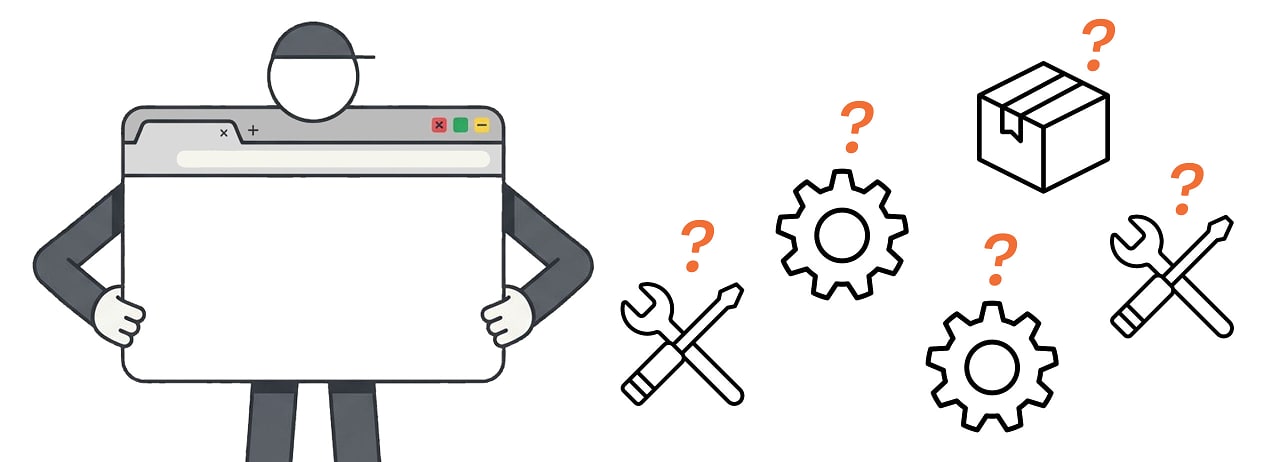
The allure of a "no-build" workflow is understandable. It promises a simpler development experience, faster iteration cycles, and a reduced learning curve, especially for developers new to the complexities of build configurations. The idea is to leverage native browser features and modern JavaScript modules (ES Modules) to load code directly, bypassing the compilation and bundling steps.
However, the practical implementation of a "no-build" approach often encounters significant limitations, especially in production environments. While it might suffice for very small, simple projects or during early prototyping, scaling this approach for larger, more complex applications presents considerable challenges.
Performance Bottlenecks: As mentioned, the lack of bundling and minification in a "no-build" setup can lead to severe performance degradation. The increased number of HTTP requests and larger file sizes can make applications sluggish, particularly for users with limited bandwidth or on mobile devices. Studies by Akamai and others consistently show a strong correlation between page load speed and user engagement, conversion rates, and overall satisfaction. A slow website is a significant deterrent to users.
Dependency Management: Managing dependencies in a "no-build" environment can become cumbersome. While npm or Yarn can still be used to manage packages, integrating them directly into a browser-served application without a build step requires careful consideration of how these packages are loaded and how their own dependencies are resolved. This can quickly lead to a tangled web of script tags and potential conflicts.

Browser Compatibility Gaps: While native browser support for JavaScript is improving, it’s not yet universal for all cutting-edge features. Relying solely on native browser capabilities without transpilation means that older browsers or less common environments might not be able to render or execute the application correctly. This limits the reach of the application and can alienate a portion of the potential user base.
Tooling and Ecosystem: The frontend ecosystem is heavily geared towards build-driven development. Many essential tools, libraries, and frameworks are designed with build processes in mind. Integrating them into a "no-build" workflow might require significant workarounds or might not be feasible at all. For example, server-side rendering (SSR) or static site generation (SSG), which are crucial for SEO and performance in many applications, are deeply intertwined with build tooling.
The Evolving Role of Build Tools and the Greptile Perspective
The ongoing evolution of frontend development necessitates a re-evaluation of the role of build tools. While they may shed some of their historical responsibilities, their core functions of optimization and enabling advanced workflows remain vital. The industry is moving towards more intelligent and configurable build systems that focus on delivering performant, maintainable, and accessible web experiences.
In this context, tools that enhance the development workflow and code quality are gaining prominence. For instance, Greptile’s Trex service exemplifies a new wave of tooling that complements the development process by automating critical aspects of quality assurance. By running PR branches in a sandbox, utilizing browser agents to interact with the UI, and providing visual evidence of issues directly within the pull request, Greptile aims to streamline debugging and improve the overall stability of applications. This type of tooling addresses the practical challenges of delivering high-quality software, regardless of the underlying build setup. It suggests a future where build tools focus on core optimizations, while other specialized services handle aspects like testing, debugging, and deployment automation.

The Case for Polyfills in a Modern Web
The discussion around the necessity of build tools is also intertwined with the broader conversation about browser compatibility and the role of polyfills. Lea Verou, in her recent piece, "In Defense of Polyfills," argues for their continued relevance, pushing back against the notion that they are inherently harmful. This perspective is critical because, despite advancements, complete browser parity is still a distant reality.
What are Polyfills? Polyfills are code snippets that provide modern functionality to older browsers that do not natively support it. For example, if a new JavaScript API is introduced that is not yet widely supported, a polyfill can be implemented to mimic that API’s behavior in older environments.
Why They Still Matter: While the goal is to eventually reach a point where polyfills are no longer necessary, the transition period is often prolonged. Developers need to support a diverse range of browsers and devices, many of which may not be running the latest versions. By using polyfills judiciously, developers can ensure a consistent experience across a broader spectrum of users. Furthermore, even in modern development, certain features might be used in a way that requires a polyfill for specific edge cases or for ensuring backward compatibility with legacy systems.
The "no-build" approach, if it relies purely on native browser features, would struggle to accommodate the need for polyfills without introducing complexity. Integrating polyfills often involves conditional loading or specific build configurations to ensure they are only served to browsers that require them, thereby avoiding unnecessary overhead.

The Future of Frontend Development
The frontend development landscape is not a static entity. It is a dynamic ecosystem shaped by innovation and the continuous pursuit of better performance, developer experience, and user satisfaction. While the specific functions of traditional build tools may evolve, their fundamental purpose of optimizing code for efficient delivery and enabling sophisticated development workflows remains indispensable.
The discourse surrounding "no-build" workflows highlights a desire for simplicity, but it also underscores the enduring challenges of web development: achieving universal browser compatibility, delivering fast-loading applications, and managing complex codebases. As the web continues to evolve, we will likely see a specialization of tooling, with build tools focusing on core optimizations, while other services and libraries address areas like automated testing, debugging, and performance monitoring. The ultimate goal remains the same: to build robust, performant, and accessible web experiences for all users, and for that, a thoughtful and strategic approach to tooling, whether it involves traditional build processes or a hybrid model, will continue to be essential. The future of frontend development lies not in the complete abandonment of tools, but in their intelligent and adaptive application to meet the ever-changing demands of the digital world.