Renowned conceptual artist Carsten Höller has expanded his lifelong exploration of play, architecture, and human emotion with the unveiling of his most ambitious slide installation to date. Titled Mexico City Slides, the permanent monumental artwork is integrated into the heart of the Antara development in Mexico City’s upscale Polanco neighbourhood. Commissioned as part of a major urban regeneration scheme led by local architecture heavyweight Sordo Madaleno alongside its development arm SOMA, the project transforms a corporate and commercial complex into a playground of architectural intervention.
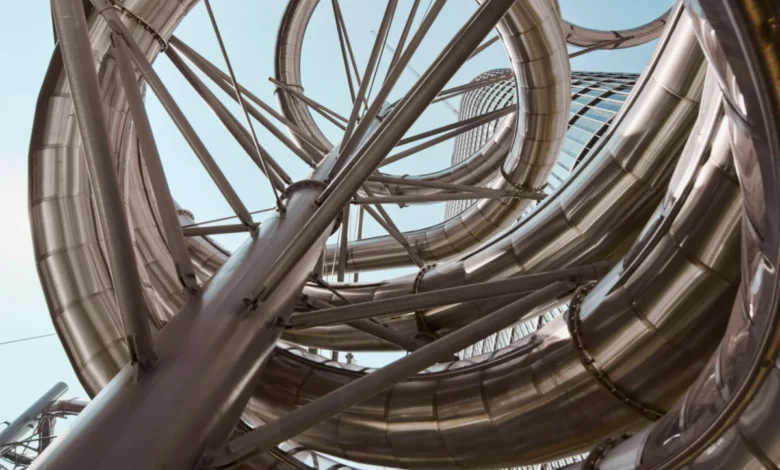
Spanning the open-air courtyards of the district, the installation comprises four distinct metallic slides featuring transparent sections that allow spectators below to catch glimpses of riders hurtling downward. The scale of the intervention is unprecedented within Höller’s expansive global portfolio. The four structures range drastically in dimension, measuring between 12 and 38 meters in height and stretching from 31 to 90 meters in length. By weaving these colossal tubular structures through multiple levels of the built environment, the project bridges the gap between passive architecture and active, bodily engagement.
Architectural Integration and Urban Context
The Mexico City Slides project is centrally positioned within the bustling Colonia Granada district, specifically cascading through the courtyards and structural voids of the mixed-use Antara destination. Curated by Arte Abierto—an independent cultural foundation dedicated to promoting contemporary art within public and private spaces—the installation serves as both a sculptural landmark and a functional transit system.
The site itself is a bustling hub of commerce, hospitality, and corporate enterprise, housing major international tenants such as technology giant Google. Furthermore, the master plan for the district includes a forthcoming 43-storey tower destined to house a luxury Rosewood Hotel in Mexico City. Höller’s slides deliberately intercept this diverse programming, threading through spaces dedicated to retail, work, hospitality, and art.
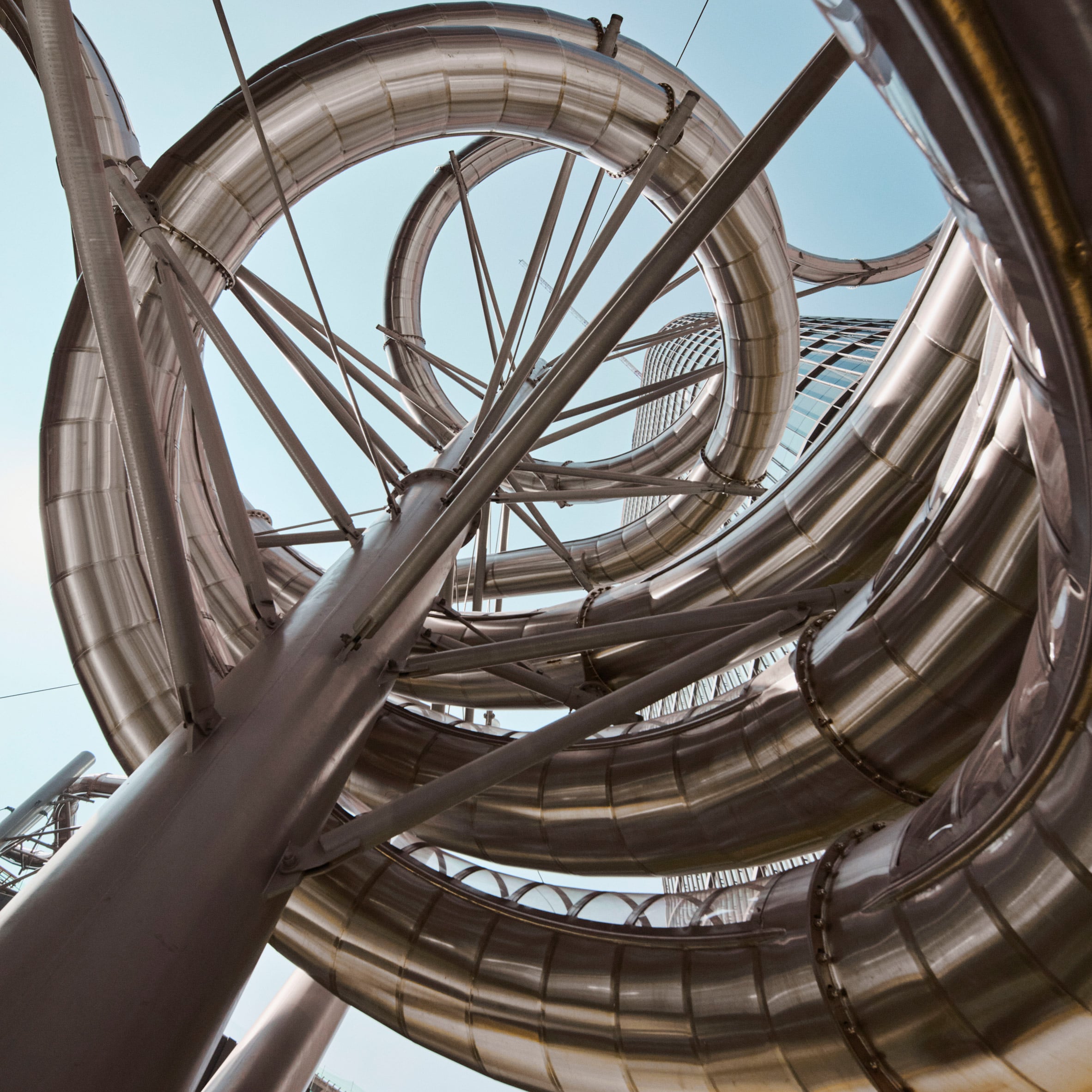
Rather than serving as isolated museum exhibits, the slides act as kinetic connectors. They collect adventurous commuters, shoppers, hotel guests, and art patrons from disparate elevations and deposit them side by side in a central ground-level landing plaza. This deliberate architectural mingling forces strangers into an immediate, shared communal experience, breaking down the rigid social boundaries typically found in high-end commercial districts.
The Psychology of the Slide: Joy, Fear, and the Unknown
Carsten Höller, a former scientist with a PhD in agricultural entomology who transitioned into a celebrated installation artist, has long used slides to investigate psychological states. His works consistently challenge how humans perceive space and their own bodies through interventions that provoke visceral reactions.
Speaking on the conceptual underpinnings of his latest installation, Höller highlighted the paradoxical emotional response generated by the act of sliding. "People sliding from a hotel, from offices, from restaurants, and from an art centre are brought together in the air and land next to each other," Höller stated. He explained that the physical descent forces individuals out of their mundane daily routines, plunging them directly into an "unknown, dreamlike territory of simultaneous joy and fear."
Describing the descent further, Höller characterized the experience as an "existential experience of bare life," comparing it to "a voluptuous panic upon an otherwise lucid mind." This friction between rational, lucid urban existence and sudden, uncontrolled acceleration is a hallmark of Höller’s artistic philosophy. By introducing elements of risk and play into corporate and commercial architecture, the artist encourages a temporary suspension of adult inhibitions, prompting participants to renegotiate their relationship with public space.
A Global Legacy of Architectural Descents
While Mexico City Slides marks a personal milestone as Höller’s largest structural installation of its kind, it builds upon a rich, decades-long history of interactive slide projects executed by the artist across the globe. Höller first began exploring the sculptural and architectural potential of slides in the late 1990s, viewing them as sculptural forms that double as rapid transportation devices and psychological catalysts.
Over the years, his interactive slide experiments have occupied some of the world’s most prestigious cultural and architectural institutions. Notable past iterations include a sprawling installation woven through the interior of a historic Florentine palazzo, and permanent architectural interventions at the renowned Vitra Campus in Weil am Rhein, Germany, where a rotating tower equipped with a massive slide invites visitors to descend from the sky.
Perhaps one of his most high-profile public commissions was completed in London, where Höller wrapped his metallic tubes around the Anish Kapoor-designed ArcelorMittal Orbit tower in Queen Elizabeth Olympic Park. Each of these projects shares a common DNA: an insistence that art should not merely be looked at, but actively experienced, felt, and physically navigated.
Sordo Madaleno and the Evolution of Colonia Granada
The integration of Mexico City Slides into the Antara development underscores a broader trend in Latin American urban design: the conscious blending of commercial architecture with high-impact contemporary art. Sordo Madaleno, one of Mexico’s most influential architecture practices, has played a pivotal role in reshaping the urban fabric of Mexico City, particularly through large-scale master-planning initiatives like the Colonia Granada transformation.
By partnering with cultural curators like Arte Abierto and visionary artists like Höller, developers SOMA and Sordo Madaleno have signaled a shift away from sterile corporate enclaves toward experiential urbanism. In modern dense metropolises, public and semi-public spaces are increasingly required to offer more than just aesthetic appeal or retail utility; they must foster community engagement and memorable psychological encounters.
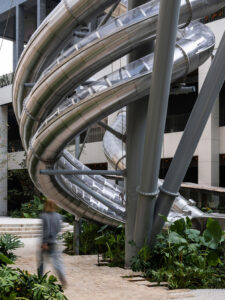
The inclusion of an installation of this magnitude within a mixed-use commercial hub demonstrates how private development can successfully subsidize and incorporate world-class public art. The project reflects a growing appetite among Latin American developers to utilize avant-garde art installations as primary anchors for community building and urban identity.
Broader Implications and Future Outlook
As cities worldwide grapple with the challenges of post-pandemic public life, revitalizing urban spaces through interactive art has emerged as a powerful strategy for driving foot traffic and social cohesion. Mexico City Slides offers a compelling case study in how architecture can transcend its traditional static boundaries to become dynamic, playful, and emotionally resonant.
The long-term implications of Höller’s installation extend far beyond Polanco. By proving that monumental, risk-inducing art can be safely and effectively integrated into high-traffic corporate and hospitality developments, the project sets a new benchmark for urban designers and city planners globally. It challenges the sterile conformity of modern commercial architecture, proving that workplaces, hotels, and retail centers can successfully incorporate elements of wonder, vulnerability, and collective joy.
With photography capturing the sleek metallic tubes cutting through the clean lines of Sordo Madaleno’s architecture—courtesy of Fernando Farfán—the project has already captured international critical acclaim. As visitors continue to test the boundaries of their own comfort zones by plunging from the heights of Colonia Granada’s newest towers, Mexico City Slides solidifies its place not only as Höller’s masterwork, but as a defining monument of contemporary interactive architecture.
Related posts: