Build RAG-ready indexes from Amazon S3 with Amazon OpenSearch intelligent ingestion | Amazon Web Services

The Evolution of the Data Pipeline Challenge
For years, the process of preparing enterprise data for Retrieval Augmented Generation (RAG) and sophisticated enterprise search has been notoriously cumbersome. Traditionally, developers were forced to construct, maintain, and scale complex ingestion pipelines that required multiple distinct stages: document extraction, image processing, content chunking, vector embedding generation, and final indexing. Each of these layers introduced unique infrastructure requirements, scaling complexities, and potential failure points.
Industry analysts have frequently noted that building these pipelines from scratch can consume weeks of engineering time. Beyond the initial setup, the ongoing maintenance of these brittle architectures—ensuring that data remains synchronized as new documents are added—often distracts engineering teams from focusing on their core competency: building high-value generative AI applications. The introduction of intelligent ingestion shifts the paradigm from "pipeline engineering" to "data enablement," allowing organizations to bypass the operational overhead that has historically stifled the adoption of RAG-based systems.
A New Architecture for Intelligent Data Ingestion
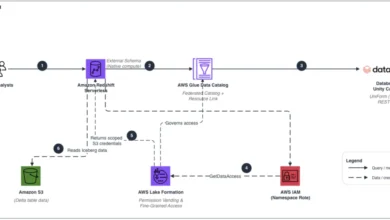
The core innovation of Amazon OpenSearch intelligent ingestion lies in its serverless, fully managed nature. By moving the processing logic inside the OpenSearch Serverless collection, AWS has effectively eliminated the need for users to provision, size, or monitor separate infrastructure for data processing. When a user points the system toward an S3 bucket, the service automatically identifies the data format—whether it be structured JSON or unstructured PDFs, Markdown, or Word documents—and initiates a standardized workflow.
This workflow includes:
- Automatic Discovery: The system scans S3 buckets to identify new or existing content.
- Intelligent Parsing: The engine extracts text and structure from complex document formats.
- Semantic Enrichment: Leveraging Amazon Nova 2 Lite, the system interprets images within documents, transforming visual data into meaningful semantic representations.
- Automated Chunking and Embedding: The service intelligently segments content and generates the vector embeddings required for modern AI search.
By automating these steps, the service ensures that data is not just stored, but "RAG-ready" from the moment it is ingested. This reduces the latency between data creation and availability, a critical requirement for businesses operating in fast-paced sectors such as finance, healthcare, and legal services.
Strategic Flexibility: Jobs vs. Streams
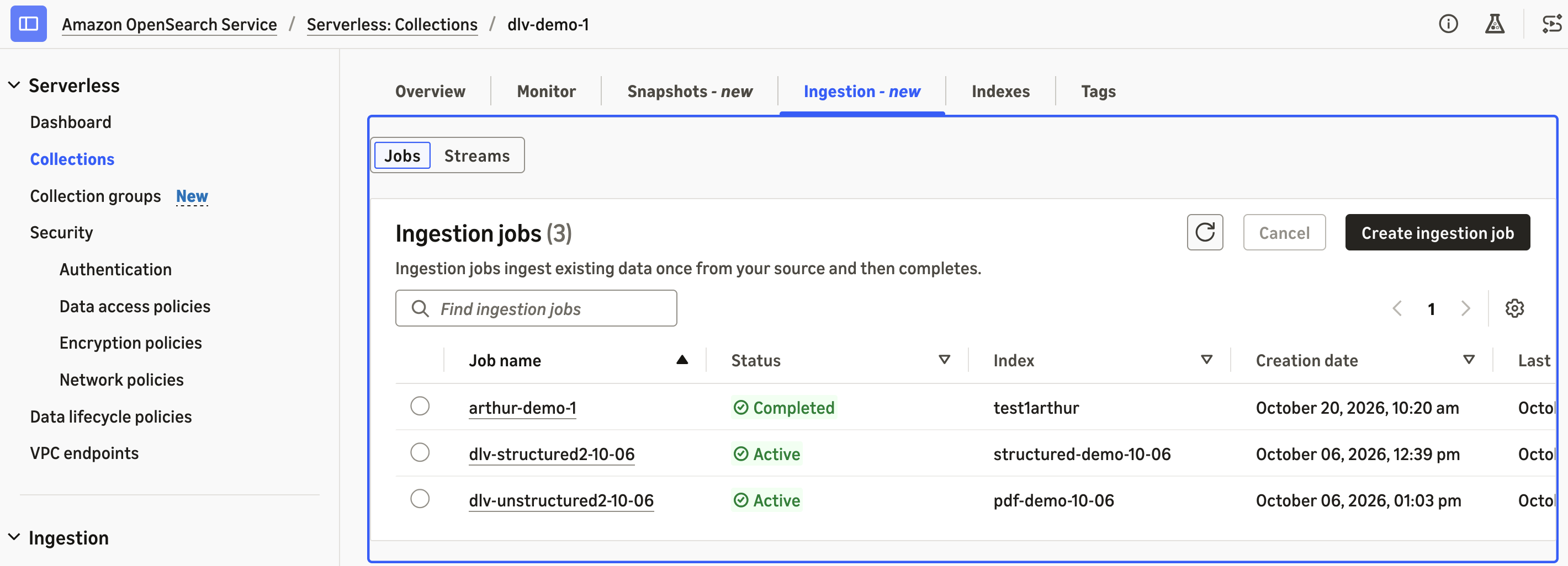
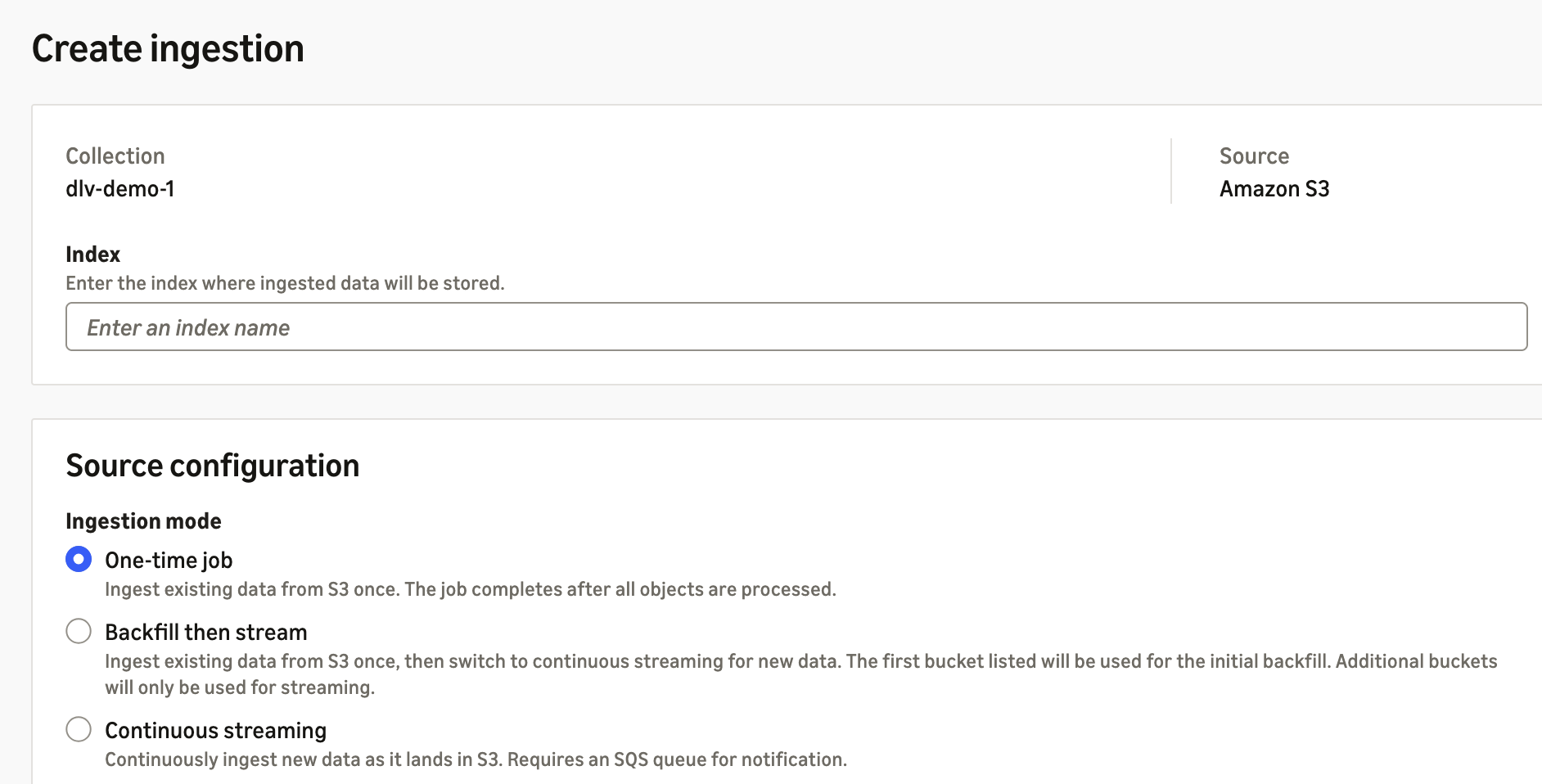
Understanding the diverse needs of modern data environments, the service offers two distinct operational modes: Ingestion Jobs and Ingestion Streams.
Ingestion Jobs are designed for static, point-in-time requirements. This is the ideal tool for organizations performing initial data migrations, backfilling historical document libraries, or establishing proofs of concept for new AI initiatives. Once the designated data has been processed and indexed, the job completes, and the service automatically terminates, ensuring cost-efficiency.
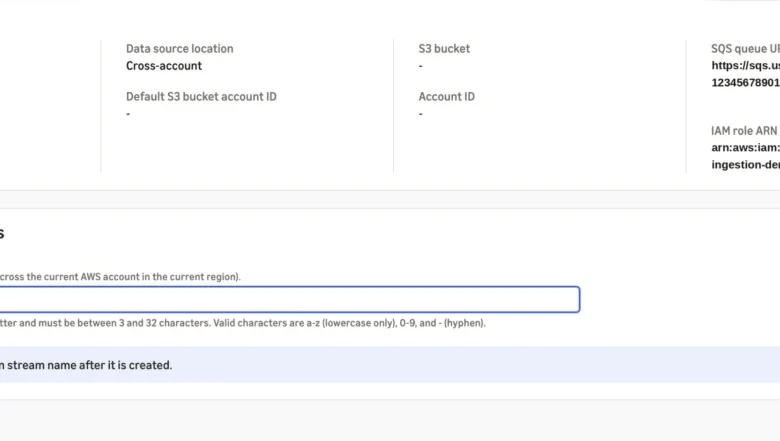
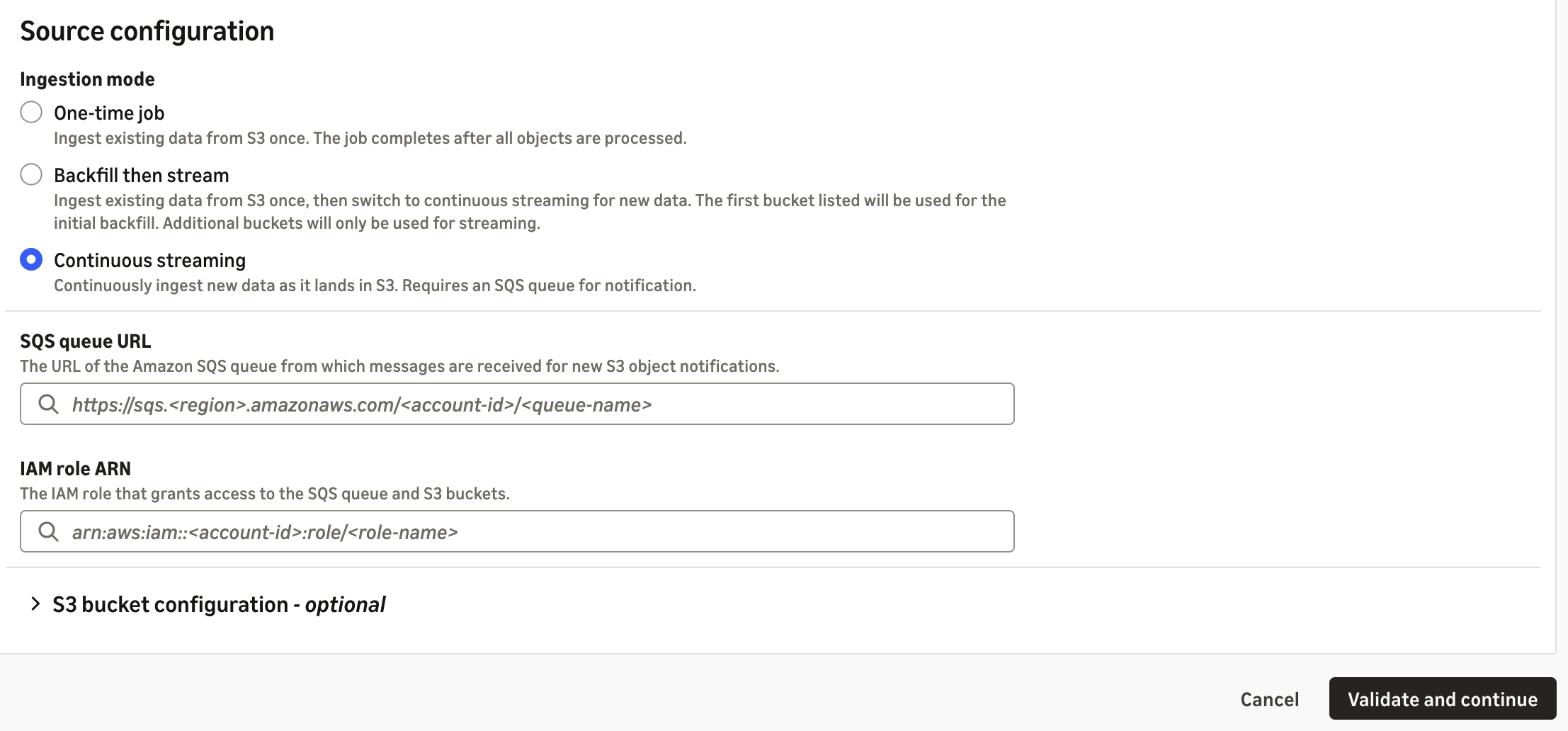
Conversely, Ingestion Streams cater to the reality of dynamic enterprise environments. By monitoring S3 event notifications via Amazon SQS, the streaming capability ensures that the OpenSearch index remains in real-time alignment with the underlying data source. This is essential for knowledge bases that require continuous updates, such as customer support manuals or daily financial audit logs. For organizations transitioning from legacy systems, the "Backfill then stream" option allows for a seamless bridge between past data and future updates, ensuring no interruption in service.
Operational Economics and Cost Transparency
A significant concern for enterprise-scale AI adoption has been the unpredictable cost of data processing. Intelligent ingestion addresses this with a transparent, usage-based pricing model. Structured data processing is charged based on the standard Open Computing Unit (OCU) rate, with billing pausing the moment the job finishes.
For unstructured data, which requires more intensive processing, the costs are similarly tiered and predictable. AWS internal benchmarks indicate that a single OCU can process approximately 600 PDF pages per hour, translating to a cost of roughly $0.40 per 1,000 pages. Furthermore, the integration with Amazon Bedrock for image understanding is priced at standard rates. For example, processing 1,000 images—which consume approximately 0.5 million input and output tokens each—costs roughly $1.40. This level of granular cost visibility is designed to allow organizations to forecast budgets accurately as they scale their AI infrastructure.
Broader Implications for Enterprise AI
The release of this feature reflects a broader industry trend toward the commoditization of infrastructure for Large Language Model (LLM) applications. As the "plumbing" of AI—data ingestion, indexing, and vectorization—becomes automated, the competitive advantage for firms will increasingly shift toward the quality of their data and the sophistication of their prompts and agentic workflows.
By reducing the time-to-market for RAG applications from weeks to mere minutes, AWS is lowering the barrier to entry for small-to-mid-sized enterprises that may have previously lacked the resources to build custom ingestion pipelines. Simultaneously, for large-scale organizations, it enables the rapid prototyping of new AI services across multiple departments without creating redundant infrastructure.
Looking Ahead
The integration of intelligent ingestion into Amazon OpenSearch Serverless (NextGen) is currently available in six supported AWS regions, marking a significant milestone in the maturity of the AWS AI stack. As businesses continue to prioritize data-driven decision-making, the ability to seamlessly bridge the gap between "data at rest" in S3 and "intelligence in use" via generative AI will be a defining factor in digital transformation success.
Engineering teams are encouraged to begin by testing small datasets to validate the workflow before scaling to larger, production-grade document repositories. By offloading the complexity of data parsing and vectorization to the cloud provider, organizations can redirect their talent toward the refinement of search accuracy, user experience, and the development of domain-specific AI models. As the ecosystem matures, the continued convergence of storage, processing, and inference—as demonstrated by this announcement—will likely remain the standard for enterprise AI infrastructure.