The landscape of user experience (UX) design is undergoing a seismic shift, driven by the rapid integration of artificial intelligence (AI) into professional workflows. This evolving dynamic has sparked both excitement and apprehension within the design community, prompting a critical examination of AI’s role and its implications for the future of UX practice. A veteran of the field, with over 25 years of experience observing technological disruptions, has launched a comprehensive series to address these concerns, aiming to provide clarity and practical guidance in a period of significant uncertainty.
The series, titled "UX & AI," is born from a perceived gap between extreme reactions to AI—ranging from uncritical embrace to outright dismissal—and the nuanced, practitioner-level thinking required for effective adaptation. The author, a recognized figure in UX training and leadership with a history of building influential platforms like UXExpert, UXUITrainingLab, and UXTalks, asserts that the current discourse often lacks the grounded analysis necessary for design professionals to navigate this new era. The core question resonating across the industry, from seasoned designers to emerging researchers and strategic leaders, is stark: "What does AI mean for me? For my work? For my value? For my career?" This series endeavors to provide an honest, rather than purely reassuring or frightening, answer.
Spanning ten articles, the "UX & AI" series is structured around four thematic pillars that interweave to provide a holistic perspective. This foundational article addresses a pervasive myth: the notion that AI is poised to replace UX designers entirely. The author contends that while the fear is legitimate, stemming from observable AI capabilities, the underlying narrative is fundamentally flawed.
The Illusion of Replacement: Conflating Tasks with Roles
The pervasive anxiety surrounding AI in UX is understandable. A designer who has dedicated years to honing their skills and reputation might understandably feel a pang of concern when witnessing AI’s rapid advancements. Similarly, a researcher whose professional identity is deeply intertwined with qualitative methodologies may question its future relevance. Design leaders, too, face pressure to justify human roles in an environment where AI can generate outputs like wireframes with unprecedented speed.
However, the author argues that the dominant narrative—that AI will replace UX designers—is built upon a critical "category error": the conflation of discrete tasks with the broader professional role. AI’s ability to perform specific tasks, such as generating wireframes, drafting microcopy, or synthesizing research notes, is often mistakenly extrapolated to signify the obsolescence of the designer’s role.
This is akin to observing a surgical robot’s enhanced precision in making incisions and concluding that surgeons are redundant. The incision is a task. The surgeon’s role, however, encompasses clinical judgment, diagnostic reasoning in complex cases, adaptive decision-making during unexpected findings, and critical communication with patients and their families. These are not tasks but a constellation of expertise, contextual intelligence, ethical responsibility, and human judgment that a machine cannot replicate.
Similarly, a wireframe is a task. The UX designer’s role involves user research to identify the core problems worth solving, systems thinking to understand the cascading effects of design decisions, facilitation to build stakeholder consensus, and the crucial judgment to discern when an AI-generated solution, while appearing technically correct, may be misaligned with specific user needs or contexts. This professional competence is not diminishing; rather, the "work surface" upon which it operates is evolving.
AI as the "Intern": A Reframe for Professional Practice
To offer a more practical and accurate perspective, the author proposes reframing AI tools not as replacements but as akin to a new intern. This "intern" possesses impressive capabilities but also significant limitations, requiring constant direction, evaluation, correction, and accountability from the human professional.
The Intern’s Strengths:
- Speed and Efficiency: AI excels at generating multiple variations of design elements, drafting initial sitemaps, or compiling competitive examples at a speed far exceeding human capacity. This rapid output is a tangible benefit.
- Tirelessness and Objectivity: AI does not experience creative fatigue or emotional attachment to previous iterations, allowing for the exploration of diverse directions without human bias or resistance.
- Vast Knowledge Base: Trained on an immense volume of design documentation, research literature, and best practices, AI can access and synthesize information on an unprecedented scale, providing a broad foundation for design exploration.
The Intern’s Limitations:
- Lack of Embodied Experience: AI has never directly interacted with users in real-world scenarios. It can process vast amounts of research data but cannot replicate the nuanced understanding gained from observing a user struggle with a device in a specific environment, or sensing the subtle social cues that inform user behavior and needs.
- Contextual Deficit: AI struggles with nuanced, situated context. It may generate an onboarding flow, but it cannot inherently grasp the specific privacy concerns of healthcare workers in Tier 3 cities or the cultural sensitivities of users in different regions. This deep, human context is the designer’s unique contribution.
- Absence of Accountability: When a design fails or causes harm, the AI "intern" is not accountable. The professional who guided, evaluated, and ultimately approved the design bears the ethical and professional responsibility.
This "intern" metaphor highlights that AI tools are powerful assistants, capable of augmenting human capabilities, but they fundamentally lack the human qualities of empathy, lived experience, ethical reasoning, and contextual intelligence that are central to effective UX design.
Research Insights: Beyond the Hype
The discourse surrounding AI and job displacement has been amplified by media narratives that prioritize dramatic predictions over rigorous analysis. However, examining actual research findings reveals a more nuanced picture.
Reports from organizations like Nielsen Norman Group consistently indicate that while AI is automating repetitive and execution-heavy tasks, the demand for higher-order UX capabilities is intensifying. The "UX Reset" report, for instance, suggests that the bar for indispensability is rising, favoring practitioners with strengths in strategic research design, cross-functional leadership, and nuanced judgment. Similarly, Optimal Workshop’s research indicates that AI is freeing up researchers from tedious tasks like transcription and initial coding, reallocating human attention to more interpretive, relational, and strategic work. McKinsey’s findings on human-AI collaborative teams corroborate this, showing increased time spent on strategic planning and synthesis.
It is also crucial to distinguish between AI-driven displacement and broader economic factors. While the UX job market experienced contraction in 2024, analyses from sources like ROSSUL attribute this primarily to a post-pandemic economic correction and industry-specific restructuring, with AI often adopted as a convenient, albeit incomplete, explanation for cost-cutting measures.
Skills Amplified by AI, Not Diminished
The integration of AI does not uniformly devalue human skills. Instead, it highlights a bifurcation: skills closely aligned with pattern generation and repeatable execution are becoming commoditized, while those that represent the core of human-centric design are becoming more valuable.
Skills AI Makes More Valuable:
- Critical Thinking and Problem Framing: The ability to identify the right problems to solve, rather than just executing solutions.
- Empathy and User Understanding: Deep, qualitative insights into user needs, motivations, and lived experiences.
- Systems Thinking: Comprehending the interconnectedness of design decisions within larger product and organizational ecosystems.
- Ethical Reasoning and Responsibility: Ensuring designs are equitable, accessible, and promote user well-being.
- Strategic Vision and Leadership: Guiding teams, aligning stakeholders, and shaping the long-term design direction.
- Creativity and Innovation: Developing novel solutions and pushing the boundaries of what is possible.
- Facilitation and Collaboration: Building consensus and fostering effective teamwork across disciplines.
- Contextual Intelligence: Understanding and adapting designs to specific user, cultural, and environmental contexts.
These are the competencies that AI cannot replicate and that become the primary differentiators in an AI-augmented design landscape.
Common Pitfalls in AI Adoption
Despite the potential for augmentation, many designers are making critical mistakes in their approach to AI:
- Blindly Trusting AI Outputs: Accepting AI-generated content without critical evaluation or validation against user needs and contextual realities.
- Over-reliance on Prompt Engineering: Focusing solely on crafting prompts, neglecting the deeper design thinking and judgment required to shape AI outputs effectively.
- Treating AI as a Replacement for Human Judgment: Substituting AI’s generative capabilities for the essential human discernment that ensures ethical, empathetic, and effective design.
These missteps can lead to flawed designs, missed opportunities, and a degradation of professional practice, causing more harm than the disruption AI initially presents.
The Art of Human-AI Collaboration
Successful integration of AI into UX workflows is not about automation but about collaboration. Teams that excel are those that:
- Leverage AI for Efficiency: Using AI for tasks like transcription or initial coding to free up human time for deeper analysis and interpretation.
- Augment Exploration: Employing AI to generate a wider range of design options, expanding the solution space for human designers to refine and select from.
- Prioritize Human Oversight: Maintaining human judgment at the center of the design process, using AI as a powerful tool to support, not supplant, critical decision-making.
- Invest in Strategic Work: Reallocating time saved by AI towards higher-value activities like stakeholder education, cross-functional collaboration, and building a robust design culture.
This approach recognizes that the most effective design teams are not choosing between humans and AI but are creating symbiotic workflows where AI amplifies human capabilities.
Applying a Framework: LucyUX in the Age of AI
The LucyUX framework—Listen, Understand, Conceptualize, Yield—offers a valuable lens through which to approach the AI integration question.
- Listen: Designers must actively listen to the capabilities and limitations of AI tools, understanding their strengths and weaknesses.
- Understand: Grasping the fundamental difference between AI’s task-oriented output and the holistic, context-aware nature of human design judgment is crucial.
- Conceptualize: Envisioning how AI can be integrated as a co-pilot or assistant, rather than a replacement, to enhance the design process.
- Yield: Producing designs that are not just technically sound but also deeply empathetic, ethically responsible, and contextually relevant, leveraging AI to achieve these goals more effectively.
When AI is treated as the primary designer, the outcome is invariably detrimental. Products may ship with interfaces that exclude significant user populations, research findings can be flattened into superficial generalities, and design decisions may optimize for metrics at the expense of genuine user well-being. The confidence projected by AI-generated data can become a trap if not tempered by human observation and ethical scrutiny.
Actionable Steps for Designers This Week
To move from understanding to practice, designers are encouraged to engage in a concrete exercise this week:
- Identify a recurring task in their workflow that involves a significant generation component (e.g., research synthesis, microcopy drafting, competitive analysis).
- Run this task alongside an AI tool, not as a replacement, but as a parallel process.
- Critically compare the outputs:
- Where did AI genuinely save time without sacrificing quality?
- Where did its output miss nuances that professional experience would capture, and what is the nature of that missing human knowledge?
- Where did AI produce something that appeared correct but felt wrong, and how was that wrongness identified?
This comparison—holding AI output against professional judgment and pinpointing where and why it falls short—is the core competency. It is not solely about prompting skill but about the ability to discern what constitutes "good" in a specific context and to apply that judgment to AI-generated material. This critical evaluation process is what makes a designer more effective and indispensable.
A Perspective on the Future
AI represents the most significant tool to enter UX practice in decades. It is powerful and will undoubtedly reshape how design work is executed. However, it is not, and in the foreseeable future will not be, a replacement for the human practitioner. The judgment, empathy, contextual intelligence, and ethical accountability of human designers remain the bedrock of value in design.
The designers who will thrive are those who cultivate a clear-eyed, practitioner-level understanding of AI’s capabilities and limitations. They will integrate these tools not by resisting them or deferring to them, but by anchoring their practice in the genuine care for the human beings on the other side of the interface—the enduring essence of UX. The conditions of work are changing rapidly, but the core work of UX—understanding and serving human needs—remains constant.
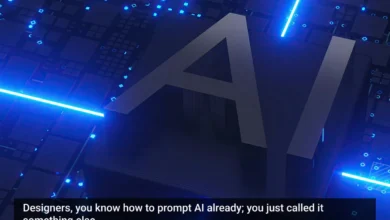
The next article in the series, "The Prompt Is the New Brief," will explore how designers’ existing skills in articulating intent and creative direction are directly transferable to the art of prompting AI, positioning them as uniquely qualified to shape the future of human-AI design collaboration.