Python Development Ecosystem Advances with Python 3.15 Beta 4 Release and Enhanced Binary Interface Standards

The Python programming language continues its trajectory toward increased performance and architectural maturity with the release of Python 3.15.0 Beta 4 and the introduction of significant updates to the CPython Application Binary Interface (ABI). These developments, alongside the emergence of agentic coding tools and refined data science workflows, signal a pivotal moment for the ecosystem as it balances legacy stability with the demands of modern, AI-integrated software engineering. Central to this evolution is the ongoing refinement of how Python interacts with compiled C extensions and how developers manage increasingly complex virtual environments and class-level name resolutions.
The Evolution of the CPython ABI and the Introduction of abi3t
The CPython Application Binary Interface (ABI) represents the low-level interface between the Python interpreter and compiled C extensions. For years, the stability of this interface has been a cornerstone of the Python packaging ecosystem, allowing developers to distribute "wheels" that do not require recompilation for every minor version of Python. With the upcoming release of Python 3.15, the community is introducing the abi3t stable ABI, a specialized version designed to address the complexities of the free-threaded build (PEP 703).
The standard ABI defines how functions are called, how data structures are laid out in memory, and how the stack is managed. In the CPython context, there are three primary levels of ABI: the version-specific ABI, the stable ABI, and the limited API. The version-specific ABI changes with every feature release (e.g., from 3.13 to 3.14), necessitating the recompilation of extensions. The stable ABI, conversely, allows an extension built for one version to run on subsequent versions. The new abi3t designation specifically targets the "thread-safe" requirements of the experimental free-threaded builds, ensuring that binary extensions can maintain compatibility while the interpreter moves away from the Global Interpreter Lock (GIL).
Industry experts, including Nathan Goldbaum, have noted that understanding these nuances is becoming essential for library maintainers. The transition to abi3t is expected to reduce the maintenance burden for developers who wish to support both traditional and free-threaded Python environments, thereby accelerating the adoption of high-performance, multi-threaded Python applications.
Python 3.15 Developmental Milestones and New PEP Standards
The release of Python 3.15.0 Beta 4 marks the penultimate stage before the release candidate phase. This version solidifies several foundational changes proposed through the Python Enhancement Proposal (PEP) process. Two notable additions in this cycle are PEP 838 and PEP 840, both of which address long-standing developer pain points regarding environment management and code clarity.
PEP 838: Standardizing Virtual Environment Metadata
PEP 838 introduces the python-version key to the pyvenv.cfg file. Historically, virtual environments (venvs) contained a configuration file that pointed to the base interpreter but lacked a standardized, machine-readable field for the specific Python version. This often forced development tools and IDEs to execute the interpreter just to determine its version, an expensive operation in terms of latency. By adding an explicit python-version field, PEP 838 enables faster introspection by tooling and improves the reliability of environment auditing.
PEP 840: Resolving Class Namespace Ambiguity
PEP 840 addresses "Name Resolution in Class Namespaces," a technical area that has historically produced counter-intuitive behavior in Python. Specifically, it clarifies how names are resolved within class-level comprehensions and generator expressions. Prior to this PEP, variables defined in a class scope were often inaccessible within list comprehensions inside that same class due to the way Python handles nested scopes. PEP 840 seeks to align these edge cases with developer expectations, making the language more consistent and reducing bugs in complex object-oriented designs.
The Rise of Agentic Coding and Claude Code Integration
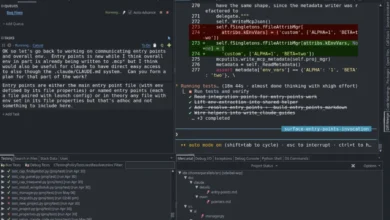
As the core language evolves, the methodology of writing code is also undergoing a paradigm shift through "agentic coding." Anthropic’s Claude Code has emerged as a frontrunner in this space, moving beyond simple code completion to active project management. Unlike traditional Large Language Model (LLM) interfaces that operate in a siloed chat window, agentic tools work directly within the file system and terminal.
The introduction of the CLAUDE.md file format is a key development in this sector. Similar to a README.md or .gitignore, a CLAUDE.md file serves as a configuration layer that provides the AI agent with project-specific context, such as preferred testing frameworks (e.g., pytest vs. unittest), linting rules, and build commands. Real Python has recently highlighted that these files can be scoped globally, by project, or locally, allowing for a hierarchical application of coding conventions. This structured approach to AI-assisted development mitigates the risk of hallucinated commands and ensures that the agent remains compliant with the existing codebase’s architecture.
Performance Optimization in Data Science and Web Frameworks
The Python ecosystem’s expansion is heavily driven by performance-oriented libraries that bridge the gap between Python’s ease of use and the speed of lower-level languages like Rust and C++.
Polars and Distributed Computing
Polars, the high-performance DataFrame library written in Rust, has recently introduced mechanisms for distributed calculations. Benchmarking conducted by researchers like Chiel Peters suggests that while Polars is exceptionally fast on single nodes due to its multi-threaded nature, the transition to distributed environments (multi-node) introduces a complex trade-off between communication overhead and computational speed-up. Data suggests that for datasets smaller than a few hundred gigabytes, a single optimized node often outperforms a distributed cluster, highlighting the importance of "right-sizing" infrastructure.
High-Speed Serialization with django-orjson
In the realm of web development, Adam Johnson has introduced django-orjson, a library that integrates the orjson Rust-based JSON serializer into the Django framework. orjson is significantly faster than the standard library json module and the widely used ujson, particularly when handling dataclasses, UUIDs, and datetime objects. As web applications scale to handle thousands of requests per second, the latency saved during serialization becomes a critical factor in overall system throughput.
Data Analysis of NASA’s Artemis II Mission
The practical application of these tools is evidenced in large-scale data projects. Recent analysis of over 12,000 JPEG images released by NASA from the Artemis II mission demonstrates the capability of the Python stack to handle massive unstructured datasets. Using Python for automated image processing, metadata extraction, and sequence analysis allows researchers to reconstruct mission timelines with high precision, showcasing Python’s dominance in the scientific community.
Specialized Tooling and Community Contributions
The breadth of the Python ecosystem is further reflected in the variety of specialized open-source projects recently gaining traction.
- Facebook Research’s
balance: This library addresses the critical issue of biased data samples. In survey science and machine learning, ensuring that a sample reflects the target population is vital.balanceprovides a streamlined workflow for weighting and adjusting samples to mitigate selection bias. - UserHarbor: A framework-agnostic user management system that aims to decouple authentication and user profile logic from specific web frameworks, allowing for greater portability between Flask, FastAPI, and Django.
- Spiel: Developed by Mike Driscoll, this tool leverages the
Richlibrary to create sophisticated terminal-based presentations. This reflects a growing trend of "terminal-first" development tools that prioritize local-environment efficiency. - Kademlia-Dynamic: A Python implementation of the Kademlia distributed hash table (DHT), providing a foundation for decentralized peer-to-peer networks.
Broader Impact and Industry Implications
The simultaneous advancement of Python 3.15 and the surrounding tooling indicates a maturing ecosystem that is increasingly focused on two fronts: performance and developer experience. The move toward a more stable ABI and free-threaded support is a direct response to the industry’s need for high-concurrency applications, a domain where Python has traditionally struggled compared to Go or Java.
Furthermore, the integration of AI agents like Claude Code suggests that the "human-in-the-loop" model of programming is being refined. By standardizing how these agents interact with codebases via files like CLAUDE.md, the community is establishing a "contract" between human intent and machine execution.
As the Call for Proposals for PyData Global 2026 opens, the focus remains on how these technical improvements—from PEP 840’s namespace resolutions to Polars’ distributed compute—can be harnessed to solve real-world problems. The roadmap for the next two years suggests a Python that is faster, more strictly typed, and more deeply integrated with the hardware it runs on, whether that hardware is an edge device, a developer’s laptop, or a massive air-gapped server running vector databases like Actian VectorAI.
The technical trajectory of Python continues to be one of inclusive growth, where low-level binary interface stability and high-level AI-assisted coding exist as two sides of the same coin, both aimed at maintaining Python’s position as the primary language for modern software development.