Reimagining the Python Stack for 2026: How Artificial Intelligence is Reshaping Development Tools

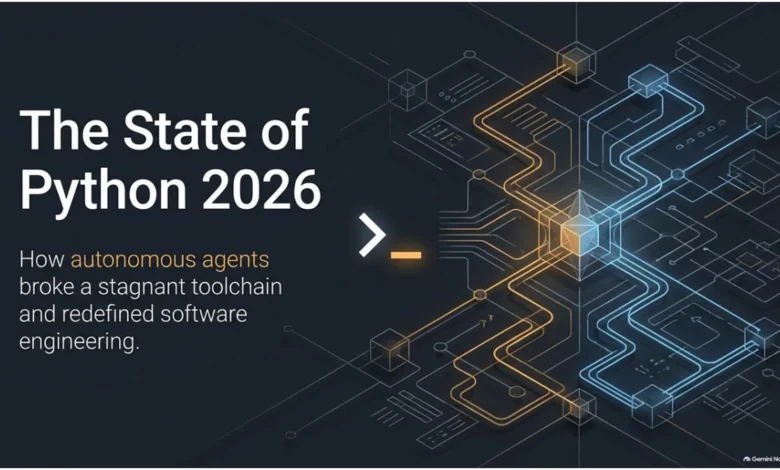
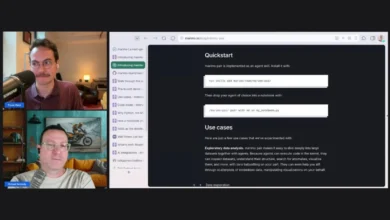
The landscape of software engineering is undergoing its most profound transformation in decades, driven almost entirely by the rapid acceleration of artificial intelligence. For a long time, the Python development stack felt settled, with developers relying on a familiar set of tools for version control, environment management, editors, and web frameworks. However, the maturation of large language models, AI coding agents, and high-performance tooling has reopened nearly every architectural choice a developer makes. On Episode 566 of the Talk Python To Me podcast, host Michael Kennedy convened a panel of industry veterans to take stock of the state of the art in Python for 2026. The discussion featured Calvin Hendryx-Parker, CTO and co-founder of Six Feet Up; Pat Decker, DevOps engineer at Hibu; Reuven Lerner, a Python corporate trainer with 15 years of experience; and Sidney Runkle, open-source product manager at LangChain. Their insights reveal a developer ecosystem where traditional workflows are being radically reimagined—with some engineers dispensing with code editors altogether in favor of agentic chat interfaces.
The Evolution of the Python Ecosystem
To understand where the Python stack stands in 2026, it is necessary to examine how far the ecosystem has evolved from its early days. Calvin Hendryx-Parker, who began programming in Python during the 1.5.2 release era, noted that the industry has traversed massive shifts, from the early days of Zope—the pioneering object-database-backed web application server—to the modern dominance of Django, FastAPI, and asynchronous architectures. Similarly, Pat Decker recalled starting his career on punched cards and mainframes before spending decades managing enterprise infrastructure, eventually integrating Python into Java-heavy enterprise environments at Hibu.
For years, Python’s core philosophy centered on readability, simplicity, and dynamic typing. Yet, the sheer friction of dependency management, virtual environments, and multi-version Python installations created significant bottlenecks. The arrival of high-performance tools built in Rust—most notably Astral’s uv—has completely altered the paradigm. What once required complex workarounds and slow package resolutions can now be executed instantaneously. Furthermore, the advent of AI coding agents has changed how developers interact with their codebases, moving the industry away from manual boilerplate generation and toward automated execution harnesses.
The Death of the Traditional IDE and the Rise of Agentic Workflows
Perhaps the most surprising revelation from the panel was the fundamental shift in how developers write and review code. While traditional integrated development environments (IDEs) like PyCharm and Visual Studio Code remain staples for deep debugging, the daily workflow for many cutting-edge developers has moved entirely into terminal multiplexers, command-line interfaces, and—in the most extreme cases—collaboration platforms like Slack.
Sidney Runkle described a workflow where the majority of code generation and maintenance is triggered directly through Slack integrations. By tagging open-source repository agents, developers can initiate feature requests, bug fixes, and documentation updates without ever opening a local file editor. For tasks requiring deeper intervention, engineers are increasingly turning to terminal-based AI tools such as Claude Code, executing commands within modern GPU-accelerated terminals like Kitty or Ghostty, and leveraging window managers like cmux and zellij.
This shift reflects a broader trend: coding agents do not merely suggest autocomplete text; they act autonomously within containerized environments, running tests, executing shell scripts, and validating syntax before presenting developers with clean pull requests. As a result, the time spent manually writing boilerplate code has drastically decreased, allowing engineers to focus on architecture, system design, and prompt engineering.
Packaging, Dependencies, and the Astral Revolution
Package management in Python has historically been a fragmented space characterized by competing standards, including pip, poetry, pipenv, and flit. The introduction of uv by Astral has effectively unified and accelerated this landscape. During the podcast, the panel agreed that uv represents one of the most important developer experience breakthroughs in Python’s history.
By handling Python version installations, virtual environments, dependency locking, and package publishing at native speeds, uv has eliminated the administrative overhead that previously plagued introductory and enterprise development alike. Crucially, uv operates independently of a pre-installed Python runtime, allowing scripts to declare inline dependencies via PEP 723 and execute seamlessly as standalone executables. This capability has proven vital for AI agents, which frequently rely on uv to instantly provision isolated execution environments, run test suites, and verify code correctness on the fly.
The strategic significance of these high-performance tooling improvements did not go unnoticed by the broader tech industry. OpenAI’s acquisition of Astral underscored the reality that modern AI models require fast, reliable, and programmatic package management to function effectively as autonomous software engineers.
Web Frameworks, Type Hints, and Data Validation
When discussing web development, the panel highlighted a pragmatic balance between established monoliths and high-performance micro-frameworks. While Django remains the bedrock for large-scale enterprise applications requiring a comprehensive feature set out of the box, FastAPI has captured the imagination of developers building API-first architectures and AI integrations.
FastAPI’s reliance on Pydantic for data validation has established a new standard for type safety in Python applications. Although Python has traditionally been celebrated for its dynamic typing and duck-typing flexibility, the rise of type hints—bolstered by ultra-fast type checkers like Astral’s ty and Microsoft’s pyright—has transformed how developers maintain large codebases. The panel noted that while human developers may occasionally resist the cognitive overhead of heavy type annotations, AI coding agents thrive on strict typing. Type hints provide the necessary constraints and context for LLMs to generate robust, bug-free code on the first attempt.
In database architecture, PostgreSQL remains the undisputed standard for production relational data. However, the panel observed a growing appreciation for embedded and analytical databases like DuckDB and SQLite. SQLite, in particular, has seen a resurgence in production readiness thanks to improved concurrency controls and write-ahead logging, making it an attractive option for single-node applications and edge computing.
Implications and Future Outlook
The 2026 state of Python demonstrates an ecosystem that has successfully modernized without losing its core identity. The integration of artificial intelligence into every layer of the software development lifecycle—from package installation and type checking to code generation and documentation deployment—has drastically amplified developer productivity.
However, this transition brings new challenges. Developers must now master observability tools like Agent’s View to monitor token consumption, track agent efficiency, and ensure that automated coding loops adhere to organizational security standards. As autonomous agents become deeply embedded in CI/CD pipelines, the role of the software engineer is evolving from a manual code writer to a system architect and reviewer.
Ultimately, the panel’s consensus is clear: Python’s enduring flexibility, combined with the explosive power of next-generation tooling, ensures that the language will remain at the forefront of software engineering and artificial intelligence innovation for years to come.