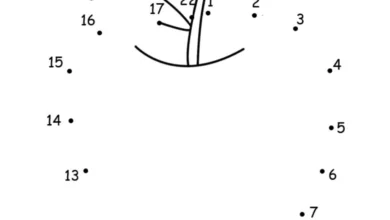
In 2015, the engineering department at Twitter faced a significant technical hurdle as the social media platform transitioned from its iconic "favorite" star icon to the now-ubiquitous "like" heart. This seemingly minor UI update, designed to mirror the engagement patterns popularized by Facebook, required a high-fidelity, fluid animation that could perform seamlessly across a vast spectrum of hardware. At the time, mobile browser performance was a major constraint; low-end devices struggled with the computational overhead of rendering 16 simultaneous DOM-based animations—comprising 14 individual particles, a popping circle, and the heart icon itself. To solve this, developers turned to a classic technique borrowed from the golden age of video game development: the spritesheet.
The Technical Foundation of Sprite Animation
The methodology relies on a "filmstrip" approach. Rather than generating elements procedurally through the Document Object Model (DOM), a single image file contains all frames of an animation arranged in a linear sequence. By rapidly shifting the viewport—or the "window"—through which the user sees this image, the browser creates the illusion of motion.
Historically, this was achieved via the CSS background-position property, which offset the background image within a fixed container. However, modern CSS provides more robust tools. By utilizing an <img> tag in conjunction with object-fit: cover and object-position, developers can precisely crop and display specific frames of an image. This approach effectively treats the image as a viewport, where changing the object-position value reveals different segments of the source file. To animate these segments, developers employ the CSS steps() timing function. Unlike standard cubic-bezier timing, which interpolates values smoothly, steps() forces the browser to jump between discrete intervals, allowing for frame-by-frame precision that is essential for character movement or complex UI transitions.
A Chronology of Web UI Animation
The history of web animation is a study in balancing visual flair with resource management. In the early 2000s, dial-up speeds and limited processor power necessitated the use of simple, static images or basic GIF animations. As broadband became ubiquitous and hardware accelerated, developers moved toward JavaScript-heavy solutions. However, these solutions often created "jank"—dropped frames and stuttering—on mobile devices with limited RAM and CPU capacity.
By 2015, the Twitter "Like" heart represented a turning point: the industry needed a way to produce complex, high-frame-rate animations that offloaded the burden from the browser’s layout engine to the GPU. The implementation of spritesheets allowed Twitter to achieve a 60-frame-per-second experience on hardware that would otherwise have crashed under the weight of traditional DOM manipulations. By 2026, the landscape has shifted again. Modern browsers are significantly more efficient, and hardware has advanced to the point where procedural generation—using trigonometry and random number generation for particles—is standard practice for many developers, offering a more dynamic and unique user experience with every interaction.
Comparative Analysis: Sprites vs. Procedural Animation
The shift from 2015 to 2026 marks a transition from "static" animation to "generative" animation. A spritesheet, by definition, is a recording. Every time a user clicks a button animated via a sprite, they see the exact same frames in the exact same sequence. This lack of variability can feel rigid.
Conversely, modern procedural approaches—such as those implemented in contemporary frontend frameworks—calculate the physics of particles in real-time. If a user clicks a button, the system can determine the trajectory, velocity, and color of the particles at the moment of interaction. This creates a "whimsical" and responsive feel that is increasingly expected in high-end web design. While sprites remain the industry standard for character-based animations (common in games and interactive storytelling), they are increasingly viewed as a secondary option for UI elements that benefit from spontaneity.

Performance Implications and Best Practices
Despite the move toward procedural generation, the spritesheet remains a vital tool in the developer’s arsenal for specific use cases. When performance is the absolute priority—such as on constrained IoT devices or in extremely high-traffic web environments—the "filmstrip" method remains arguably the most efficient way to display complex movement.
Data from web performance benchmarks suggests that the cost of decoding a single, large image file is often lower than the cost of rendering dozens of individual DOM nodes, especially when those nodes require complex CSS filters or heavy transition effects. However, developers must be mindful of "layout thrashing" and memory consumption. Large spritesheets can lead to high memory usage if not properly optimized or compressed, potentially offsetting the performance gains they were intended to provide.
The Role of ‘Steps’ in Modern CSS
The technical nuance of the steps() function is often misunderstood. By default, the function employs jump-end, which excludes the final frame of a sequence during a cycle. In non-looping animations, this is often desirable, as it prevents the animation from "flashing" or jumping prematurely. However, for continuous, looping animations—such as a character walking or an object rotating—developers must utilize jump-none. This ensures that every frame, including the final one, is displayed for an equal duration, resulting in a smooth, continuous loop that feels natural to the eye.
Industry Perspectives on Future Trends
The resurgence of interest in these foundational techniques speaks to a larger trend in web development: the "re-discovery" of low-level optimization. While frameworks like React, Vue, and Svelte have abstracted much of the complexity of the DOM, engineers are increasingly looking toward native browser capabilities—such as CSS animations and hardware-accelerated images—to reduce the footprint of their applications.

Industry experts note that as web applications continue to grow in complexity, the ability to selectively apply "old-school" techniques like sprite animation alongside modern state-management systems will be a key differentiator. The goal is no longer to choose between performance and aesthetics, but to synthesize the two. As web standards evolve, it is likely that browsers will eventually implement native support for more advanced animation formats, potentially replacing the manual labor of spritesheets with more efficient, vector-based animation standards. Until that point, however, the "filmstrip" technique stands as a testament to the longevity of core computing principles.
In conclusion, the evolution of the "like" button from 2015 to the present day serves as a microcosm for the web at large. It represents a journey from necessity-driven constraints to creative, performance-minded design. Whether a developer is animating a gold trophy or a wandering character, the fundamental lesson remains consistent: the most effective solutions are often those that understand the underlying mechanics of the browser, balancing the raw power of the hardware with the fluid, intuitive requirements of human-computer interaction.
Related posts: