Governed Multi-Tenant Data Access in AI-Powered Analytics: Architecting Secure External-Facing Data Agents

In the rapidly evolving landscape of software-as-a-service (SaaS) and business-to-consumer (B2C) applications, the integration of AI-powered analytics has shifted from a competitive advantage to a standard requirement. As organizations rush to embed natural-language querying capabilities—allowing users to interact with structured data through conversational agents—a significant architectural hurdle has emerged: the enforcement of fine-grained, multi-tenant data governance. While translating natural language into SQL is a well-solved challenge, the far more complex task lies in ensuring that these AI agents, which act as proxies for users, strictly adhere to authorization boundaries. When an agent executes a query, it must be architecturally constrained to access only the rows, columns, and tables explicitly permitted for that specific tenant.
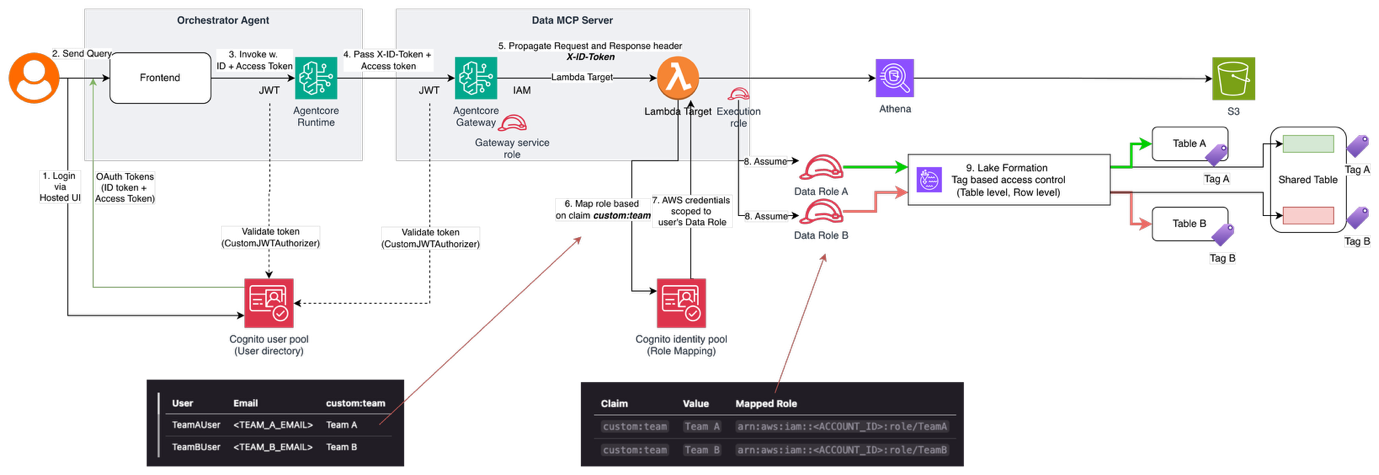
The challenge of fine-grained data access for external users is fundamentally a question of identity propagation and trust. Modern data agents typically rely on orchestrating frameworks connected to Model Context Protocol (MCP) servers. These systems are designed to operate with broad permissions to maximize their utility. However, in a multi-tenant environment, granting an agent broad access is a security risk. If a user from "Company A" asks a question, the agent must be incapable of retrieving data belonging to "Company B." Achieving this requires a robust mechanism that maps user identity directly to data permissions, preventing unauthorized access at the storage layer rather than relying on application-level filtering, which is prone to human error and potential bypasses.
The Evolution of Identity Models in Modern Analytics
Choosing the correct identity model is the foundation of a secure, multi-tenant architecture. AWS provides various mechanisms tailored to different segments of the user population. For internal workforce scenarios, IAM Identity Center, leveraging Trusted Identity Propagation (TIP), is the industry standard. It excels at propagating enterprise identities across analytics services using SAML 2.0 and SCIM federation. However, for external-facing applications, this model is often overly restrictive and difficult to manage at scale.
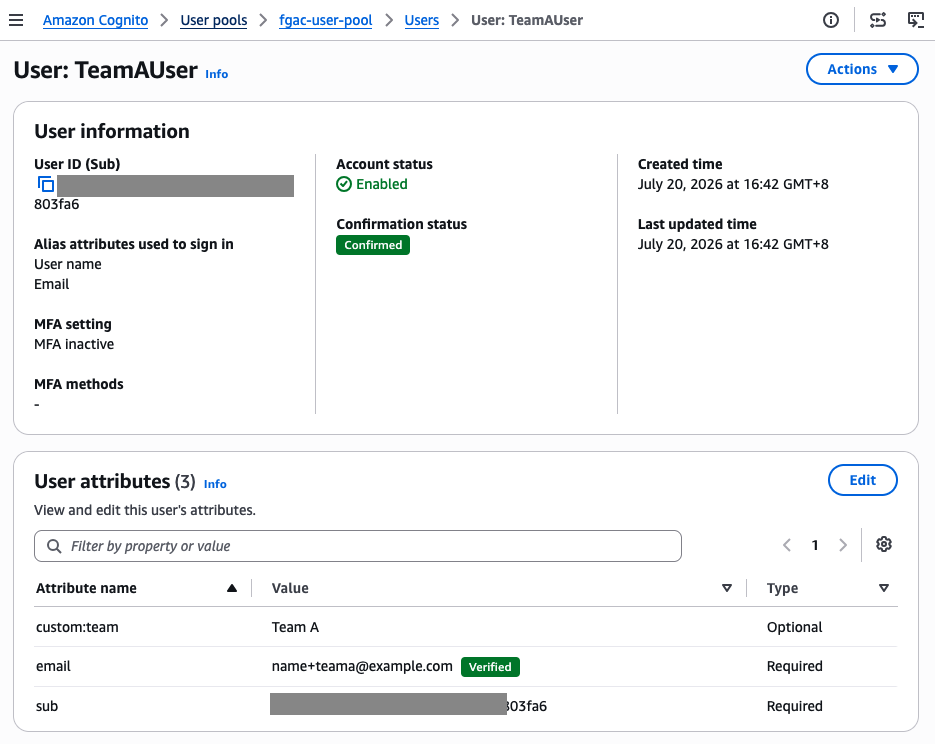
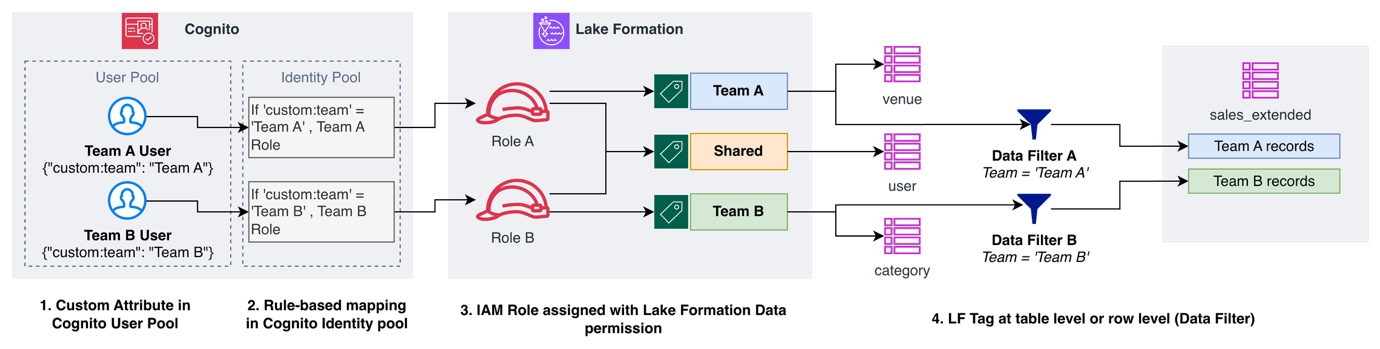
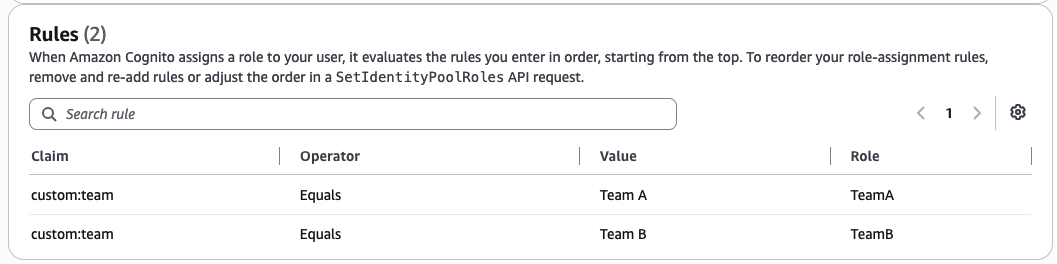
For B2C or multi-tenant SaaS products, Amazon Cognito has emerged as the preferred solution. Unlike enterprise-focused IAM solutions, Cognito is designed for consumer scale, offering seamless integration with user pools for authentication and identity pools for authorization. By utilizing Cognito User Pools, developers can define custom attributes—such as a "team" or "tenant ID"—that flow through the authentication lifecycle. These attributes, when combined with Cognito Identity Pools, allow for a dynamic, rule-based mapping to IAM roles. This approach provides a "natural fit" for external users because it decouples the application’s user directory from the underlying cloud infrastructure, allowing for rapid scaling without compromising the principle of least privilege.
Architecting for Scale: The Role of AgentCore Gateway
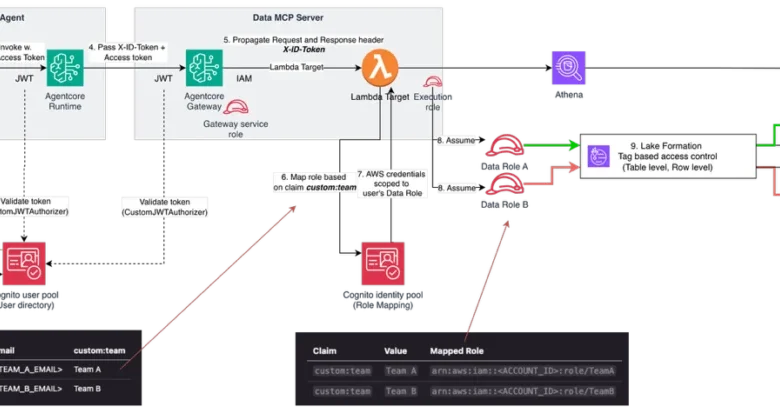
The modern approach to solving this security dilemma involves applying traditional identity patterns to advanced agentic frameworks, such as the AgentCore Gateway, a feature of Amazon Bedrock AgentCore. This architecture transforms the data agent from a monolithic executor into a secure, gated entity. The AgentCore Gateway serves as a centralized, fully managed entry point that validates traffic before it ever touches a data tool.
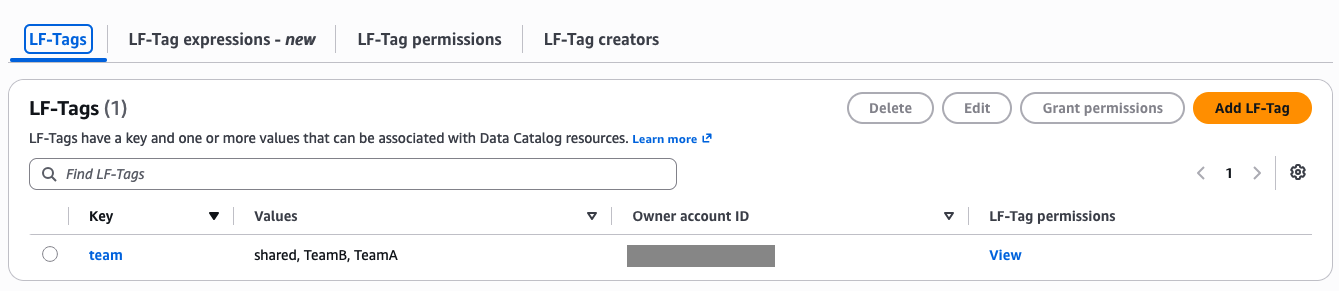
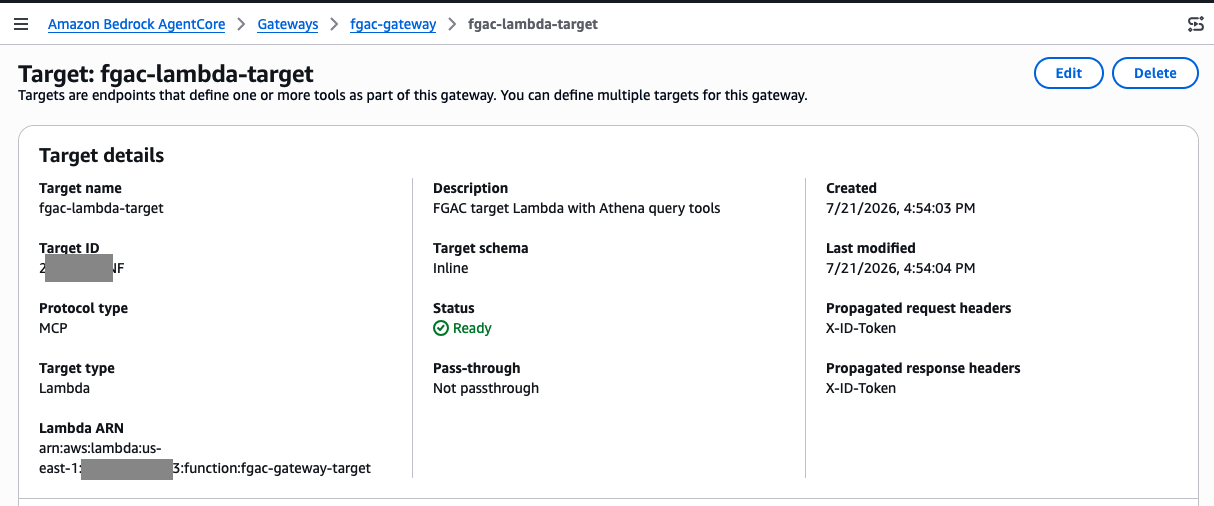
The architecture functions through a sophisticated flow of claims and credentials. When a user submits a query, the system identifies the user’s team through their authenticated token. This token is passed to a "Target Lambda," which acts as a credential broker. Crucially, this Lambda does not possess its own data access rights. Instead, it exchanges the user’s ID token for temporary, highly scoped IAM credentials. By using these short-lived credentials to execute queries, the system ensures that the agent is always acting on behalf of the user, inheriting their specific row- and column-level restrictions.

Implementing Declarative Security with Lake Formation
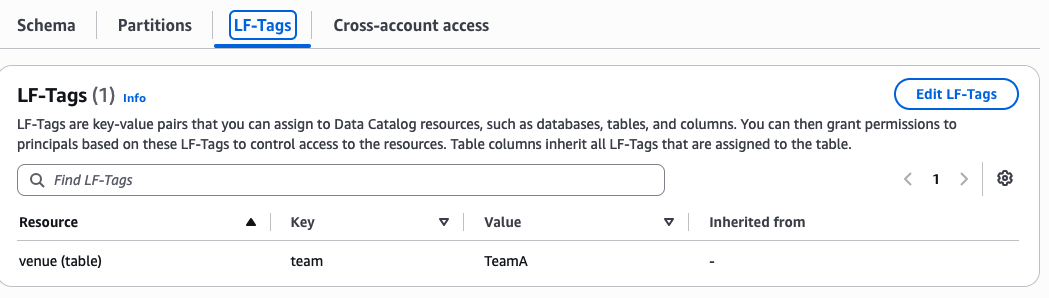
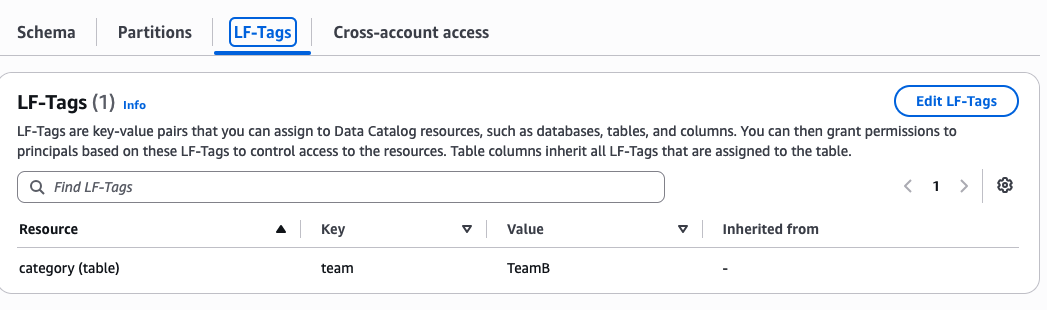
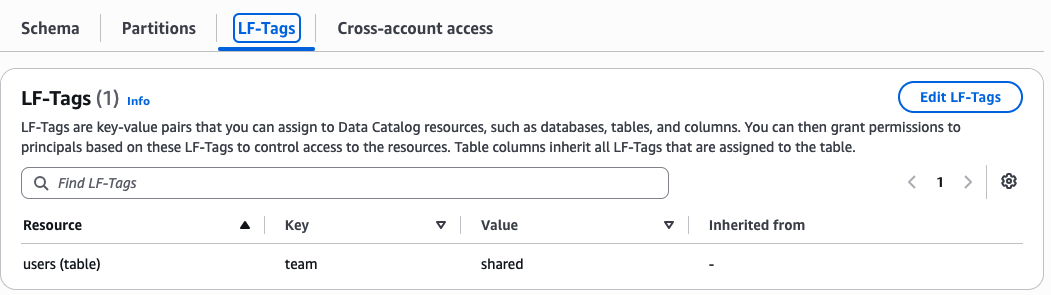
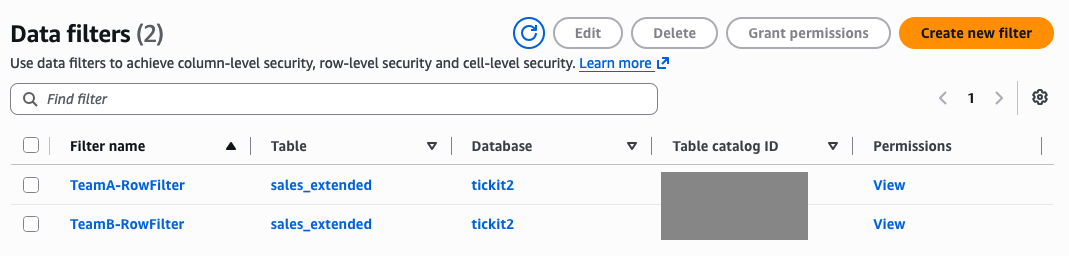
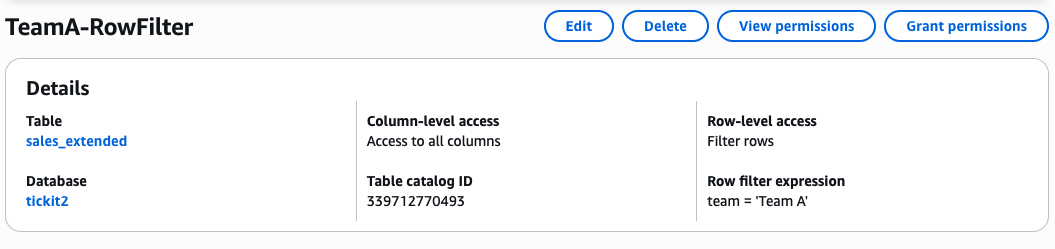
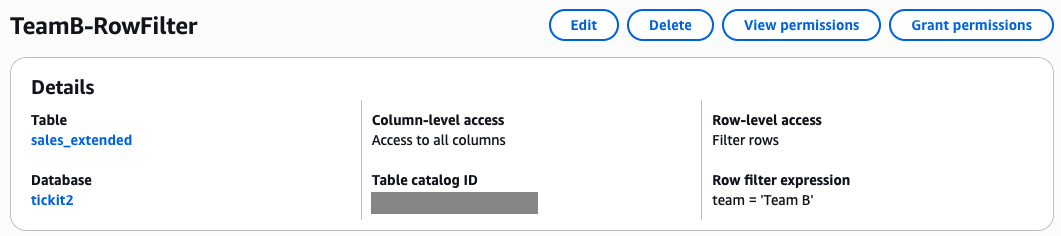
The shift toward Tag-Based Access Control (TBAC) in AWS Lake Formation represents a departure from traditional, rigid permission management. In legacy systems, developers often wrote complex filtering logic directly into their code—a "hard-coded" approach that is difficult to audit and maintain. With TBAC, permissions are defined declaratively. An administrator tags a database, table, or even a specific row as belonging to a "Team" (e.g., TeamA, TeamB, or Shared).

This declarative model simplifies the security posture. If a data object is tagged "TeamA," only an IAM role mapped to "TeamA" can interact with it. This mapping happens at the infrastructure level. The Target Lambda, upon assuming the user’s role, inherits these tags. When the query is executed against a service like Amazon Athena, Lake Formation transparently evaluates the user’s role against the tags on the data. If the user does not have the necessary tag, the data is simply invisible to them. This ensures that even if an AI agent is instructed to "list all sales records," it will only receive the subset of data allowed by the policy, effectively neutralizing the risk of cross-tenant data leakage.
Chronology of the Deployment and Security Lifecycle
The deployment of such a system follows a rigorous sequence designed to minimize the attack surface. First, the setup requires the configuration of a Lake Formation Data Lake Administrator, who serves as the root of trust for all permission grants. Following this, the infrastructure-as-code (IaC) deployment—typically handled via the AWS Cloud Development Kit (CDK)—provisions the necessary Cognito resources, including the User Pool, Identity Pool, and the custom attributes that drive access control.
Once the environment is live, the lifecycle of a query proceeds in a specific order:
- Authentication: The user logs in via the application’s frontend, receiving a JWT containing their team-based claims.
- Gateway Traversal: The user’s natural language request, accompanied by the token, hits the AgentCore Gateway.
- Credential Exchange: The Target Lambda extracts the token, verifies its integrity, and exchanges it via the Cognito Identity Pool for temporary credentials.
- Data Execution: The Lambda, now acting with the identity of the specific user, initiates a query against the data lake.
- Enforcement: Lake Formation applies row-level filters and tag-based policies to return only the authorized dataset to the agent.
- Response: The agent processes the result and returns a natural language response to the user.
Impact and Implications for the SaaS Industry
The implications of this architectural pattern for the broader software industry are profound. As AI agents become the primary interface for data analytics, the "black box" nature of these models poses a genuine challenge for compliance officers and security teams. If an agent can be manipulated via "prompt injection" to output data it shouldn’t, the consequences for a multi-tenant SaaS provider could be catastrophic, leading to GDPR violations, loss of intellectual property, or breach of client trust.
By embedding security at the infrastructure layer—using the Cognito-to-Lake Formation bridge—developers move the burden of security away from the AI model itself. It no longer matters if the AI is "smart" enough to try to bypass security; the infrastructure ensures that the underlying data access is physically restricted. This "security-by-design" approach is essential for companies aiming to build enterprise-grade AI products that can withstand rigorous third-party security audits.
Evaluating the Security Considerations
Despite the robustness of this architecture, it is not a "set and forget" solution. Security teams must remain vigilant regarding several key areas:
- Token Integrity: The reliance on JWTs means that the secure handling of the
X-ID-Tokenis paramount. The configuration must ensure that headers are not improperly exposed or intercepted. - Least Privilege: The Target Lambda must be strictly limited. By restricting its permissions to only
GetCredentialsForIdentity, the potential for a compromised Lambda to be used as a pivot point for further network infiltration is virtually eliminated. - Tag Management: TBAC is only as effective as the tagging strategy. Administrators must ensure that tags are applied consistently and that the "Shared" tag is used sparingly to prevent over-privileged access.
- Observability: Centralized logging through AWS CloudTrail and Lake Formation audit logs is essential for detecting anomalous access patterns. If an AI agent suddenly attempts to query forbidden tables, security teams must have the alerting mechanisms in place to catch this behavior in real-time.
Future Perspectives on Agentic Security
The convergence of identity management and AI agentic frameworks is still in its infancy. As these technologies mature, we can expect to see more automated, AI-driven security governance where permissions are granted dynamically based on the intent of the query rather than static tags. However, for the current generation of applications, the combination of Cognito, AgentCore, and Lake Formation provides the most reliable blueprint for secure, multi-tenant analytics.
In conclusion, the challenge of building AI-powered data agents is not merely a technical task of natural language processing or LLM orchestration. It is a fundamental exercise in identity and data governance. For SaaS providers and B2C developers, the ability to guarantee data isolation is the difference between a successful, compliant product and one that faces significant regulatory and reputational risk. By implementing the architecture described—leveraging the power of declarative security and robust identity propagation—organizations can empower their users with advanced AI insights while maintaining the highest standards of data integrity and tenant isolation. As the demand for personalized, AI-driven analytics grows, this governed approach will undoubtedly become the standard for the next generation of cloud-native applications.