Nuclear Fusion, No Power Lines: The Urgent Infrastructure Gap in the Age of Generative AI

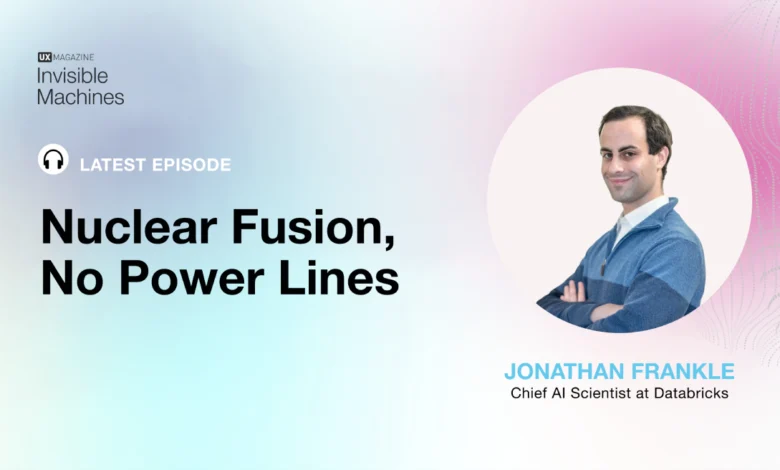
Three years ago, the discourse surrounding Large Language Models (LLMs) was dominated by the technical challenges of data curation—a process Jonathan Frankle, then-chief scientist at MosaicML, famously likened to “data mixology.” Today, as the Chief AI Scientist at Databricks, Frankle returns to the Invisible Machines podcast with a refined, sobering thesis: the AI industry has successfully achieved a state of nuclear fusion—a monumental breakthrough in raw intelligence—but it has entirely neglected the construction of the power lines. Without a robust grid of specification, testing, and application-layer engineering, this immense capability remains trapped in a state of experimental potential, disconnected from the pragmatic needs of enterprise and human intent.
The Evolution of the AI Landscape: A Three-Year Retrospective
In 2021 and 2022, the AI community was obsessed with scaling laws and the “betty crocker” problem of model training. Practitioners were learning how to balance pre-training data, optimize mini-batches, and navigate the initial hype of transformer architectures. At the time, academic benchmarks like HellaSwag served as the industry’s gold standard for performance. However, Frankle argued even then that these metrics failed to capture the nuances of user intent.
The intervening three years have seen an unprecedented acceleration. Following the release of GPT-4, the industry pivoted toward “agentic” workflows, retrieval-augmented generation (RAG), and massive context windows. Despite these leaps in capability, the fundamental disconnect identified by Frankle remains: the gap between building a powerful model and building a functional, reliable software system. The industry has spent trillions on the “fusion” of compute and parameter density, yet it lacks the “power lines”—the equivalent of the Java, C, or Pascal programming languages that allow developers to define, edit, and verify system behavior predictably.
From Scientific Curiosity to Engineering Discipline
The current state of AI deployment is, according to Frankle, analogous to the “Fortran days” of early computing. While developers have access to incredibly sophisticated “engines,” they lack the high-level abstractions necessary to translate human requirements into stable, testable machine logic. This is not merely a research hurdle; it is a profound design challenge.
In the software engineering tradition, developers rely on unit tests, integration tests, and rigorous regression cycles to ensure that code behaves as expected. In the current AI paradigm, however, many organizations treat prompt engineering as a substitute for software architecture. Frankle points out that when practitioners interact with models like Claude or GPT-4, they are effectively performing “parameter tuning” in natural language rather than building deterministic systems. This creates a precarious environment where the “source code” is opaque and the output is non-deterministic, making it impossible to guarantee the reliability required for enterprise-grade applications.
The Fallacy of Long Context and Retrieval-Augmented Generation
One of the most persistent trends in the current AI cycle is the move toward massive context windows. The promise is seductive: by stuffing millions of tokens—entire libraries of documentation, codebases, and historical data—into a single prompt, users can seemingly bypass the need for fine-tuning.
Frankle’s analysis suggests a more cautious reality. While retrieval and long-context stuffing can work for specific, isolated queries, they are not a panacea. The “garbage-in, garbage-out” principle remains the governing law of data science. As retrieval systems expand to incorporate more data, they often introduce more “distractors,” leading to degraded performance. A model, no matter how large, is not omniscient; it is a statistical processor. If the underlying data includes contradictions, outdated information, or “wrong answers” buried in unread files, the model will faithfully synthesize those errors into plausible-sounding falsehoods.
This creates a critical strategic imperative for enterprises: the need for rigorous data curation. Before an organization ingests its proprietary documents into an LLM, it must treat that data with the same scrutiny as a production database.
The Emergence of the AI Optimization Cottage Industry
The implications of this shift extend to every corner of the digital economy, particularly for content teams and marketing departments. As LLMs become the primary interface through which information is consumed, the internet is no longer written solely for human readers or search engine crawlers. It is increasingly being written for training signal.
This shift will likely catalyze an “LLM optimization” industry, analogous to the SEO boom of the early 2000s. Organizations will need to develop strategies for separating “stable truth”—verified, canonical facts—from tentative or draft content. The goal is to build a clear distinction between the knowledge base (the data) and the reasoning engine (the model). Until this architectural split is perfected, organizations will continue to operate within a state of “trillion-parameter uncertainty,” where the model’s reasoning capabilities are often compromised by the poor quality of the ingested source material.
Chronology of the “Mixology” Shift
- 2021: Jonathan Frankle introduces the concept of “data mixology,” emphasizing that the training data distribution is as critical as the model architecture.
- 2022: The industry experiences a surge in “leaderboard chasing,” where models are optimized to score high on standardized benchmarks like HellaSwag, often at the expense of real-world utility.
- 2023: The emergence of RAG (Retrieval-Augmented Generation) and massive context windows (up to 1M+ tokens) allows enterprises to build systems without traditional fine-tuning.
- 2024: The current inflection point. Industry leaders begin to recognize that without standard testing, verification, and specification frameworks, AI systems remain brittle and difficult to deploy at scale.
Broader Implications for the Software Industry
The failure to establish these “power lines” has a direct impact on the adoption rate of AI in critical infrastructure. If an organization cannot verify that its AI agent will produce the same result for a given input under different conditions (regression testing), it cannot safely delegate high-stakes decisions to that agent.
The path forward, as Frankle envisions it, is a return to the fundamentals of software engineering. The “blender”—the metaphor for the chaotic, unplugged state of current AI tooling—must be connected to the grid of mature software development practices. This involves:
- Automated Specification: Developing tools that allow humans to describe system requirements in a way that is machine-readable and verifiable.
- Modular Architecture: Moving away from monolithic prompt-based systems toward composable tools where knowledge and reasoning are cleanly separated.
- Discipline over Hype: Prioritizing experiment design and clear success metrics over the pursuit of AGI or high leaderboard citations.
Conclusion: Measuring Success Beyond the Hype
Frankle’s career trajectory, marked by his work on facial recognition policy and the lottery ticket hypothesis, underscores a consistent value system: the preference for measurable impact over theoretical elegance. The transition from “cupcakes”—the small-scale experiments of the early LLM era—to “fusion”—the massive energy and capability of today’s models—is complete.
The challenge for the next three years will be the unglamorous, essential work of laying the infrastructure. Organizations that focus on the “power lines”—specification, testing, and data integrity—will be the ones that move AI from the realm of experimental toys to the foundation of modern enterprise operations. The era of building for the sake of the model is ending; the era of building for the sake of the user has begun. For practitioners, the message is clear: stop admiring the fusion reaction and start building the grid.