Robust Serialization with JSON and Custom Types in Python Machine Learning Pipelines

In the fast-evolving ecosystem of machine learning engineering, the primary challenge often shifts from the mathematical elegance of model architectures to the practical, often tedious, reality of data plumbing. As data science projects transition from research prototypes to production-grade microservices, the requirement for reliable, schema-aware data serialization becomes paramount. A robust JSON serialization pipeline is not merely a convenience; it is a critical infrastructure component that ensures data integrity across distributed systems, API endpoints, and long-term storage solutions.
The Hidden Cost of Data Plumbing
Industry analysts and machine learning practitioners frequently note that approximately 80% of an engineer’s time is consumed by data cleaning, preprocessing, and transformation. Within this lifecycle, the movement of structured datasets—configuration files, experiment metadata, and model parameters—frequently hits a wall when utilizing standard serialization formats like JSON. While JSON is the industry standard for lightweight data interchange, its native implementation in Python is intentionally limited to basic types: strings, numbers, lists, dictionaries, and booleans.
When a pipeline encounters complex Python objects such as datetime, pathlib.Path, sets, or Enum types, the default json.dumps() method triggers a TypeError. This limitation has historically forced developers to write repetitive, error-prone manual conversion logic, which often lacks consistency across large-scale projects. The need for a standardized, extensible approach to serialization has become increasingly vital as organizations move toward automated MLOps workflows where pipeline configurations must be saved, versioned, and restored without human intervention.
Chronology of Serialization Evolution
The development of serialization practices has evolved alongside the Python language itself. In the early days of data science, developers often relied on pickle for serializing Python objects. However, pickle is notoriously insecure, as it allows for arbitrary code execution, and it creates binary files that are difficult to inspect or debug.
As the industry pivoted toward JSON for its human-readable nature and language-agnostic compatibility, the limitations of the format became a significant hurdle. In response, the community began developing custom encoders and decoders. By 2020, as the adoption of pathlib for file system management and Enum for hyperparameter tracking grew, the requirement for a unified "hook" system—which allows for the injection of custom serialization logic—became a standard best practice in professional engineering circles. This shift has enabled teams to treat configuration as code, allowing for more stable experiment tracking and easier reproduction of results.
Technical Implementation: A Three-Tier Strategy
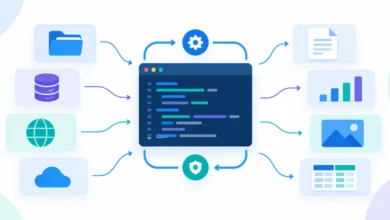
Building a production-ready pipeline requires a departure from simple serialization to a multi-tiered approach that addresses encoding, decoding, and schema evolution.
1. Custom Encoders: Extending JSON Functionality
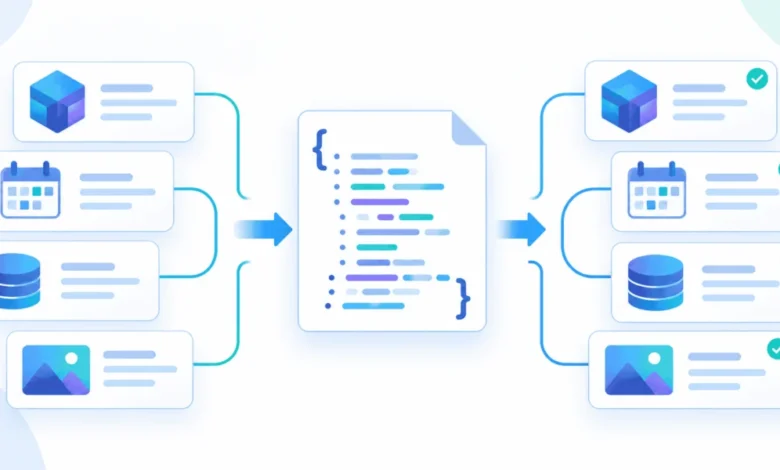
The first line of defense is the implementation of a custom class inheriting from json.JSONEncoder. By overriding the default() method, developers can explicitly define how non-serializable objects should be transformed. The most efficient strategy involves implementing a "type-tagging" mechanism. By wrapping a serialized object in a dictionary containing a __type__ key, the encoder preserves the metadata necessary for the receiver to identify the original object type.
For instance, converting a datetime object to an ISO-formatted string is standard, but pairing it with a __type__ marker ensures that the deserialization process knows exactly which constructor to invoke. This prevents the common pitfall where a date string is mistakenly treated as a standard string during analysis.
2. The Power of Object Hooks
The second tier involves the deserialization phase, where json.loads() is supplemented with an object_hook. This function acts as a filter, intercepting every dictionary created during the parsing process. When the hook identifies the presence of the __type__ marker, it can programmatically reconstruct the Python object.
This approach provides a graceful degradation path. In instances where data is malformed or corrupted, the decoder can be configured to catch exceptions, log the incident, and return the raw data rather than crashing the entire pipeline. This level of resilience is essential in production environments where a single malformed configuration file could otherwise bring down a downstream training job or an inference server.
3. Schema Migrations and Defensive Programming
The final, and perhaps most critical, aspect of a robust pipeline is the management of schema changes. Machine learning experiments are inherently iterative. A configuration that is valid today may be obsolete in six months as new hyperparameters are introduced or old ones are deprecated.
A sophisticated serialization pipeline must include a validation layer that acts as a factory function. This function serves as a gatekeeper, ensuring that legacy configurations are retroactively updated to meet current schema requirements. By using default values for missing keys and explicitly discarding deprecated fields, engineers can ensure backward compatibility. This practice allows teams to maintain historical records of experiments without needing to rewrite every existing configuration file when the schema evolves.
Industry Implications and Best Practices
The adoption of these serialization patterns has broader implications for MLOps and the reproducibility of scientific research. When configurations are reliably serialized, they become immutable records of an experiment’s intent.
Data engineers and MLOps leads emphasize several best practices when implementing these systems:
- Version Control: Always include a schema version key within your serialized JSON to track which version of the codebase the configuration corresponds to.
- Validation: Use schema validation libraries (such as Pydantic or Marshmallow) alongside custom encoders to provide a secondary layer of data integrity.
- Logging: In production, ensure that all deserialization errors are captured by a centralized logging framework, providing traceability for debugging failed jobs.
Broader Impact on Machine Learning Engineering
The shift toward standardized, robust serialization is a microcosm of the maturation of the machine learning field. As the industry moves away from "notebook-driven development" toward "system-driven development," the demand for predictable data handling has intensified.
By implementing these strategies, engineering teams can significantly reduce the "mean time to recovery" for pipeline failures. Furthermore, the ability to safely move data across heterogeneous systems—such as transitioning a configuration from a local training script to a Kubernetes-based cloud deployment—is a fundamental requirement for scaling operations.
As artificial intelligence systems become more complex, the underlying data pipelines must become more resilient. The integration of custom encoders, object hooks, and schema migration logic represents a significant step toward creating the kind of reliable, transparent, and reproducible infrastructure that modern enterprise AI requires. While it may not be as glamorous as model architecture design, the engineering of the data pipeline remains the bedrock upon which successful, sustainable machine learning solutions are built. Future iterations of these tools will likely continue to emphasize automation, potentially moving toward automated schema generation based on Python type hints, further simplifying the developer experience.