The Evolving Role of Artificial Intelligence in Crafting Compelling Narrative Arcs for Data Storytelling


Making the crucial shift from presenting information along a linear, chronological path to structuring it within a compelling narrative arc is a fundamental challenge for many communicators, particularly in data-driven fields. While the intuitive approach often involves brainstorming content and arranging it sequentially, the true power of persuasion lies in orchestrating information around tension and resolution, a distinct cognitive process that is not always inherent. This is precisely where artificial intelligence (AI) is emerging as a powerful, albeit non-generative, assistant: not to invent the story itself, but to help uncover the latent narrative structure embedded within existing material.
The Indispensable Role of Audience-Centric Tension
The linchpin of an effective narrative arc is tension. Critically, this is not the tension perceived by the analyst or the information communicator, but rather the tension that resonates profoundly with the audience. Recalling foundational principles of effective communication, the core question revolves around what is genuinely at stake for the audience. What is the discernible gap between the current state of affairs and the desired future state? By precisely identifying this audience-centric tension and subsequently constructing the story around it, communicators transcend mere reporting of findings. They begin to weave a narrative that possesses the persuasive force to move people from understanding to decisive action. This strategic pivot from "what happened" to "what matters and why" transforms data into a catalyst for change.
The Evolution of Data Storytelling and the AI Nexus
The landscape of data communication has undergone a significant transformation over the past decade. With the explosion of big data and advanced analytics, organizations are awash in information. However, the ability to extract actionable insights and communicate them effectively remains a persistent bottleneck. Traditional reports, often laden with technical jargon and linear data dumps, frequently fail to capture the attention or stimulate the decision-making processes of executive audiences. This recognition has spurred a growing emphasis on "data storytelling" – the art of translating complex data into understandable, engaging narratives.
The challenge lies in the inherent human difficulty of moving beyond a purely analytical mindset. Analysts are trained to be objective, comprehensive, and sequential. Storytellers, conversely, are trained to evoke emotion, build suspense, and guide an audience toward a particular conclusion. Bridging this gap has traditionally required significant skill development and often, external coaching. Enter AI, which, while incapable of genuine creativity or empathy, excels at pattern recognition, structural analysis, and iterative feedback – precisely the attributes needed to assist in shaping raw information into a narrative.
The Human-Centric Storyboarding Process: A Foundational Stage
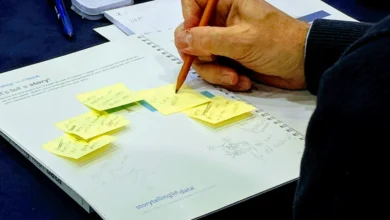
Despite the advancements in AI, the initial storyboarding process remains a deliberately human endeavor. The vital stages of brainstorming, critical editing, and strategic arrangement of content are activities best conducted away from digital screens and, crucially, away from AI’s immediate influence. As proponents of this methodology emphasize, the analog nature of this initial phase – often involving physical sticky notes, whiteboards, and free-flowing discussion – is a feature, not a limitation. This tactile and collaborative environment fosters uninhibited ideation and allows for a more organic exploration of ideas without the constraints or biases that an AI might inadvertently introduce at too early a stage.
AI as a Strategic Thought Partner: Two Critical Junctures
That said, AI proves to be an exceptionally useful thought partner at two distinct and crucial moments within this human-driven process. The first juncture arises after the initial brainstorming phase. At this point, communicators typically possess a disparate array of sticky notes, brimming with ideas, but often lacking a cohesive structure. Here, AI can be invaluable in helping to identify a nascent narrative arc from this raw material. Its capabilities allow it to analyze the content, discern potential points of tension, suggest logical or impactful orders for presentation, and ultimately, help the human communicator visualize the underlying story that is embedded within the generated ideas. This is not about AI creating the story, but rather illuminating pathways within the existing creative output.
The second critical juncture for AI intervention occurs after the content has been provisionally arranged, whether with or without prior AI assistance. Once a draft structure exists, AI can act as a sophisticated pressure-tester. In this capacity, it rigorously evaluates whether the proposed narrative arc effectively holds together. It can scrutinize the perceived tension, identify logical gaps in the storyline, and flag specific areas where the narrative might lose momentum or fail to resonate with the intended audience. In both scenarios, the overarching objective of leveraging AI is consistent: to surface blind spots, provide objective feedback, and empower the human storyteller to assess and refine their narrative plan before committing significant time and resources to building the final presentation or communication piece.
Transitioning from Planning to Execution: AI’s Bridging Role
Once the low-tech, human-devised plan is solidified, AI can further streamline the transition from conceptualization to execution. It can efficiently transform the topics identified on sticky notes into draft takeaway titles for eventual slides or sections of a report. This capability provides a valuable bridge between the strategic planning phase and the practical building phase, ensuring that the essence of the narrative arc is carried forward into the structural elements of the final deliverable. This not only saves time but also helps maintain consistency in messaging and focus.
Navigating the Digital Waters: Potential Pitfalls and Best Practices
While the utility of AI in this context is undeniable, it is imperative to approach its integration with an awareness of potential pitfalls. Over-reliance on AI can stifle human creativity and critical thinking. There’s a risk that users might become too passive, expecting AI to solve all structural challenges rather than engaging in the deeper analytical and empathetic work required for true storytelling. Furthermore, the quality of AI’s output is inherently tied to the clarity and specificity of the human input. Vague prompts will inevitably lead to generic or unhelpful suggestions.
Best practices suggest maintaining human oversight at every stage. AI should be treated as an intelligent tool, not a replacement for human insight. Users should actively critique AI’s suggestions, using them as prompts for further human refinement rather than blindly adopting them. The iterative process, where human input informs AI analysis, which then informs further human refinement, is key to maximizing AI’s benefit while preserving the essential human element of storytelling.
Crafting the AI Prompt: A Blueprint for Collaboration
To effectively leverage AI in this process, a well-structured prompt is essential. If continuing an existing AI conversation, context is likely established. However, for a new interaction, a brief reorientation is critical: articulating the "Big Idea," describing the target audience, outlining what is at stake, and pinpointing the key tension intended for the narrative.
A robust prompt might be structured as follows:
"I am currently working through the storytelling process using storyboarding and the narrative arc framework from Storytelling with You by Cole Nussbaumer Knaflic (Chapters 3 and 4). My objective is to find or pressure-test the narrative arc of my material. Your role is to act as a thought partner, focusing specifically on identifying gaps, inconsistencies, or areas where the story might lose momentum. It is crucial that you do not rewrite my content or suggest entirely new material. Instead, concentrate on whether my existing material can be effectively shaped into, or already follows, a clear narrative arc that successfully builds tension and progresses towards a resolution."
Following this foundational prompt, users can then select an option tailored to their current stage:
-
Option A: After Brainstorming
"I have generated numerous ideas for potential content but have not yet structured them. Please help me identify a potential narrative arc from this raw material. [Share a photo of your sticky notes or a comprehensive list of your ideas]." -
Option B: After Arranging
"I have arranged my content into a preliminary sequence. I need your assistance in evaluating whether this sequence effectively follows a narrative arc or if it could be restructured for greater impact. [Share a photo of your storyboard or a detailed list of planned content]."
"Before providing your feedback, please ask me any clarifying questions that would help you give more precise and valuable input." This proactive request for questions further refines the AI’s understanding and leads to more targeted and useful assistance.
In Practice: The Hybrid Work Policy Scenario
To illustrate these principles, consider the practical application within a corporate context. Imagine a People Analytics Manager at a mid-sized consulting firm. Their team has completed an exhaustive analysis of the company’s hybrid work policy, scrutinizing performance ratings, in-office attendance patterns, collaboration network data, and attrition trends. The core recommendation is a strategic shift: moving from the current universal three-days-in-office, two-days-remote policy to a more nuanced, differentiated approach based on specific role requirements and team types.
The "Big Idea" distilled for this scenario is: "It’s time to shift from our current three-days-in-office policy to a differentiated approach based on role and team type—one that meaningfully reduces costs and enables people to perform better and stay longer."
With the context established and the Big Idea articulated, the immediate task becomes structuring this complex information into a compelling story. The manager initiates the process, as is customary, with sticky notes. Each note captures a single idea, unfiltered, reflecting various perspectives: Diana’s need for confidence in championing the recommendation, Robert’s potential support, Priya’s anticipated objections, and the essential versus merely interesting data findings.
After an initial brainstorming session, yielding approximately twenty-five distinct ideas, the crucial editing phase begins. The manager systematically filters out content that serves the process rather than the audience’s needs—such as methodological details, historical policy timelines, general benchmarking data, or discarded options. Similarly, overly granular information or data points lacking clear actionable output—like specific attrition by location, general manager feedback, or diffuse geographic utilization patterns—are set aside.
This rigorous editing and arrangement process naturally prompts a refinement of the sticky note content itself. What began as purely descriptive, such as "attrition rates before/after," transforms into more pointed, tension-driven statements like "early-tenure attrition has spiked, and it’s costing us." This iterative refinement, even before AI involvement, already pushes the communicator to adopt a storyteller’s mindset over that of a mere analyst.
The result is a streamlined set of twelve core items. These are then arranged into an initial sequence—not yet a fully formed narrative arc, but a logical flow based on immediate understanding, often chronological: policy overview, key data findings, the proposed recommendation, and finally, a call to action. It is at this stage, either after the initial brainstorm (with 25 ideas) or after the initial arrangement (with 12 ideas), that AI can be introduced to help refine or pressure-test the nascent narrative.
For instance, presenting the initial 12-item sequence to AI with "Option B" would allow the AI to critically examine:
- Clarity of Tension: Is the central tension (e.g., "current policy is ineffective/costly") clearly established early and maintained?
- Momentum and Pacing: Does the story build effectively, or are there points where it drags or loses impact?
- Resolution Pathway: Does the sequence logically lead to the proposed differentiated policy as a clear and compelling resolution?
- Audience Relevance: Does each point directly contribute to addressing the audience’s stakes, or are there extraneous details?
The AI’s feedback, such as "The current policy overview sets the stage, but the immediate jump to ‘early-tenure attrition has spiked’ might feel abrupt without first detailing the impact of the current policy on overall performance or morale, thereby building the tension more gradually before revealing the specific pain point," would guide the manager to re-sequence or elaborate on certain points.
The Broader Impact and Future Implications
The integration of AI into the narrative crafting process signifies a pivotal shift in how organizations approach communication, particularly regarding complex data. It democratizes access to advanced storytelling techniques, enabling more individuals within an organization to craft persuasive narratives without necessarily possessing an innate storytelling flair. This can lead to more effective internal communications, more successful client presentations, and ultimately, better data-informed decision-making across the board.
Beyond the immediate benefits, this trend highlights the evolving nature of human-AI collaboration. AI is not replacing human creativity or strategic thinking; instead, it is augmenting these capabilities, acting as an intelligent co-pilot. As AI models become more sophisticated, their ability to understand nuance, context, and even implied emotional responses from prompts will likely enhance their utility further. The future of data storytelling will undoubtedly involve a symbiotic relationship between human intuition and AI’s analytical prowess, leading to more impactful and resonant communications in an increasingly data-saturated world.