Introducing Amazon OpenSearch Service Managed Disaster Recovery for Mission-Critical Data Resilience

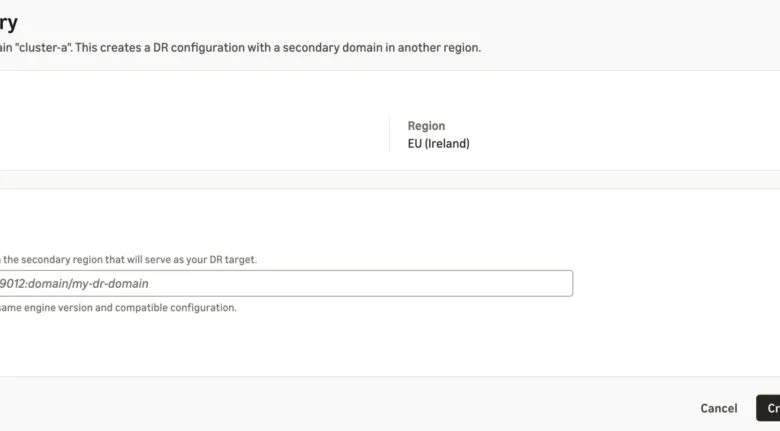
Amazon Web Services (AWS) has officially launched a managed disaster recovery feature for Amazon OpenSearch Service, marking a significant evolution in how enterprises manage cross-Region data redundancy for search and AI-driven applications. By automating the replication process for domains running OpenSearch 3.7 or later, AWS aims to eliminate the complex engineering overhead previously required to maintain high-availability, multi-Region architectures. This new capability provides organizations with a robust, API-driven mechanism to achieve a Recovery Point Objective (RPO) of under one minute and a Recovery Time Objective (RTO) of under 20 minutes, addressing critical gaps in business continuity planning for large-scale data operations.
The necessity for this feature stems from the increasing reliance on OpenSearch for mission-critical workloads, such as real-time log analytics, observability, and generative AI search backends. Historically, companies requiring geographic redundancy had to architect custom solutions—often involving complex cross-cluster replication pipelines or dual-write strategies. These manual efforts were not only resource-intensive, often requiring months of engineering time, but also prone to configuration errors and lacked a standardized, coordinated failover path. The introduction of managed disaster recovery shifts the burden of infrastructure maintenance from the user to the platform provider, ensuring that data is continuously synced across geographic boundaries with minimal latency.
The Evolution of Disaster Recovery in AWS
The landscape of cloud-native disaster recovery has matured significantly over the past decade. Previously, Amazon OpenSearch Service relied on Multi-Availability Zone (Multi-AZ) deployments to ensure high availability within a single AWS Region. While sufficient for localized hardware failures, this approach did not protect against large-scale, Region-wide outages or satisfy stringent regulatory mandates that require data residency in geographically distinct locations.
In the absence of a managed service, many enterprise-level users operated their own replication clusters. This "build-it-yourself" era meant that IT teams were responsible for managing the underlying networking, such as VPC peering, encryption, and the orchestration of role swaps during a disaster. These manual systems often struggled to meet the rigorous RPO/RTO targets demanded by financial institutions, healthcare providers, and e-commerce platforms. With the new managed service, AWS now provides an integrated, secure, and encrypted replication stream that operates entirely within the OpenSearch Service network, removing the need for external networking configuration and simplifying the management of security keys through AWS Key Management Service (AWS KMS).
Operational Mechanics and Architectural Design
At its core, the managed disaster recovery architecture creates a primary-secondary pairing between two OpenSearch Service domains located in different regions. The primary domain acts as the source of truth, accepting both read and write operations. The secondary domain, serving as a passive read-only node, continuously ingests the data stream from the primary.
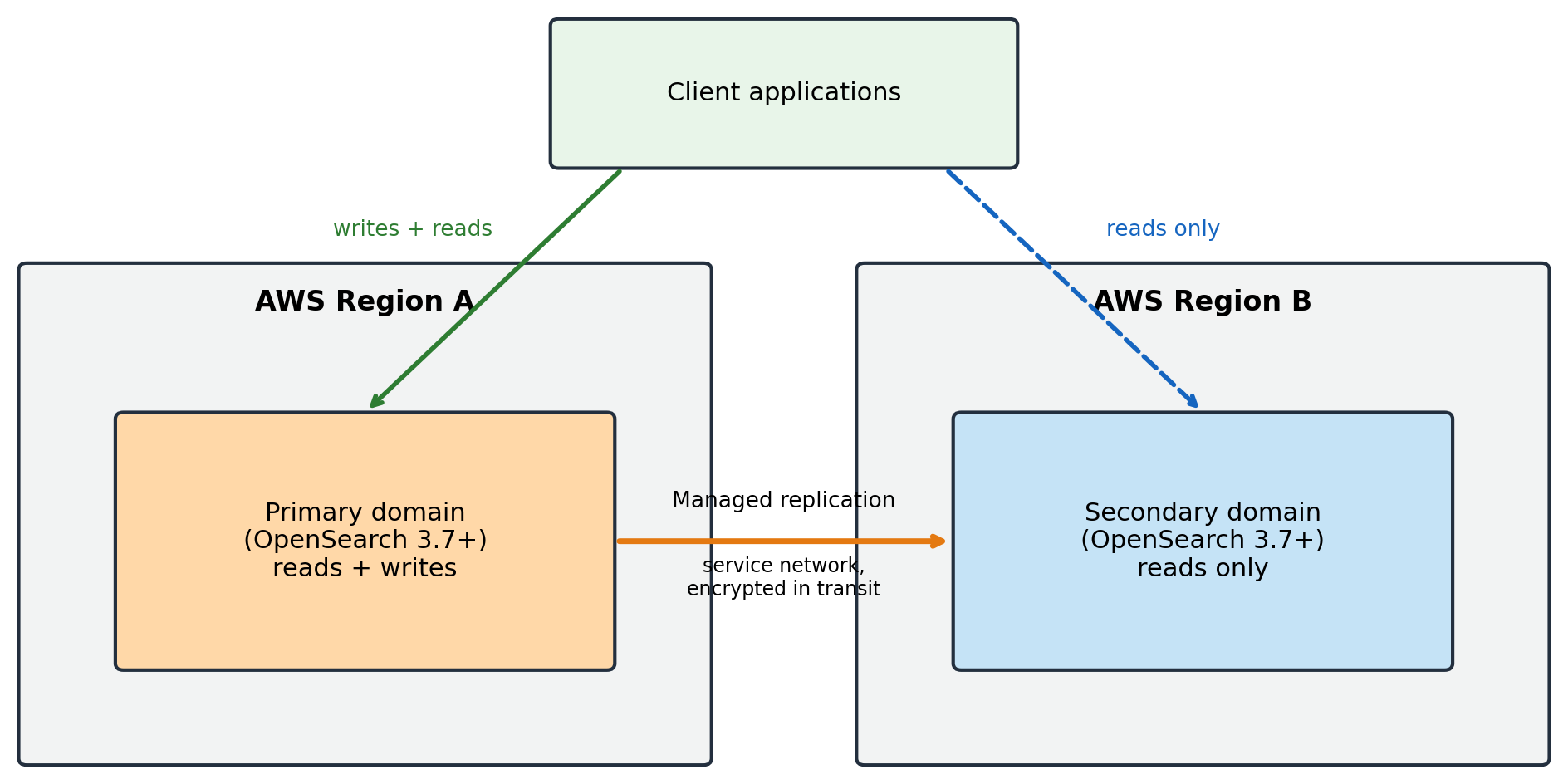
The initial synchronization process is a critical phase, where existing Lucene segments are replicated from the primary to the secondary. Once this baseline is established, the service manages the replication of new documents and index updates in near real-time. By keeping the secondary domain in a constant state of readiness, the system ensures that the infrastructure is prepared to transition roles instantly, should the primary region face an outage.
The service categorizes movement between regions into two distinct operations: switchover and failover. A switchover is a planned event, typically utilized for maintenance, regulatory compliance exercises, or preemptive migration of workloads. Because it is coordinated, it guarantees zero data loss, as all pending writes are reconciled before the role swap occurs. Conversely, a failover is an unplanned, emergency response to a primary region outage. In this scenario, the secondary domain is promoted to primary status unilaterally. While this process is significantly faster, it inherently accepts a marginal risk of data loss—bounded by the replication lag—for the sake of immediate service restoration.
Quantifying Resilience: Performance Data
Internal AWS performance testing, conducted across r7g instance types with a sustained write load of 240 MBps, highlights the efficiency of the new system. For a 1 TiB data footprint, the system demonstrated a total initial synchronization time of approximately 20 minutes. Scaling up to a 10 TiB workload, the synchronization time increased to roughly 2 hours and 30 minutes, depending on the underlying instance size.
Perhaps most critical for disaster recovery planners is the steady-state replication lag. Tests indicated that across both 1 TiB and 10 TiB data sizes, the p95 replication lag remained consistently around 10 seconds. During a planned switchover, the "writes down" time—the period during which the application cannot accept writes—averaged between 36 and 57 seconds. In an unplanned failover, the time required to confirm the role flip was significantly lower, often taking less than 10 seconds, with the total RTO (time until the new primary accepts traffic) hovering around 60 to 70 seconds. These metrics provide a clear, empirical foundation for organizations to update their Service Level Agreements (SLAs) and internal recovery playbooks.
Strategic Implications for Enterprises
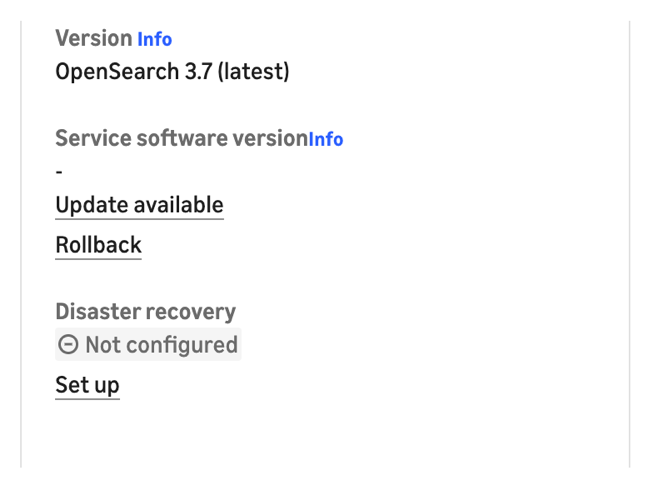
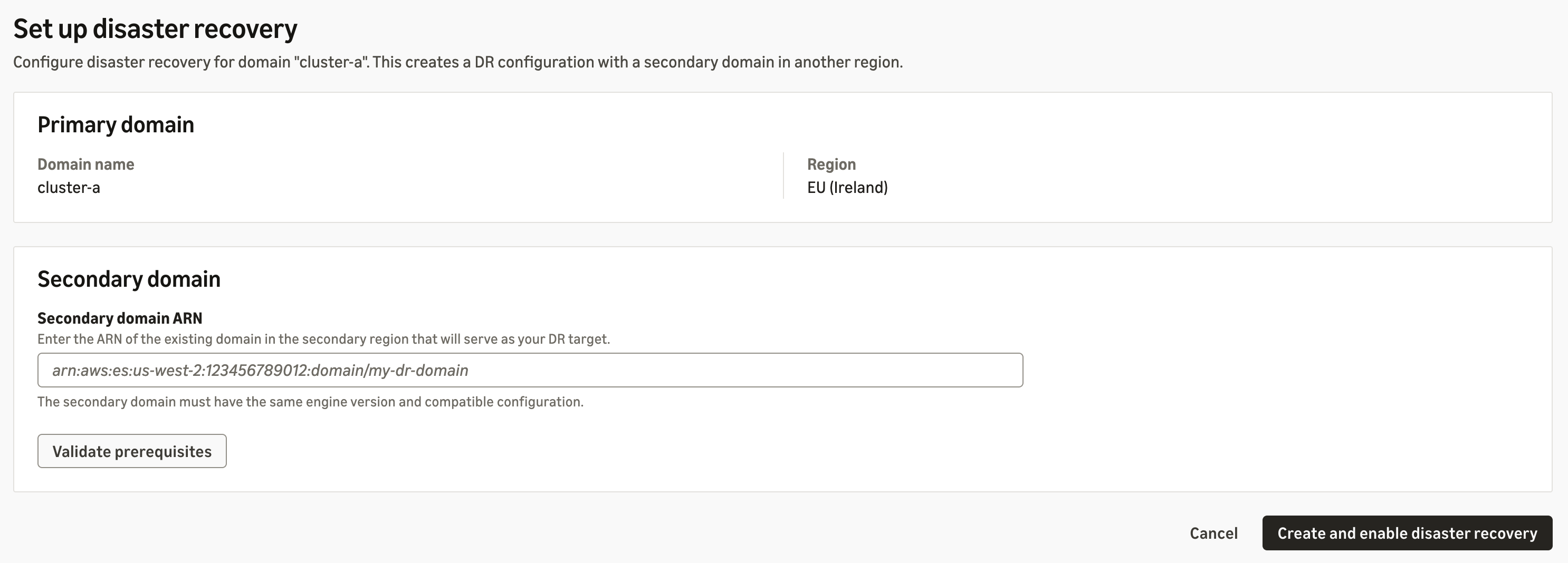
The deployment of managed disaster recovery has several immediate implications for the broader cloud ecosystem. First, it democratizes high-end business continuity. Small and medium-sized enterprises that previously lacked the staff to maintain complex replication pipelines can now achieve enterprise-grade durability with a simple two-step configuration.
Second, the shift towards API-driven, managed replication underscores the move toward "infrastructure-as-code" resilience. By allowing developers to trigger failovers via the AWS CLI or SDKs, companies can integrate disaster recovery into their automated CI/CD pipelines. This means that a failover event could potentially be triggered by automated monitoring systems before human operators are even alerted, drastically reducing the impact of regional outages.

However, the responsibility for the "write-path" remains with the user. Managed disaster recovery does not automatically redirect application traffic; users must ensure their application-layer logic, DNS records, or service discovery mechanisms are capable of rerouting writes to the new primary region following a promotion. This remains a crucial step in the Disaster Recovery (DR) playbook that necessitates careful orchestration and pre-testing.
Regulatory and Compliance Context
For industries governed by strict data sovereignty and availability regulations—such as the financial sector (e.g., PCI DSS, SOC2) and healthcare (e.g., HIPAA)—the ability to prove that data is continuously replicated to a secondary region is a significant compliance advantage. The built-in dashboard for monitoring replication health, coupled with granular Amazon CloudWatch metrics, provides an audit trail that can be used to demonstrate compliance with RPO and RTO requirements.
By offering a native, AWS-supported solution, the service reduces the "compliance debt" associated with managing third-party replication tools. Security teams can now rely on standard AWS encryption at rest and in transit, simplifying the validation process for regulatory audits.
Future Outlook and Next Steps
The launch of managed disaster recovery for OpenSearch 3.7 and later versions is a clear signal that AWS intends to solidify its position as the premier host for mission-critical search workloads. As enterprises continue to migrate legacy on-premises search clusters to the cloud, the maturity of these disaster recovery features will be a deciding factor in platform selection.
For organizations currently utilizing older versions of OpenSearch or Elasticsearch, the upgrade path to 3.7 is now facilitated by a "clone-based" upgrade mechanism. This allows users to test the new version on a cloned cluster while the original remains live, significantly de-risking the transition.
As the technology evolves, it is expected that AWS will continue to refine the automation of the "fail-back" process—the procedure for returning traffic to the original region once it has been restored. Currently, this requires a manual re-seeding of the original domain, but the integration of these features into the core service suggests that more seamless, bidirectional synchronization could be on the horizon. For now, the introduction of this managed disaster recovery layer represents a foundational improvement in cloud infrastructure reliability, enabling organizations to build with higher confidence, knowing their search capabilities are protected against the unpredictability of regional infrastructure events.
Related posts: