Neri Oxman Unveils Vigils: A Living Bacterial Dyeing Concept Transforming Synthetic Biology into Sustainable Fashion

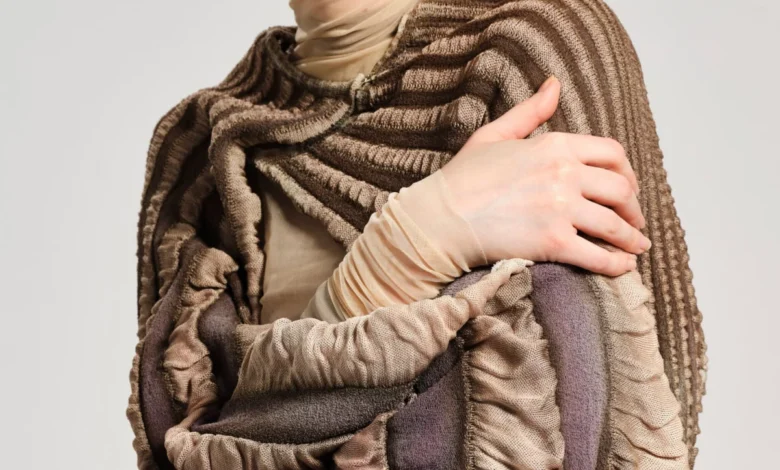
The intersection of biotechnology and textile design has yielded a striking new frontier through the work of designer Neri Oxman and her eponymous studio, Oxman. Titled Vigils, the research-driven project introduces a revolutionary fabric dyeing concept that replaces conventional, water-intensive chemical coloration methods with living bacterial cultures. By spraying a specialized biological solution onto 3D-knitted silk textiles, the studio has unlocked an organic method of generating muted indigo and pink pigments. While currently positioned at the prototype and experimental stage rather than an optimized industrial pipeline, Vigils challenges traditional paradigms of fashion production, proposing a future where biological activity is directly integrated into the lifecycle of a garment.
The Mechanics of Living Color
At the core of the Vigils project is a sophisticated interplay between synthetic biology and material engineering. The process begins with 3D-knitted Tussah silk, a wild silk variant prized for its unique textural and structural properties. The threads of this textile are intentionally coated with specialized chemicals that are sensitive to bacterial interaction.
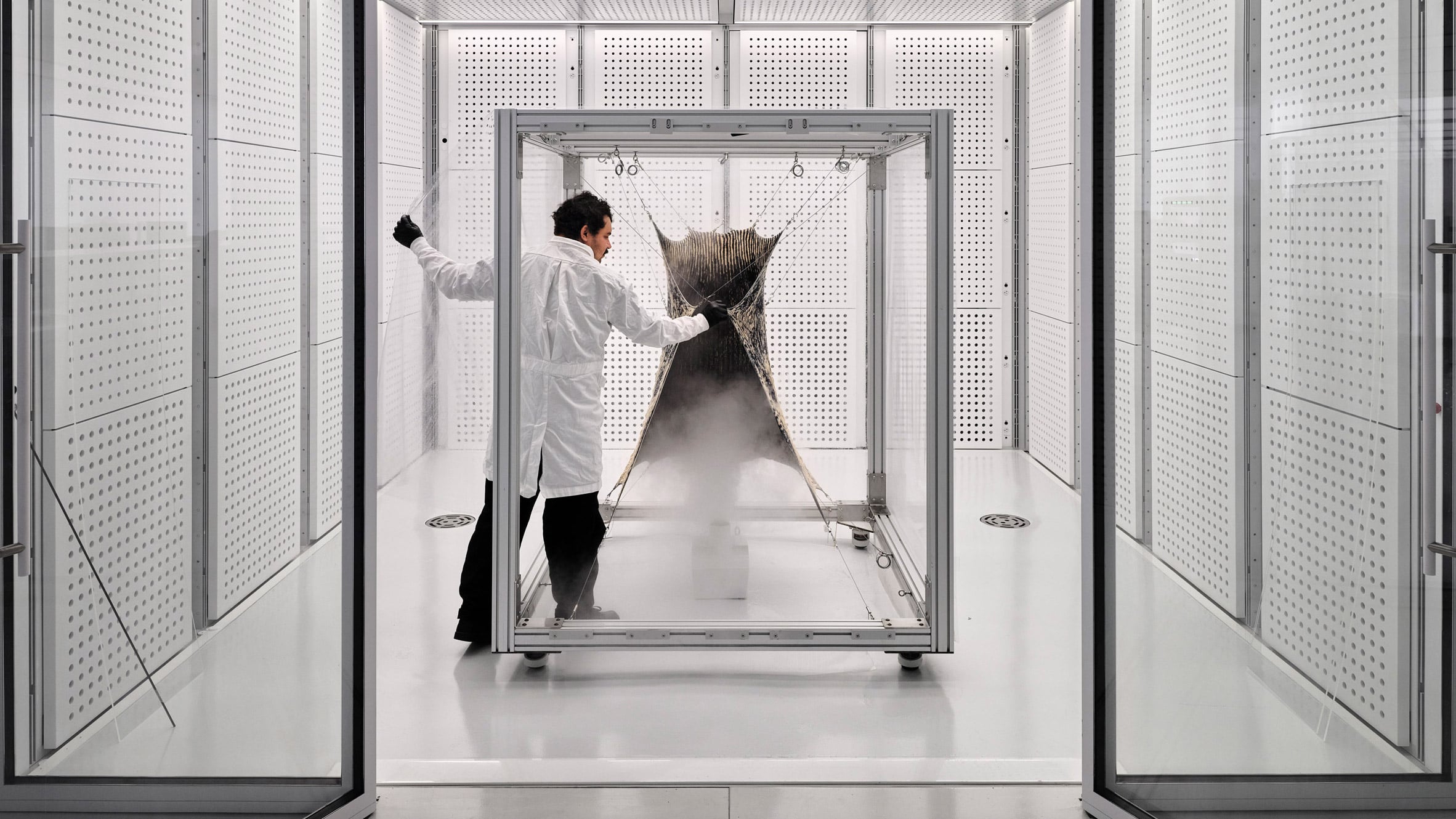
Once prepared, the fabric is treated with a precise spray solution developed within the Oxman laboratory. This solution incorporates the BL21 strain of Escherichia coli (E. coli), a well-documented and widely utilized strain in biotechnology and synthetic biology research. The spray acts as a catalyst, transforming the textile substrate into a functional bioreactor.
Following application, the fabric undergoes a 24-hour incubation period. During this critical window, the sprayed solution and the bacterially sensitive chemicals engage in a biochemical dialogue, cultivating a living bacterial culture numbering in the billions of cells. As this organism spreads across the material according to the precise application patterns dictated by the designer, it leaves behind amino acids. These residual amino acids impart natural, faded indigo and pink pigments directly to the silk fibers.
To finalize the textile, the fabric is thoroughly washed and dried. This essential step deactivates and removes the living bacteria from the substrate, leaving behind only the permanent, organically derived color. According to the Oxman team, the resulting patterns and color gradients are fundamentally tied to the density and placement of the initial spray, ensuring that no two textiles are identical.
Demonstrating the Concept Through Fashion
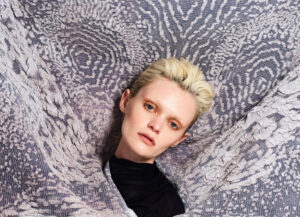
To showcase the aesthetic and material possibilities of the Vigils technique, the Oxman studio produced a collection of four distinct capes. These garments serve as physical testaments to the variations, gradients, and muted tones generated by the bacterial dyeing process. Rather than yielding uniform sheets of color common in industrial dyeing vats, the capes display organic striations and depth that visually communicate their biological origin.
The studio has emphasized that Vigils is intended as an exploratory research endeavor rather than a fully realized commercial manufacturing process. By prioritizing the investigation of synthetic biology over mass production, Oxman aims to expand the creative toolkit available to contemporary designers, artists, and material scientists.
Contextualizing the Innovation Within Material Ecology
Neri Oxman has long been a prominent figure in the realm of material ecology—a field that seeks to integrate design, biology, and materials science to create sustainable, nature-inspired structures. The unveiling of Vigils follows a period of significant institutional expansion and conceptual output for the designer. In 2024, Oxman established a new studio in Midtown Manhattan, signaling a continued commitment to large-scale urban and material research. Concurrently, the studio revealed an artificial intelligence-designed conceptual skyscraper titled Eden AI, demonstrating its capacity for computational architecture.
However, Oxman’s return to prominent design discourse also arrives against a backdrop of past academic scrutiny. The designer previously faced public scrutiny concerning allegations of academic plagiarism within her doctoral thesis completed at the Massachusetts Institute of Technology (MIT). Despite these controversies, her creative studio continues to push the boundaries of bio-architecture and sustainable material innovation.
Broader Implications for the Textile Industry
The environmental toll of traditional textile dyeing is well-documented. The global fashion industry consumes trillions of liters of water annually, with a substantial portion of wastewater contaminated by synthetic dyes, heavy metals, and toxic chemical agents discharged directly into natural waterways. While alternatives such as natural plant-based dyes exist, they often require vast amounts of agricultural land and water resources, limiting their scalability.
Biotechnology offers a compelling alternative by leveraging microorganisms to synthesize color compounds without the heavy reliance on petrochemicals or intensive agricultural inputs. Projects like Vigils point toward a future where garments are grown rather than manufactured, fundamentally altering supply chains.

Despite its promising aesthetic and ecological potential, the Vigils project remains an early-stage academic and design prototype. The studio acknowledges that the technique has not yet undergone a comprehensive Life Cycle Assessment (LCA). An LCA is a critical scientific framework required to accurately measure the environmental footprint of a product from raw material extraction through production, distribution, and end-of-life disposal. Without this rigorous auditing, the true ecological viability of scaling bacterial dyeing remains to be definitively proven.
Nevertheless, the cultural and systemic implications of the project are profound. By reframing the textile substrate as an active participant in biological growth, Oxman challenges the industry to rethink the relationship between humanity, technology, and nature. As synthetic biology matures, initiatives like Vigils provide a vital conceptual bridge, illustrating how living organisms can be harnessed to redefine the boundaries of design, aesthetics, and sustainability.
Related posts: