The Evolution of Information Retrieval
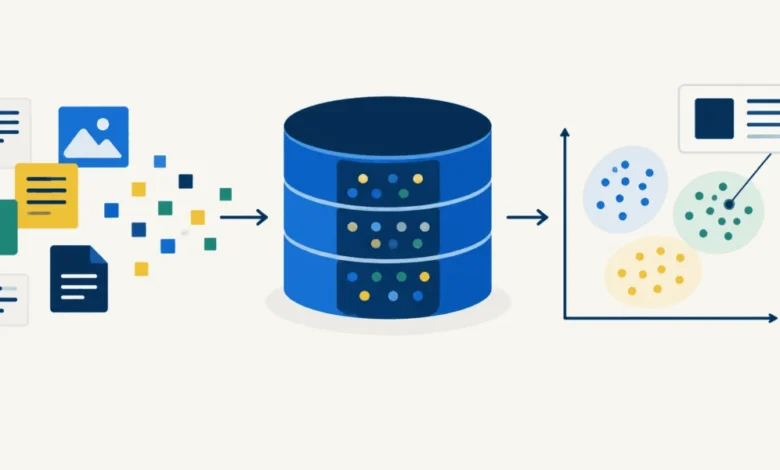
Traditional databases, which rely on SQL or keyword-based indexing, function by matching exact strings or tokens. While efficient for structured data, this methodology often fails to capture the nuance of human language, where synonyms, context, and intent play critical roles. Vector databases have emerged as the primary solution to this limitation. By transforming text into dense numerical representations—embeddings—these systems enable "semantic search," where the database identifies results based on the conceptual proximity of vectors in multi-dimensional space.
The shift toward vector-based retrieval has been accelerated by the rise of Large Language Models (LLMs). As enterprises look to implement Retrieval-Augmented Generation (RAG), the ability to store and query high-dimensional embeddings has become a foundational skill for engineers. Understanding how to build these tools from the ground up demystifies the black-box nature of commercial offerings like Pinecone, Milvus, or Weaviate.
Core Mechanics: From Text to Vectors
The process begins with the transformation of raw data into vector form. In the provided ten-step framework, developers are guided through the initialization of a database object, the ingestion of a corpus, and the subsequent encoding of that data using pre-trained models.
Each document, regardless of length, is converted into a vector of fixed dimension—typically 384 numbers for models like all-MiniLM-L6-v2. This uniformity is a critical feature of vector databases; it ensures that the index size is predictable and that scanning operations remain computationally efficient. Once the index is built, a search query undergoes the same transformation process. The database then calculates the similarity between the query vector and the document vectors. By normalizing these vectors to a length of one, the dot product between the query and a document becomes equivalent to cosine similarity, the standard metric for determining how "close" two pieces of information are in terms of meaning.
Implementation Chronology and Methodology
The ten-step journey moves from basic setup to sophisticated data management:
- Environment Configuration: Establishing the workspace and importing essential libraries like NumPy and sentence-transformers.
- Indexing: The process of encoding documents and managing the storage of these numerical arrays.
- Initial Search Execution: Testing the retrieval system with natural language queries to confirm that semantic matching is functional.
- Semantic Nuance Testing: Executing queries that share no common keywords with the target documents, proving that the system relies on meaning.
- Score Interpretation: Analyzing the output scores, which represent the confidence or proximity of the match, and establishing a threshold for relevance.
- Metadata Filtering: Implementing "where" clauses to refine search results, a necessary feature for production-grade applications.
- Advanced Filtering Logic: Understanding how to handle scenarios where filter constraints are more restrictive than the requested number of results.
- Data Integrity and Guard Rails: Implementing error handling to ensure that document, vector, and metadata arrays remain synchronized—a critical requirement for preventing index corruption.
- Persistence: Strategies for saving the index to disk (storing vectors as binary files and metadata as JSON) to allow for reloading without re-encoding.
- Scalability Benchmarking: Measuring the performance of the system against larger synthetic datasets to illustrate how the computational cost of a matrix-based search scales linearly with the number of documents.
Supporting Data and Performance Analysis
A notable finding in the implementation process is the performance stability of matrix-based search operations. When scanning 1,000 documents, the system performs a search in approximately 0.01 milliseconds. Even when scaling to 100,000 documents, the scan time remains highly competitive at roughly 3.73 milliseconds.
This performance is derived from the efficiency of NumPy’s underlying C-based matrix multiplication operations. Because the search process reduces to a high-speed dot product calculation, the system effectively bypasses the iterative bottlenecks found in traditional list-based searching. These benchmarks demonstrate that for many mid-sized datasets, a custom-built, in-memory NumPy index can perform as effectively as, or better than, complex external systems.
Official Perspectives on Vector Search
Industry experts often note that the "magic" of a vector database is not the storage engine itself, but the embedding model that interprets the data. Without a high-quality model, the database is simply performing math on arbitrary numbers. Consequently, the industry has seen a stabilization in embedding techniques, with models like the all-MiniLM series becoming the standard for lightweight, high-performance applications.
The consensus among developers is that while commercial vector databases provide essential features like automatic sharding, multi-tenancy, and distributed storage for millions or billions of records, the fundamental logic of the "vector search" is remarkably lean. Building one from scratch reveals that the complexity of vector databases usually lies in the infrastructure required to scale, rather than the search algorithm itself.
Broader Implications for Information Technology
The move toward vector-native search architectures signals a fundamental shift in how applications process information. By replacing keyword-based indexing with vector embeddings, developers can create systems that "understand" the user’s intent rather than simply matching characters. This capability is the cornerstone of modern AI applications, from personalized recommendation engines to advanced customer support bots and knowledge management systems.
For the enterprise, the ability to maintain local,, self-hosted, or custom-built vector indices is a strategic advantage. It allows for better data privacy, reduced reliance on expensive API-based embedding services, and the ability to fine-tune the indexing process for specific domain-specific vocabularies.
Conclusion: The Future of Semantic Indexing
As this tutorial illustrates, the transition from simple text processing to semantic intelligence is more accessible than it might appear. The underlying math—vector multiplication and similarity ranking—is consistent whether one is managing twenty-five documents or twenty-five million. While the infrastructure to support massive, distributed vector databases requires significant engineering effort, the core mechanism remains elegant in its simplicity. By mastering these ten steps, developers gain the necessary insights to navigate the evolving landscape of AI-powered data retrieval, ensuring they can build robust, meaningful search experiences for the next generation of applications.