Breaking Down Information Silos: How Amazon Quick Integrates Structured and Unstructured Data Through Conversational AI

Modern organizations generate and capture vast quantities of information every single day, yet a significant operational challenge remains: this data is typically fractured across entirely different silos. Structured information—such as numerical sales figures, transaction metrics, and inventory inventories—lives neatly inside relational databases, structured spreadsheets, and enterprise data warehouses. Meanwhile, unstructured data—encompassing critical business memos, qualitative market research reports, corporate strategy documents, and unstructured email files—sits scattered across various file systems and cloud storage buckets. Historically, attempting to analyze these two distinct data categories simultaneously required analysts and business leaders to switch endlessly between multiple disjointed tools, execute entirely separate database queries, and manually correlate the resulting outputs. This tedious process introduced latency into decision-making and heightened the risk of human error.
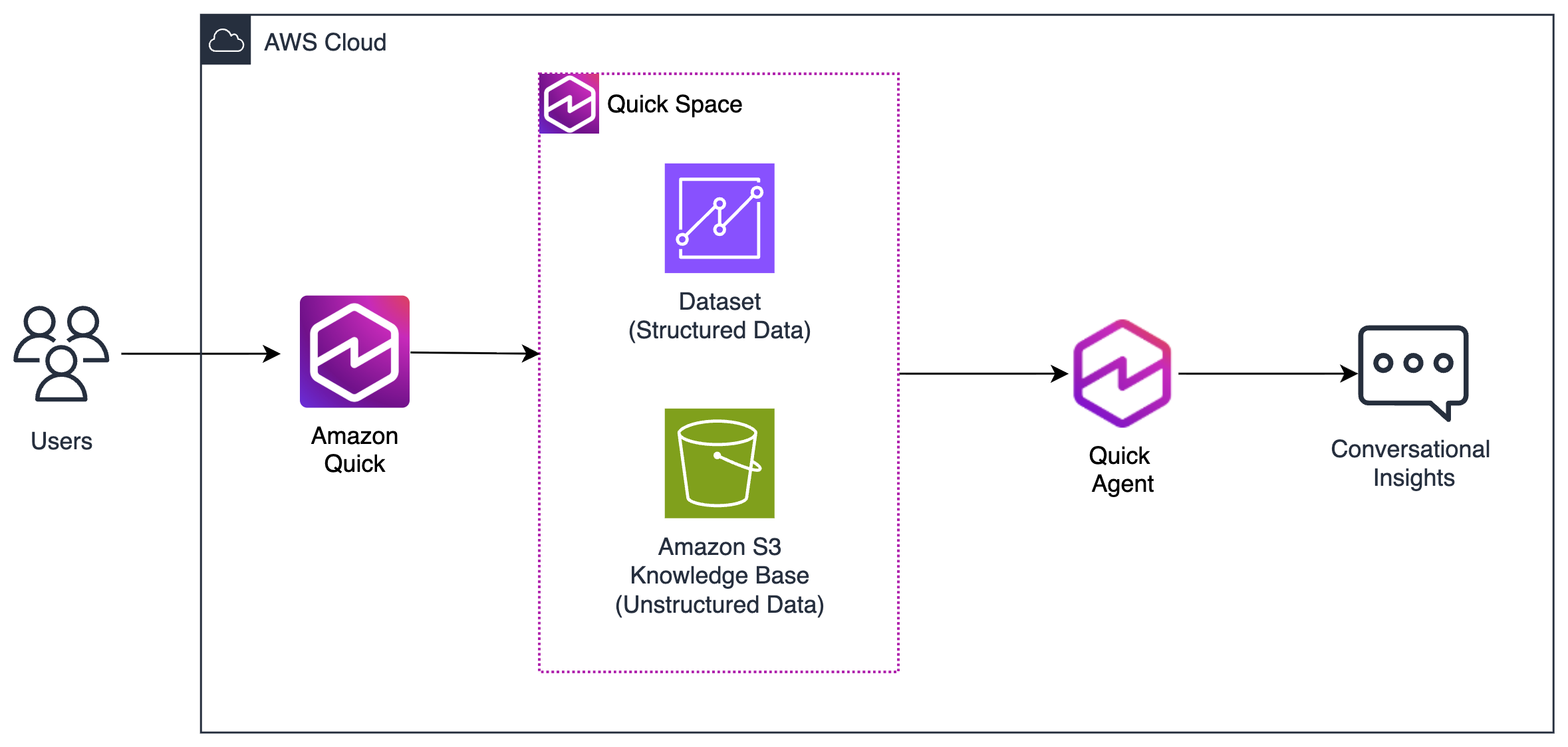
To resolve this enterprise friction, Amazon Web Services has introduced advanced integration capabilities within Amazon Quick, offering a unified, conversational workspace designed to bridge the gap between structured and unstructured corporate assets. By leveraging this unified architecture, enterprises can now connect structured data through deeply enriched datasets while concurrently feeding unstructured repositories via Amazon S3-backed knowledge bases. Both formats can then be queried effortlessly through a single, intelligent conversational AI agent. Industry analysts observe that this capability represents a crucial evolution in enterprise business intelligence, shifting the paradigm from rigid, dashboard-driven queries to dynamic, natural-language exploration that transcends data boundaries.
The architecture powering this unified data experience relies on a meticulously engineered, three-layered approach designed for scalability, governance, and seamless expansion. At the foundational layer, data resides within integrated storage repositories, including Amazon Simple Storage Service (S3) buckets for unstructured documents and optimized in-memory calculation engines (such as SPICE) for structured datasets. The intermediate layer consists of Amazon Quick Spaces—centralized workspaces that act as collaborative data hubs. Finally, the top layer features customized chat agents equipped with enterprise-grade security guardrails, persona instructions, and direct access links to the underlying Spaces. Because of this modular, layered design, organizations can dynamically expand their analytical ecosystems over time. As new data sources or document repositories are introduced into a designated Space, the linked conversational agent instantly gains the ability to leverage them, while strictly adhering to the access permissions and security credentials of the individual user issuing the query.
Deploying this integrated solution in a production environment requires a systematic approach to data preparation, integration, and agent configuration. The foundational phase begins by populating an Amazon S3 bucket with unstructured reference materials, such as comprehensive market analysis reports, executive summaries, and strategic product memos. Simultaneously, administrators prepare structured CSV files—such as regional product sales transaction records—which will later be ingested directly into the Amazon Quick platform.
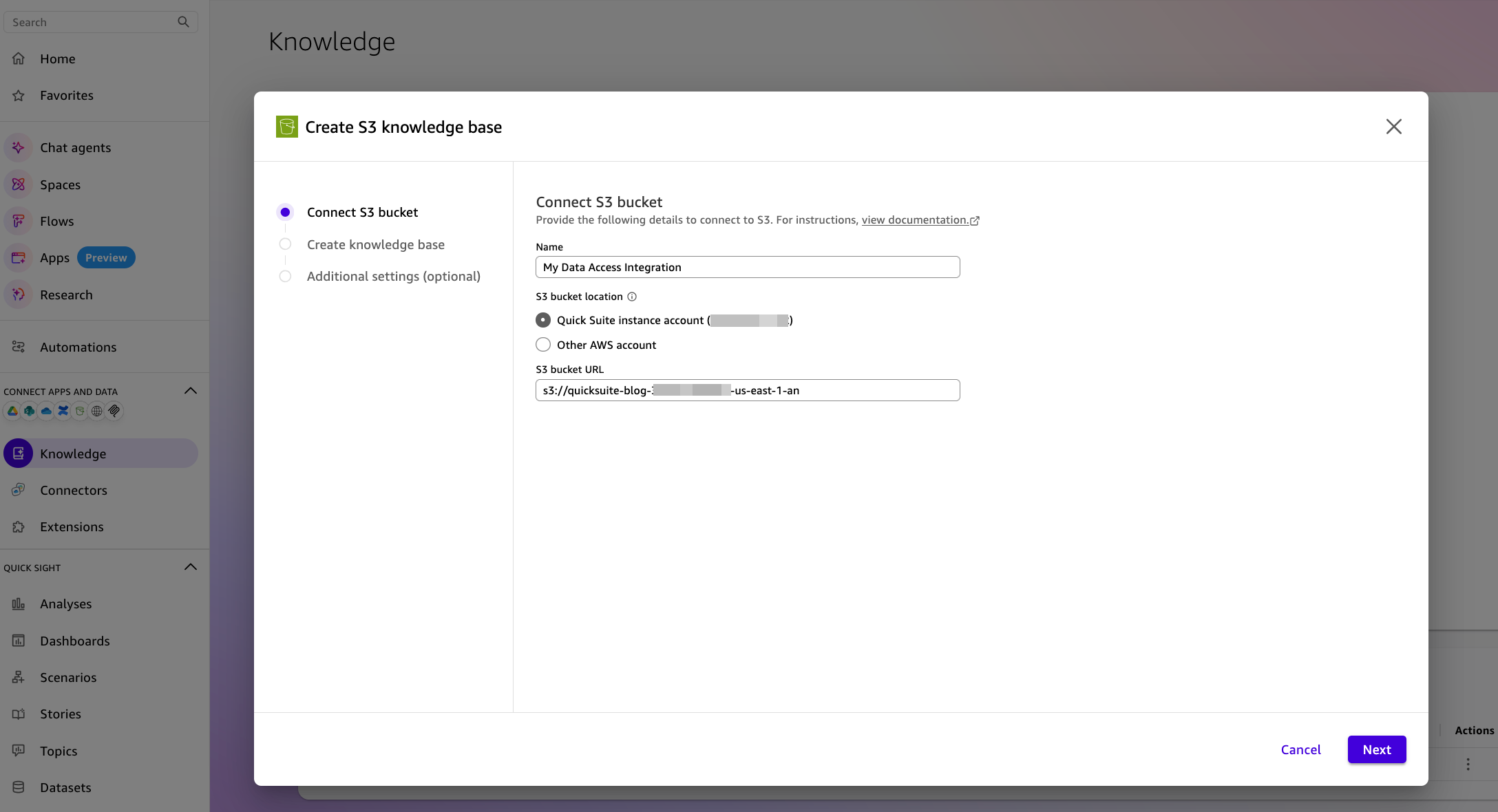
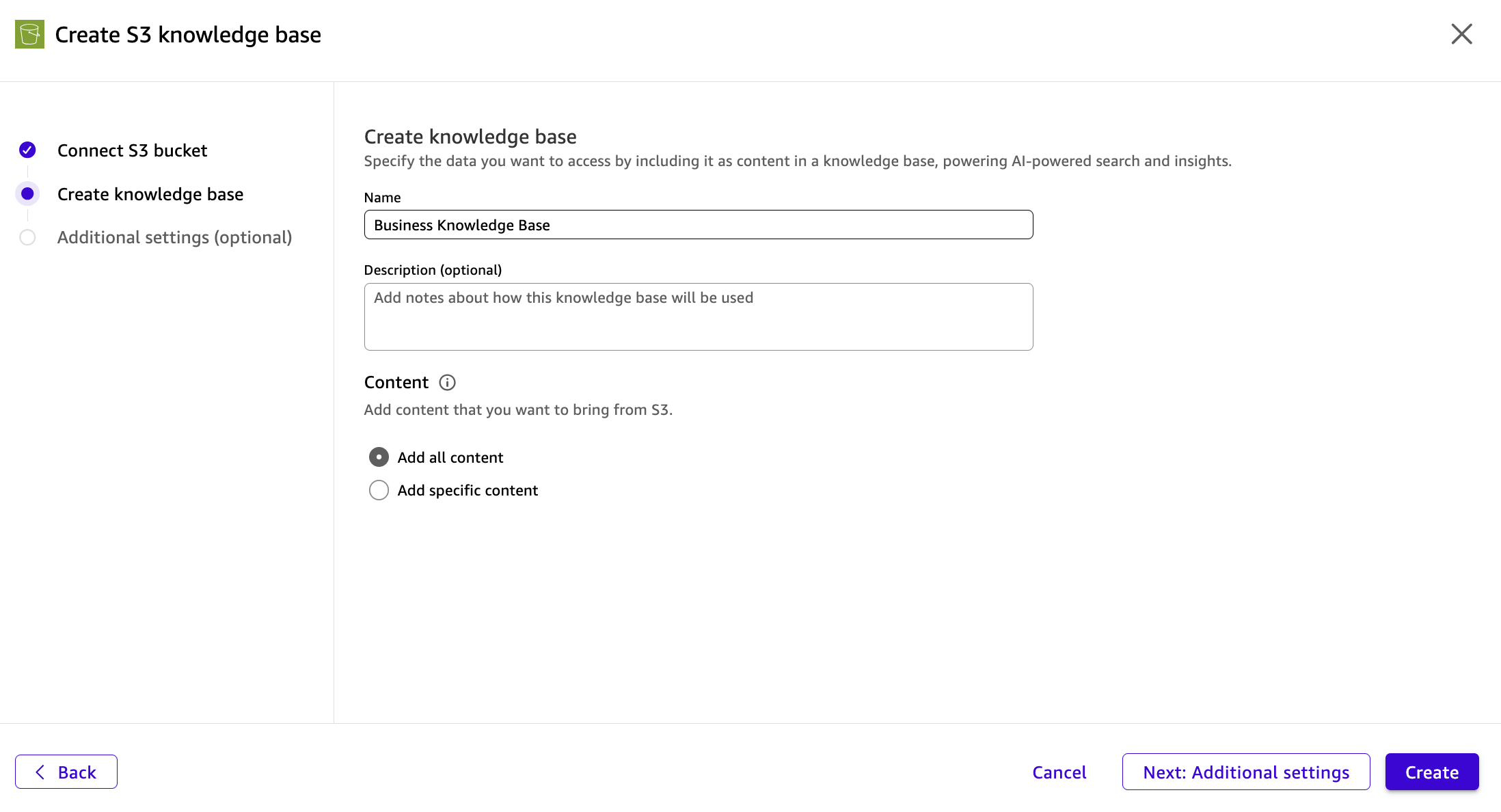
Once the sample data is staged, the integration sequence commences with the establishment of an Amazon S3 knowledge base connector via the Amazon Quick management console. This step links the cloud storage bucket to the platform, prompting the system to begin indexing the unstructured documents in the background for high-speed, AI-powered semantic search. During this phase, administrators must carefully evaluate and configure document-level access control lists (ACLs) and metadata directory settings to ensure strict regulatory compliance and data governance from the outset.
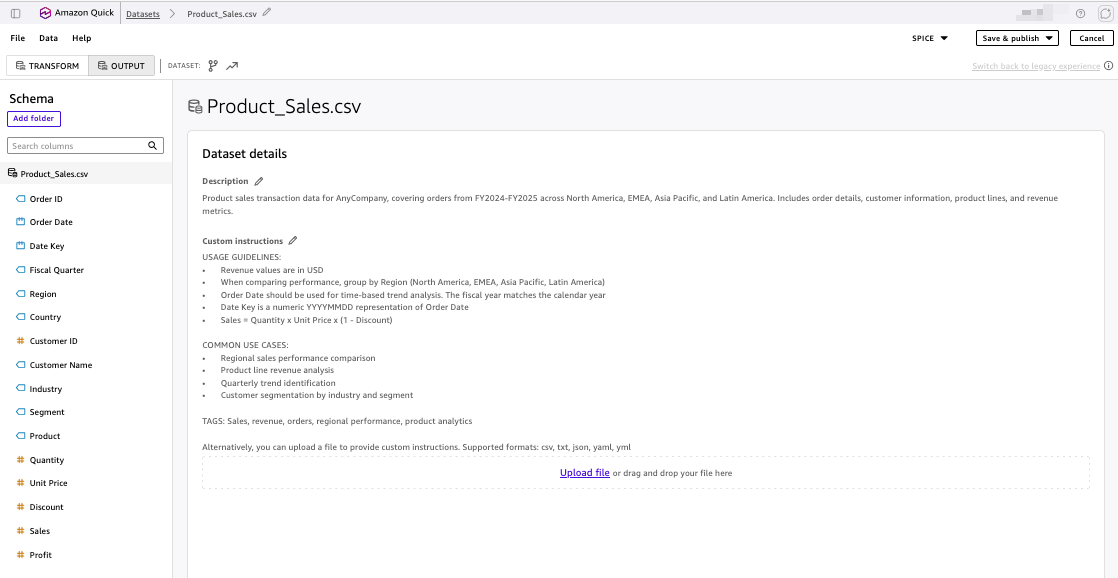
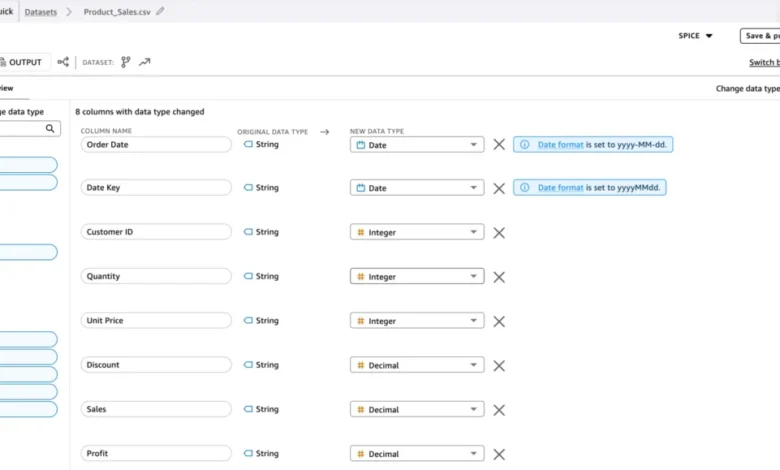
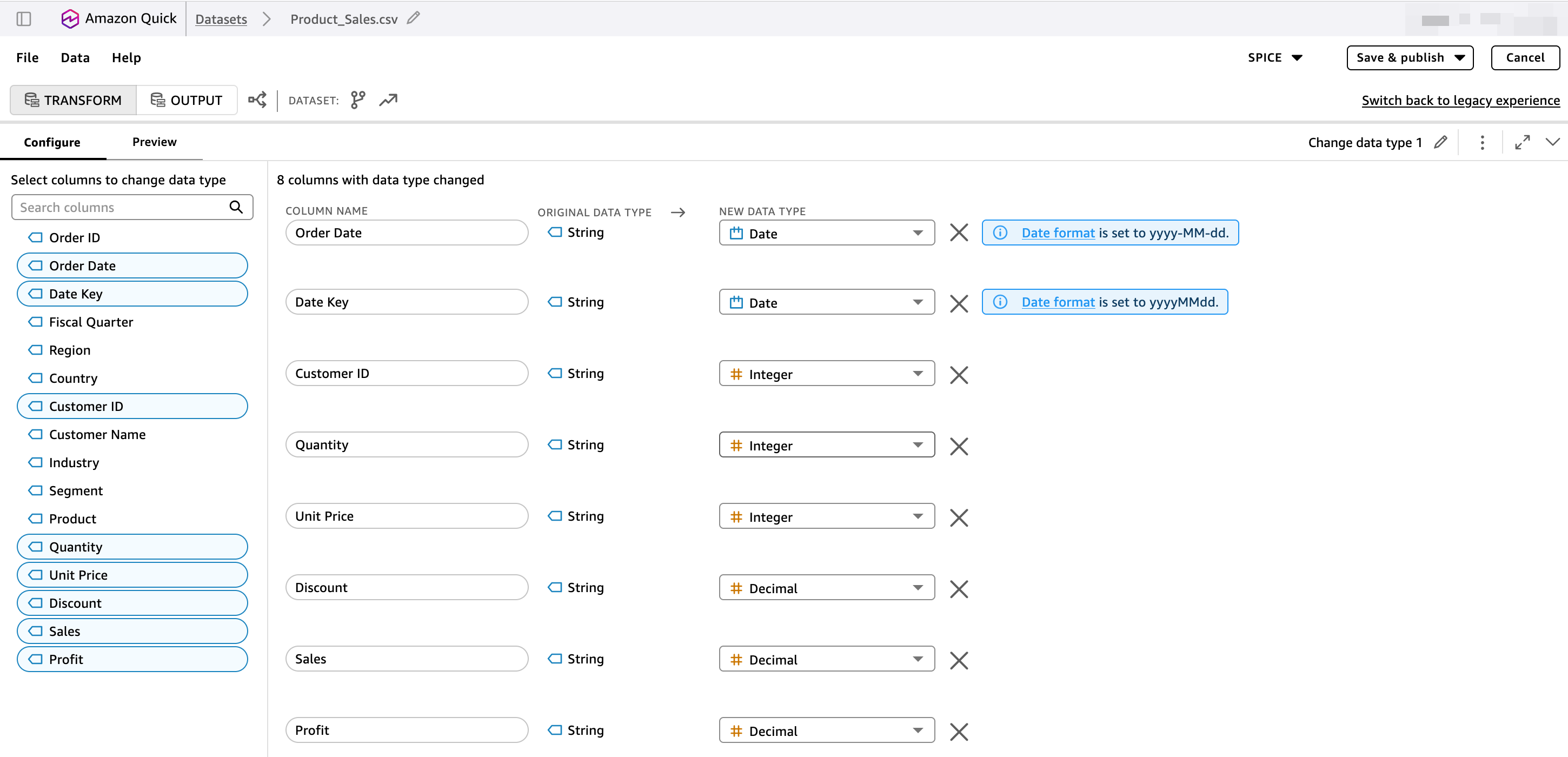
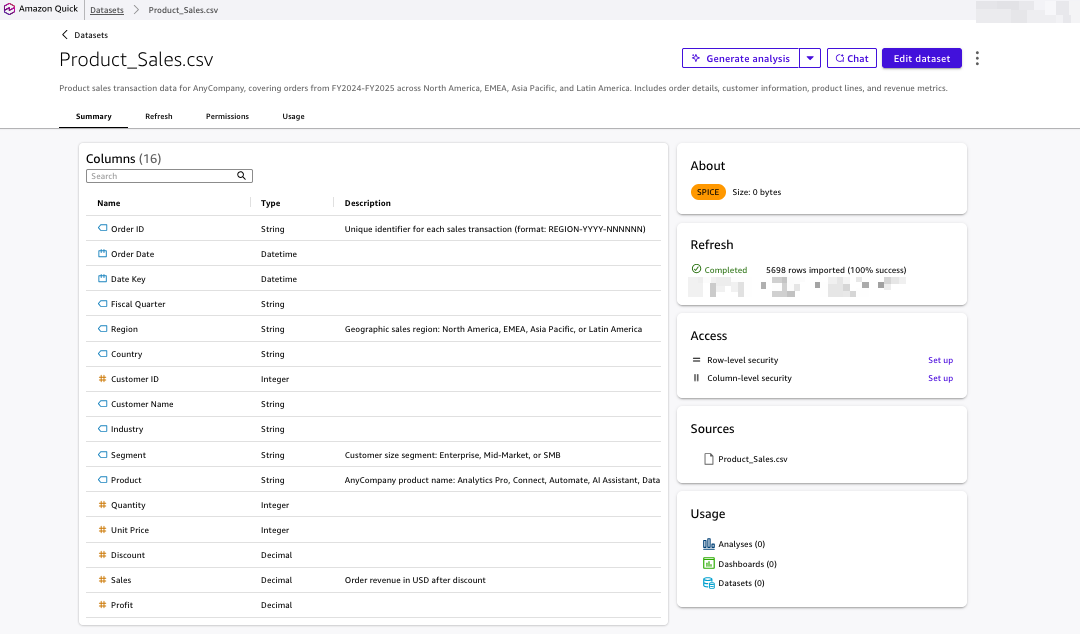
Following the establishment of the unstructured knowledge base, attention shifts to the structured data component. Administrators upload the structured transaction files into Amazon Quick, where the data is ingested into the high-performance calculation engine. However, simply uploading raw rows and columns is insufficient for advanced natural language processing. To achieve maximum query accuracy, the dataset undergoes a rigorous enrichment process. In the transformation phase, system administrators meticulously inspect and manually correct auto-detected data types—ensuring that numerical metrics, monetary values, and temporal data points are accurately categorized. Subsequently, in the output configuration phase, comprehensive semantic context is injected into the platform. Administrators input rich dataset-level descriptions, define custom usage guidelines, outline common business use cases, and assign precise tags. Furthermore, individual column descriptions are explicitly articulated, providing the underlying large language models with the exact business context required to reliably translate complex natural language questions into precise SQL queries.
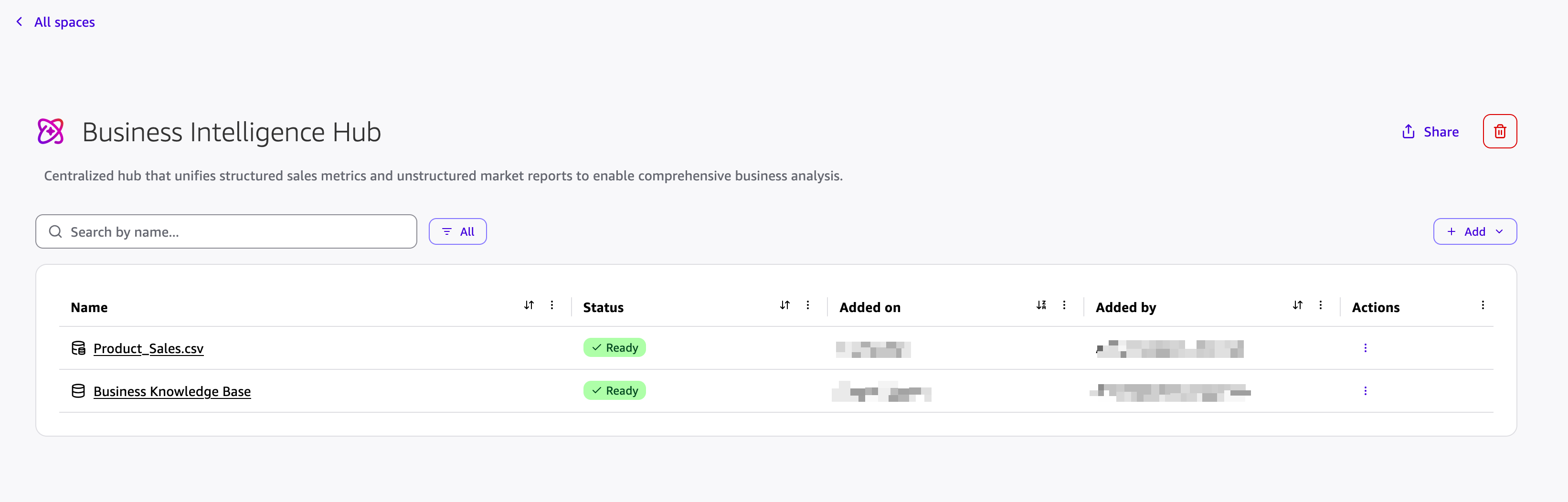
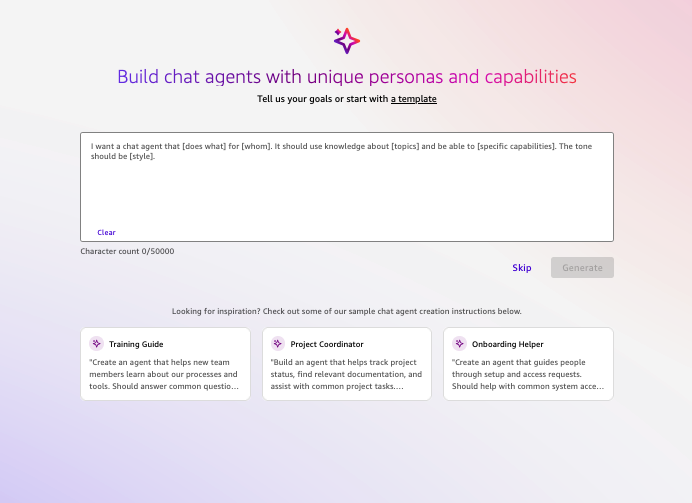
With both structured datasets and unstructured knowledge bases fully prepared and enriched, they are consolidated into a single Amazon Quick Space, designated in deployment scenarios as the "Business Intelligence Hub." This Space acts as the central nexus where disparate data types converge, providing the foundation for the final integration step: the creation and deployment of a custom chat agent. Rather than relying on generic conversational assistants, administrators configure a tailored agent persona by establishing specific operational parameters. For instance, an agent can be programmed to act as an executive business intelligence assistant tasked with breaking down information silos, analyzing S3-stored metrics, retrieving qualitative insights from memos, connecting internal performance data with external market trends, and citing sources transparently. Furthermore, administrators select preset communication styles—such as an authoritative "Executive" tone—and link the agent directly to the centralized Business Intelligence Hub Space, ensuring responses draw exclusively from verified enterprise knowledge sources.
The true transformative value of this integrated architecture becomes apparent during the querying phase, where the conversational agent dissolves the historical barriers separating numerical data from textual insights. When a business user prompts the agent with a complex analytical question—such as analyzing regional sales performance shifts over a specific fiscal year—the agent simultaneously queries the structured sales dataset via automated text-to-SQL generation and scans the unstructured S3 document repository for qualitative commentary. The resulting response delivers a cohesive, synthesized overview complete with precise citation markers that link individual findings back to their exact source documents. Users can seamlessly transition from examining quantitative regional growth metrics to reviewing overarching strategic product priorities outlined in corporate memos, or evaluating how annual sales performance aligns with external market trends identified in professional research reports. Moreover, the agent is capable of generating fully formatted, professional enterprise artifacts on demand—including multi-slide Microsoft PowerPoint presentations complete with downloadable files, structured Excel spreadsheets, and detailed Word reports—drastically accelerating executive reporting workflows.
Security and governance remain paramount considerations throughout the lifecycle of these deployments. Operating under the shared responsibility model dictated by cloud infrastructure providers, organizations retain full accountability for configuring granular access permissions across data stores, knowledge bases, and conversational agents. Newly launched chat agents remain strictly private until intentionally shared with designated teams, and responses inherently respect the access control lists of the querying user. Best practices dictate that organizations continually refine dataset semantic descriptions, monitor query performance logs, establish rigorous review cycles for unstructured document repositories, and enforce strict principle-of-least-privilege access controls across all linked Spaces. By systematically combining robust data governance with the fluid, accessible nature of conversational AI, enterprises can successfully eliminate information silos, empower non-technical stakeholders to perform deep multi-modal data analysis, and accelerate strategic decision-making across the entire organization.