The Impact of AI-Assisted Contributions on Open Source Maintainer Load and Project Sustainability

The landscape of open source software development is undergoing a fundamental shift as generative artificial intelligence transforms the speed and volume of code contributions. What began as a promise of increased productivity has, for many maintainers, evolved into a logistical crisis characterized by high-volume "slop" and a significant increase in the "review tax." Over the past year, GitHub activity has spiked by a factor of 12 within mere months, a signal that is landing disproportionately on a small group of volunteer maintainers who were already operating at the edge of burnout. This phenomenon is reshaping the social contract of open source, forcing major foundations to rethink their contribution guidelines and, in some cases, causing established projects to sunset under the weight of automated noise.
The Reality of the AI-Driven Contribution Surge
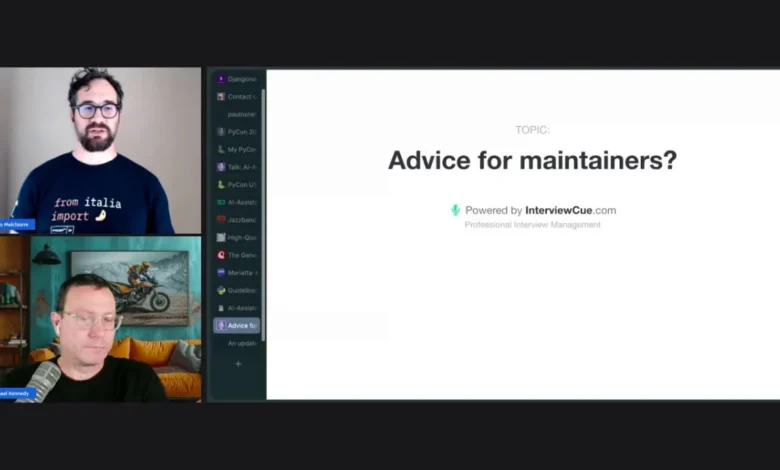
For a maintainer of a popular open source project, the daily workflow has been disrupted by a new category of pull request: the massive, unannounced AI-generated submission. Paolo Melchiorre, Director of the Django Software Foundation and a long-time core contributor to the Python ecosystem, describes a burgeoning trend where contributors submit tens of thousands of lines of code without prior discussion or an associated issue report. These submissions often come with a brief, dismissive note: "Here, please review this for me."
This trend is not merely anecdotal. Data from GitHub indicates that the frequency of automated and AI-assisted interactions has surged, creating a bottleneck at the review stage. While AI can generate code in seconds, the human effort required to verify that code for security vulnerabilities, logic errors, and stylistic consistency remains high. This imbalance creates a "review tax" that falls exclusively on the maintainers, many of whom are unpaid volunteers.
The consequences of this imbalance have already claimed several high-profile victims within the open source community. Jazzband, a prominent collective that served as a home for essential Django-related tools such as pip-tools and the Django debug toolbar, recently hit what its maintainers described as a "slop apocalypse." The influx of low-quality, AI-generated contributions overwhelmed the project’s democratic maintenance model, leading the organization to begin sunsetting its operations. Similarly, the curl project, a foundational piece of internet infrastructure, saw its bug bounty program buried under AI-generated noise, forcing lead maintainer Daniel Stenberg to adjust the program’s rewards to deter low-effort automated submissions.
A Chronology of the Generative AI Integration in Code
The current crisis did not emerge in a vacuum but is the result of a rapid technological evolution over the last four years.
- 2021–2022: The Emergence of Copilot. GitHub launched its AI-powered pair programmer, Copilot, based on OpenAI’s Codex model. Initially, usage was confined to early adopters and was largely seen as a sophisticated autocomplete tool.
- Late 2022: The ChatGPT Inflection Point. The release of ChatGPT brought generative AI to the mainstream. Developers began using large language models (LLMs) to write entire functions and refactor legacy code.
- 2023: The Volume Spike. As LLMs became more integrated into integrated development environments (IDEs), the barrier to entry for "contributing" to open source dropped to near zero. This period saw the first reports of "AI slop"—contributions that look syntactically correct but contain "hallucinations" or logical fallacies.
- 2024–2025: Policy Formalization. Major foundations began realizing that silence was no longer an option. The Python Software Foundation (PSF), the Linux Foundation, and others began drafting formal AI policies to protect their maintainers.
- 2026: The Shift to Agentic AI. The current era is defined by "agentic" AI, where autonomous agents can discover repositories, identify issues, and submit pull requests without human intervention. This has led to the 12-fold increase in GitHub activity discussed by industry leaders like Michael Kennedy and Paolo Melchiorre.
Supporting Data: The Policy Landscape
The reaction to AI in open source is far from uniform. An analysis conducted by Redmonk researcher Kate Holterhoff, which surveyed 86 open source foundations and organizations, revealed a fragmented landscape regarding generative AI policies.
- Permissive Policies (55%): The majority of foundations currently allow AI-assisted contributions, provided they meet existing quality standards. These organizations, including the PSF, generally view AI as a tool similar to a compiler or a linter.
- Banned or Highly Restricted (25%): A significant minority of projects, such as Asahi Linux, have implemented strict bans on AI-generated code. The primary concerns cited by these groups are copyright provenance and the high rate of subtle bugs.
- Undecided or Case-by-Case (20%): Many smaller projects remain in a state of flux, lacking the legal or administrative resources to draft and enforce complex AI policies.
When foundations were asked to rank their concerns regarding AI contributions, "Quality" was the top-rated issue, followed by "Copyright/Legal Provenance" and "Ethics." This suggests that maintainers are less worried about the philosophical implications of AI and more concerned with the practical reality of whether the code actually works and who is liable if it fails.
Official Responses and the CPython Model
In response to these challenges, the CPython core development team recently released updated guidelines regarding AI-assisted contributions. This move is seen as a bellwether for the rest of the industry. The CPython policy emphasizes a "Human-in-the-Loop" requirement, stating that the person submitting a pull request is legally and technically responsible for its content, regardless of the tools used to create it.
The policy explicitly discourages "code churn"—the practice of using AI to refactor code simply for the sake of modernization without providing a tangible performance or security benefit. It also mandates that contributors must be able to explain every line of code they submit. If a contributor cannot justify a specific implementation detail because "the AI wrote it," the contribution is subject to immediate rejection.
This approach aims to re-establish the "trust" that Paolo Melchiorre identifies as the core of open source. Melchiorre argues that AI is best understood as an "amplifier." It can amplify the productivity of a skilled, well-intentioned developer, but it can also amplify the chaos created by an inexperienced or malicious actor. He uses the analogy of an AI-generated image of a guitarist: at first glance, it looks perfect, but upon closer inspection, the guitarist has six fingers. In code, that "extra finger" is a subtle memory leak or a security bypass that can take a human maintainer hours to find.
Impact and Implications for the Future of Open Source
The "AI-assisted contribution" era is forcing a re-evaluation of how open source projects are funded and staffed. If the volume of contributions continues to grow at its current trajectory, the volunteer-only model of maintenance may become untenable for mission-critical software.
The Erosion of Mentorship
One of the most significant impacts of the AI surge is the potential erosion of the traditional mentorship model. Historically, a new contributor would start with small, manual fixes and learn the project’s nuances through feedback from senior maintainers. If AI replaces these "entry-level" tasks, the pipeline for developing new core maintainers could dry up. To combat this, the Django community has launched initiatives like "Djangonaut Space," a structured mentorship program designed to guide human contributors through the complexities of the project in a way that AI cannot replicate.
The Shift Toward In-Person Collaboration
As online platforms become increasingly saturated with automated noise, there is a visible trend toward returning to in-person or highly vetted collaboration. Events like PyCon Italy and specialized "sprints" (such as the "Django on the Mad" initiative) are gaining importance. These forums allow maintainers to build human connections and verify the expertise of contributors in a high-trust environment.
Automated Defense Systems
Ironically, the solution to AI-generated noise may be the deployment of AI-based defense systems. Some projects are experimenting with LLM-powered bots to "triage" incoming pull requests. These bots can identify common AI-generated patterns, run test suites, and even provide a first-level security audit before a human maintainer ever sees the code. However, this risks creating an "arms race" between contribution bots and triage bots, further distancing the human element from the software development process.
Conclusion
The open source community stands at a crossroads. The 12-fold spike in GitHub activity is a clear indicator that the "old way" of managing projects is no longer sufficient. While AI offers unprecedented opportunities for code generation and modernization, it also threatens to overwhelm the human infrastructure that has sustained the software industry for decades.
As foundations like the Django Software Foundation and the PSF refine their policies, the focus is shifting away from the tools used and back toward the responsibility of the individual. The survival of the open source ecosystem will likely depend on its ability to preserve the human connections and the culture of trust that AI, for all its processing power, remains unable to generate. Maintainers are not just gatekeepers of code; they are the stewards of a community. In the age of the amplifier, protecting the human at the end of the pull request has become the most critical task in software engineering.
Related posts: