The Strategic Shift Toward Baseline Interoperability
The concept of "Baseline" has become the industry standard for measuring web platform maturity. By reaching this status, a feature is confirmed to be stable and available in the latest versions of major browsers, providing developers with the confidence to utilize these tools in production environments. The releases observed in May 2026 demonstrate a clear trend: browser vendors are prioritizing the removal of friction in responsive design and media performance.
The release cycle began early in the month, with the major vendors pushing updates that addressed both long-standing developer requests and emerging performance requirements. Chrome 148, Firefox 151, and Safari 26.5 were deployed in a staggered fashion, ensuring that the web platform remains a living standard rather than a stagnant collection of proprietary implementations.
CSS Advancements: Simplifying Complex Layouts
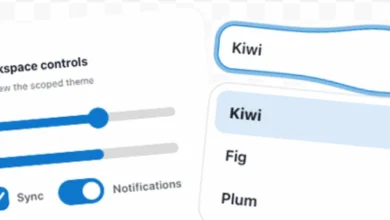
One of the most notable updates arriving in this period is the broad support for the :open CSS pseudo-class. With Safari 26.5 finally incorporating this feature, it has reached Baseline status, allowing developers to target elements like <details>, <dialog>, and <select> when they are in an active, expanded state. Previously, developers were forced to rely on attribute selectors such as details[open], which often lacked the semantic clarity and styling flexibility of a native pseudo-class. This change simplifies the creation of interactive components, potentially improving accessibility and maintainability for UI kits.
Simultaneously, the maturation of container queries has reached a new level of utility. With the arrival of Chrome 148, name-only container queries are now officially part of the Baseline. This development is a response to developer feedback regarding the verbosity of existing container query syntax. By allowing developers to query a container solely by its name without being forced to define a container-type on every ancestor, the CSS working group has significantly reduced the boilerplate code required for modular design systems.
Furthermore, Firefox 151 has introduced support for style() queries within the @container rule, enabling style-based conditional logic. This allows developers to query the computed value of custom CSS properties on a parent container to trigger layout changes. For instance, toggling a --theme variable from light to dark can now automatically propagate stylistic adjustments across components without the need for additional JavaScript observers or global class toggling. This represents a major leap forward in "CSS-only" architectural patterns, pushing more logic into the browser’s native rendering engine.
Performance and Media Optimization
As the web continues to handle increasingly rich media, performance optimization has become a central focus for browser vendors. The integration of native lazy loading for <video> and <audio> elements in Chrome 148 is a direct response to the growing demand for efficient data usage. By utilizing the loading="lazy" attribute—a standard already established for images and iframes—developers can now defer the loading of media assets until they are near the user’s viewport.
Industry data suggests that this could significantly improve Largest Contentful Paint (LCP) scores for media-heavy websites. By preventing non-critical media from consuming bandwidth during the initial page load, this feature is expected to have a tangible impact on data consumption for mobile users. Squarespace engineering teams, among others, have already begun documenting the transition to these native attributes, signaling a shift away from third-party JavaScript-based lazy loading libraries that often introduce their own performance overhead.

Expanding API Functionality: Document Picture-in-Picture and Web Serial
The introduction of the Document Picture-in-Picture (PiP) API in Firefox 151 marks an expansion of browser-level multitasking capabilities. While the original PiP API was restricted to video elements, the Document PiP API allows for an arbitrary HTML document to be displayed in an always-on-top window. This creates new opportunities for web applications, such as persistent participant grids in video conferencing tools or floating dashboards that remain visible during complex navigation tasks.
In the realm of hardware integration, the Web Serial API continues to gain traction. With Firefox 151 adding support for desktop platforms and Chrome 148 extending compatibility to Android, the web is increasingly becoming a viable platform for interacting with local hardware, including 3D printers and microcontrollers. The implementation of a site-permission add-on in Firefox serves as a balanced approach to security, allowing users to control access to serial ports while enabling developers to create powerful, hardware-connected web experiences.
Beta Preview: What Lies Ahead
The beta releases of Chrome 149 and Firefox 152 offer a glimpse into the next cycle of innovation. Chrome 149 is set to introduce CSS gap decorations, a feature that will simplify the styling of whitespace in grid and flexbox layouts—a common pain point for front-end developers. Additionally, the inclusion of path-based shape functions in the shape-outside property suggests a future where complex, non-rectangular text wrapping becomes significantly easier to implement.
Firefox 152 beta’s focus on the field-sizing property highlights a trend toward more intelligent, adaptive form controls. By allowing form elements to automatically resize to fit their content, browsers are moving toward a more fluid, content-driven layout model. Furthermore, the enhancement of the Notification interface and Element.getAnimations() API indicates that both vendors are heavily invested in improving the programmatic control developers have over user interaction and browser-native animations.
Broader Implications and Industry Analysis
The cumulative effect of these May 2026 releases is a more cohesive web platform. By reaching Baseline, these features provide a stable foundation upon which developers can build without the fear of inconsistent behavior across browsers. This is particularly important for enterprise-level applications, where the cost of maintaining cross-browser compatibility can be prohibitive.
The shift toward CSS-heavy solutions—as seen in the rise of style queries and name-only container queries—suggests that the industry is moving away from complex JavaScript-driven state management for visual components. By empowering CSS to handle more of the application’s responsive logic, browser vendors are effectively optimizing the browser’s main thread, potentially leading to smoother interactions and better energy efficiency on mobile devices.
As the industry looks forward, the focus remains on closing the gap between developer requirements and browser capabilities. The collaborative nature of these releases, where major vendors coordinate their efforts to achieve Baseline status for critical features, is a testament to the health and ongoing development of the open web platform. For developers, the message is clear: the tools available today are more capable, more performant, and more interoperable than at any point in the history of the modern browser. The next several months will likely see these features move from early adoption to widespread integration, fundamentally altering how modern web applications are architected and deployed.
Related posts: