Maxon revolutionizes professional creative workflows with touch-integrated Cinema 4D and ZBrush for the new MacBook Pro PROLED XDR

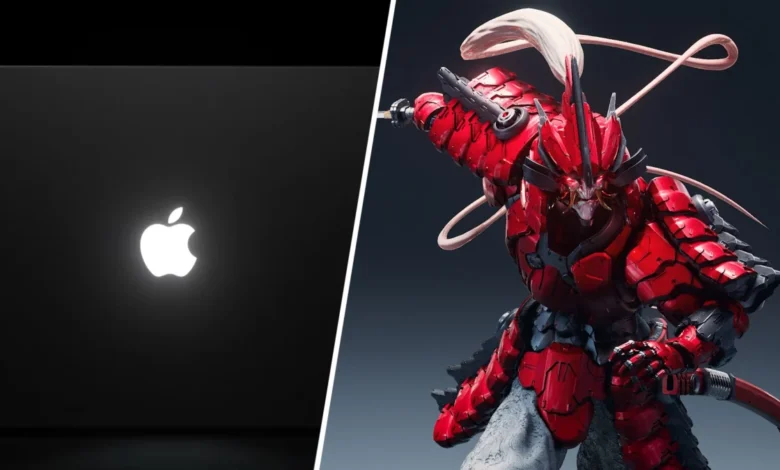
The professional creative landscape is undergoing a significant transformation following Apple’s announcement of the new MacBook Pro featuring the groundbreaking PROLED XDR display. This hardware evolution, which marks the first instance of touch-input integration on an Apple laptop, has prompted major software developers to recalibrate their user interface paradigms. Among the most notable responses is from Maxon, which has confirmed that its industry-standard creative tools, Cinema 4D and ZBrush, will receive comprehensive touch support in late November 2026. This move bridges the gap between the precision of traditional desktop computing and the tactile immediacy of mobile workflows, signaling a new era for 3D artists, digital sculptors, and animation professionals.
A New Era of Tactile Interaction
For decades, the standard for professional 3D design has been a rigid combination of keyboard, mouse, and high-precision tablet. While Windows-based laptops have long offered touchscreen functionality, these iterations were frequently criticized for failing to provide the color accuracy, contrast ratios, and structural brightness required by high-end design professionals. Apple’s PROLED XDR display aims to disrupt this narrative. By pairing high-performance M5 Pro and M5 Max silicon with a display panel that offers professional-grade fidelity, Apple has created a platform capable of handling the resource-intensive rendering of 3D environments while simultaneously supporting direct manual manipulation.
Maxon’s commitment to this platform is strategic. By enabling touch support within Cinema 4D and ZBrush, the developer is effectively transitioning the "hands-on" experience previously popularized by ZBrush for iPad directly to the workstation. This is not merely an alternative input method; it represents a fundamental change in how artists interact with their creations. Rather than navigating complex sub-menus or relying solely on hotkey mapping, artists can now use their fingers to manipulate vertices, adjust camera angles, and sculpt digital geometry with a level of fluidity that was previously impossible on a traditional laptop form factor.
Chronology of the Integration
The rollout of these features follows a structured timeline designed to align with the hardware release cycle. The new MacBook Pro models are scheduled to reach consumers on November 6, 2026. Shortly thereafter, in late November, Maxon will deploy updates for Cinema 4D and ZBrush that unlock the touch-enabled interface.
This follows a broader trend of cross-platform parity within Maxon’s ecosystem. The company has spent the last two years refining its iPad-based applications, establishing a framework for touch-based UI that has now proven scalable for the desktop environment. Additionally, before the close of 2026, the company plans to release a dedicated Cinema 4D app for the iPad, further expanding the mobile-to-desktop ecosystem. The integration of the Spatial Preview API, slated for the same November update, marks the final piece of this technological puzzle, connecting the MacBook Pro to the immersive capabilities of the Apple Vision Pro.
Leveraging Spatial Computing: The Vision Pro Connection
Perhaps the most ambitious aspect of Maxon’s announcement is the implementation of the "Open in Spatial Preview" capability. By utilizing the Spatial Preview API, designers can now leverage the Mac Virtual Display on the Apple Vision Pro to visualize their 3D scenes in a fully immersive, life-size environment.
In traditional workflows, the primary challenge for 3D designers is the inherent "flattening" of 3D objects onto 2D screens. While high-resolution monitors provide excellent clarity, they do not accurately convey the scale, proportion, or presence of an object in a physical space. The integration with visionOS 27 changes this by allowing artists to inhabit their designs. Whether working on architectural visualization for a new retail space or prototyping an exhibition booth, designers can now move through their creations, evaluate spatial relationships in real-time, and identify potential design flaws that would remain invisible on a standard display.
Market Implications and Professional Feedback
Industry analysts suggest that this shift could significantly accelerate the feedback loops within design agencies. For decades, the communication between designers and clients has been hampered by the difficulty of translating 3D files into understandable formats. Clients often struggle to interpret static renderings or technical wireframes. By using the Apple Vision Pro as a collaborative tool, stakeholders can now experience a design proposal at a 1:1 scale, providing a level of informed feedback that was previously reserved for costly physical prototypes.
"This integration allows for a more democratic approach to design review," notes an industry expert familiar with current visualization workflows. "When a client can walk through a proposed interior or inspect a product prototype in a spatial environment, the requirement for technical literacy drops. It is no longer about reading a blueprint; it is about experiencing the space. This is a potential game-changer for architecture, interior design, and experiential marketing firms."
Technical Specifications and Performance
The performance of these new features is underpinned by the M5 Pro and M5 Max chipsets. These chips represent the latest iteration of Apple’s silicon strategy, offering significant gains in neural engine performance and ray-tracing capabilities. For Cinema 4D users, who rely heavily on complex global illumination and subsurface scattering calculations, the M5 series provides the necessary headroom to maintain high frame rates while simultaneously processing touch input and spatial data.
The PROLED XDR display itself serves as a vital component in this ecosystem. By delivering superior brightness and deep black levels, it ensures that when an artist is sculpting in ZBrush, the subtleties of the digital material—such as texture depth and lighting response—are rendered with absolute fidelity. The touch response time on these displays is reportedly optimized for professional applications, ensuring that there is negligible latency between the user’s gesture and the software’s reaction.
Addressing the Workflow Transition
While the transition to touch-based workflows is expected to be widely welcomed, it does present a learning curve for seasoned professionals who have spent years building muscle memory around keyboard shortcuts and mouse-based navigation. Maxon has indicated that the touch features are intended to supplement, rather than replace, traditional inputs.
The software will likely maintain its robust support for secondary input devices, allowing users to keep their left hand on the keyboard for hotkeys while using their right hand to perform touch-based adjustments on the screen. This hybrid approach is expected to be the standard for high-end professional users, as it maximizes efficiency while reducing the physical strain associated with repetitive mouse movements.
Looking Ahead: The Future of Creative Hardware
The collaboration between Apple and Maxon is indicative of a broader shift in the technology sector: the convergence of professional power and intuitive, consumer-friendly input mechanisms. As Apple continues to iterate on its hardware, and as developers like Maxon continue to optimize their software for these unique capabilities, the definition of a "professional workstation" is likely to expand.
The roadmap for the remainder of 2026 suggests that we are only at the beginning of this integration. With the upcoming release of the dedicated Cinema 4D iPad app and the continued refinement of visionOS, the barriers between the concept, the design, and the final reality are thinning. For creative professionals, the next few months will be a period of adaptation, as they integrate these new tools into their existing pipelines. However, the long-term outlook remains clear: the integration of touch, spatial computing, and high-performance hardware is set to provide a more intuitive, efficient, and immersive environment for the next generation of digital creators.
As the late November update approaches, the design community will be watching closely to see how these tools perform in real-world scenarios. With the hardware arriving on November 6, the window for early adoption and testing is small, but the potential for immediate productivity gains is significant. Whether this marks the beginning of the end for the traditional mouse-and-keyboard-only era remains to be seen, but for now, it is clear that the future of 3D design is becoming significantly more tangible.
Related posts: