Introducing time series collections for the next generation of Amazon OpenSearch Serverless | Amazon Web Services

The Evolution of Observability Infrastructure
For years, the industry standard for managing massive volumes of machine-generated data has involved self-managed or managed OpenSearch clusters. While powerful, these systems often forced engineers into a precarious balancing act. Organizations frequently had to over-provision capacity to handle unpredictable traffic spikes—such as those occurring during major outages or high-velocity product deployments—leading to wasted expenditure during periods of baseline activity.
Conversely, undersized clusters created bottlenecks, delaying critical logs at the exact moment they were needed for incident response. Furthermore, as data retention requirements grew to meet compliance standards, the cost of "hot" storage—data immediately available for high-performance querying—became prohibitive. Teams were often forced to manually move older data to cold storage or snapshots, a cumbersome process that required restoration times before any analysis could occur. The new time series collections in Amazon OpenSearch Serverless effectively dissolve these trade-offs by decoupling storage and compute, allowing both to scale independently and dynamically.
Core Technical Advancements
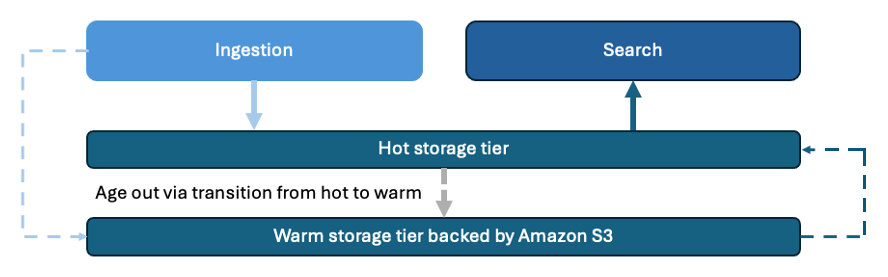
The architecture of the new time series collection is built to handle up to 100 terabytes of hot storage per collection, making it suitable for large-scale enterprise environments. The system utilizes a two-tier storage model: a high-performance hot tier for recent, frequently queried data, and a highly cost-effective warm tier on Amazon Simple Storage Service (S3) for historical data.
The transition between these tiers is governed by the index.warm.after setting, which provides granular control. Organizations can define retention periods as short as 24 hours or as long as 10 years, ensuring that long-term historical analysis remains accessible without the need for manual intervention or snapshot management. Crucially, when a query targets data in the warm tier, the service automatically fetches the required segments back into the hot tier, ensuring that even archived data remains queryable through the same interface as real-time logs.
Operational Efficiency and Scaling
The "next generation" designation in this release refers to the underlying compute architecture, which is capable of scaling down to zero when idle. This ensures that organizations only pay for the compute resources they actually utilize. During an incident, the platform scales compute resources in seconds to accommodate sudden increases in log volume, ensuring that real-time observability is never compromised by throughput limits.
From a configuration standpoint, the platform simplifies lifecycle management. By setting the index.data.retention parameter, developers can ensure that data lifecycle policies are applied automatically to all indices matching a specific pattern. This eliminates the need for maintaining separate, fragile lifecycle management scripts. Furthermore, the requirement for a designated timestamp field (defaulting to @timestamp) ensures that the system can effectively index, sort, and expire data, providing a structured foundation for high-performance time-series analytics.
Integrated Alerting and Anomaly Detection
Perhaps the most notable addition to this serverless offering is the native integration of alerting and anomaly detection. In previous iterations of OpenSearch Serverless, users were often required to rely on third-party tools or separate systems to monitor their data for anomalies. By bringing these features directly into the collection, AWS allows teams to maintain a tighter feedback loop.
The alerting system supports per-query monitors—which track specific thresholds—and per-bucket monitors, which allow for more nuanced tracking across different entities, such as individual hosts or services. Additionally, the inclusion of the Random Cut Forest (RCF) machine learning algorithm allows users to implement automated anomaly detection. This algorithm learns the "normal" patterns of the data stream, flagging deviations from the baseline in near real-time without requiring the manual configuration of static thresholds, which are often prone to false positives or missed events.
Implications for Enterprise Strategy
The shift toward serverless observability reflects a broader trend in cloud computing: the commoditization of infrastructure management. For Chief Technology Officers and Engineering Managers, the implications are twofold. First, the reduction in operational overhead allows SRE teams to pivot from "cluster maintenance" to "data value creation." By removing the burden of sizing, tuning, and patching clusters, engineers can dedicate more time to building advanced dashboards, refining security analytics, and optimizing application performance.
Second, the cost-predictability afforded by the new pricing model is a significant advantage. By paying only for what is consumed—rather than for a fixed "worst-case" cluster size—companies can optimize their observability spend, often enabling them to retain data for longer periods without proportional increases in cost. This is particularly vital for industries subject to strict regulatory compliance, where retaining audit logs for years is mandatory.
Chronology and Implementation
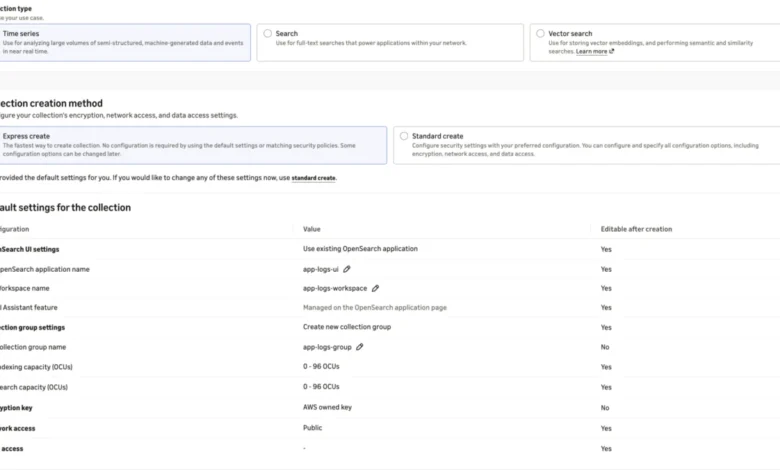
The rollout of these features follows a structured implementation path. Users can initiate the process through the Amazon OpenSearch Service console via the "Express Create" option, which automates the setup of collection groups, encryption, and network access. For more specialized requirements, the AWS Command Line Interface (CLI) provides fine-grained control over compute limits, allowing for the definition of minimum and maximum OpenSearch Compute Units (OCUs).
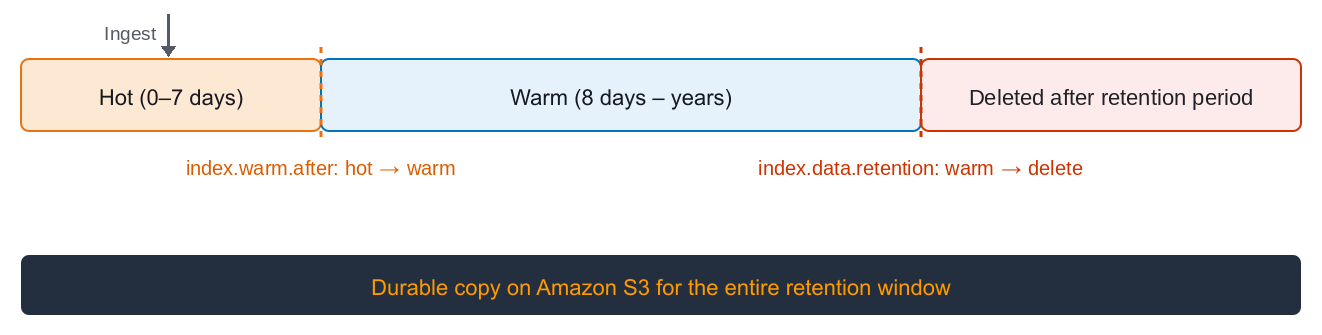
Once the collection group is established, the creation of an index template acts as the blueprint for the lifecycle of the data. By defining the time field and the warm-tier threshold within this template, organizations can ensure consistency across their entire logging ecosystem. This standardized approach prevents "configuration drift," where different parts of an organization might otherwise use varying retention or storage policies.
Market Context and Future Outlook
The release arrives at a time when the volume of machine data is growing at an exponential rate. As microservices architectures and distributed systems become the norm, the sheer volume of logs and traces generated can easily overwhelm legacy monitoring systems. AWS’s decision to move toward a natively serverless, time-series-optimized model directly addresses the scalability challenges faced by modern cloud-native enterprises.
Industry analysts observe that this move aligns OpenSearch with the requirements of the modern observability market, where "speed to insight" is the primary competitive metric. By removing the technical hurdles of infrastructure management, AWS is likely aiming to retain existing customers who might otherwise have migrated to specialized SaaS observability platforms that offer similar "hands-off" experiences.
Conclusion
The introduction of time series collections on the next generation of Amazon OpenSearch Serverless is a pivotal update that addresses the long-standing challenges of cost, complexity, and scalability in observability. By providing a platform that handles the heavy lifting of data lifecycle management, compute scaling, and anomaly detection, AWS has lowered the barrier to entry for robust system monitoring. Whether for small startups or global enterprises, the ability to ingest, store, and analyze vast amounts of data with minimal administrative overhead is set to become a fundamental component of the modern DevOps toolkit. As businesses continue to rely on data-driven decision-making, the efficiency of their observability stack will remain a key determinant of their operational success.