The Strategic Transition Toward Open Lakehouse Architectures and the Migration from Proprietary Data Warehousing

Enterprises increasingly measure their readiness for artificial intelligence by the caliber and accessibility of their data, a shift that is compelling organizations to move away from vertically integrated, closed-system data warehouses toward open, modular lakehouse architectures. In the current enterprise landscape, data portability has transitioned from a technical preference to a core business requirement. As generative AI and multi-engine analytics become the standard for competitive operations, the high cost of vendor lock-in—where storage formats, catalogs, and query engines are fused into a single runtime—is driving a significant architectural migration across the global technology sector.
The fundamental shift involves moving toward an open lakehouse, where data remains portable and governed by open standards rather than proprietary interfaces. This architectural evolution is not merely an IT upgrade but a strategic move to decouple storage from compute, allowing organizations to select the most efficient engines for specific workloads without the need for constant, resource-intensive data migration or duplicate pipelines.
The Rise of the Open Lakehouse Architecture
The modern enterprise data stack is defined by three primary requirements: the freedom to choose the engine, unified governance, and AI readiness. Historically, analytics tools were built inside integrated systems that traded openness for ease of use. While convenient in the short term, this design created "data silos" that hinder the agility required for contemporary machine learning models.
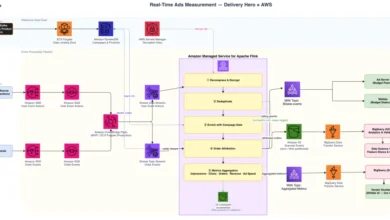
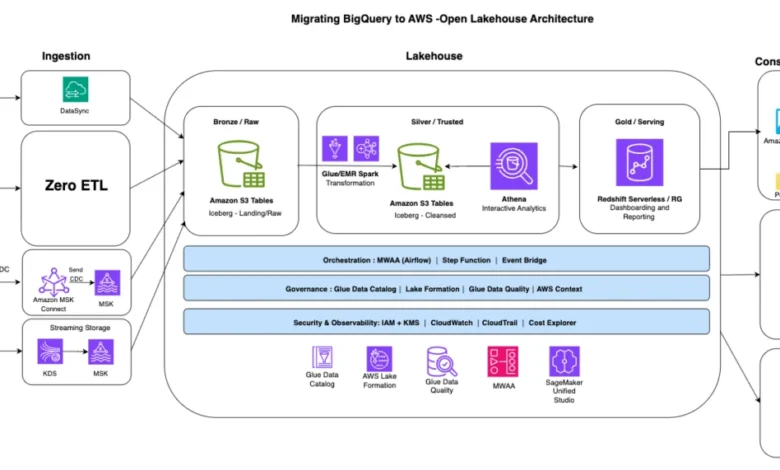
The industry is now coalescing around Apache Iceberg, an open table format that allows multiple engines to read and write to the same datasets concurrently at petabyte scale while maintaining ACID compliance. On platforms such as Amazon Web Services (AWS), this has led to the development of the "open lakehouse" model. In this ecosystem, Amazon Simple Storage Service (Amazon S3) acts as the foundational storage layer, while tools like Amazon Athena, Amazon Redshift, and Amazon EMR interact with the same data using different compute methodologies. By standardizing on an open format, companies eliminate the need for extract, transform, and load (ETL) processes that once served only to move data between incompatible systems.
Chronology of the Shift Toward Open Standards
The movement toward open data architectures can be traced back to the growing dissatisfaction with the performance-to-cost ratio of legacy cloud data warehouses. Over the past five years, the proliferation of generative AI has acted as an accelerant. Organizations realized that training foundational models requires access to vast, clean, and accessible data, which was often trapped behind the proprietary walls of legacy warehouse vendors.
By late 2023 and throughout 2024, industry reports began highlighting a trend: a significant increase in "cloud exit" or "platform migration" strategies. Companies, particularly those in the iGaming, financial services, and network security sectors, began to prioritize portability. The establishment of the Apache Iceberg REST catalog specification allowed for greater interoperability, effectively creating a "neutral ground" where data could exist independently of the compute engine. This evolution reached a critical milestone as major cloud providers began offering managed services that treat Iceberg as a first-class citizen, effectively legitimizing the open lakehouse as the target architecture for large-scale enterprise data.
Supporting Data and Performance Implications
The financial and operational implications of migrating to an open lakehouse are substantial. Recent case studies from the technology sector suggest that organizations can achieve significant cost reductions by moving away from scan-based, on-demand pricing models—common in legacy warehouses—toward compute-based, optimized environments.
For instance, in a large-scale migration involving petabytes of security data, a global technology leader reported zero-downtime cutovers across multiple regions. By transitioning to an S3-based open lakehouse, the firm was able to lower total cost of ownership (TCO) by optimizing query performance and reducing the overhead of maintaining disparate data silos. Furthermore, Yggdrasil Gaming, a global iGaming studio, reported that their transition to an Iceberg-based architecture allowed them to consolidate their dual-cloud infrastructure. The result was a dramatic reduction in operational overhead, enabling their engineering teams to focus on advanced analytics and real-time AI initiatives rather than infrastructure maintenance.
Governance in a Decentralized Ecosystem
One of the most persistent criticisms of open architectures has been the fear of governance fragmentation. However, modern implementations address this by defining governance at the metadata layer. By using tools like the AWS Glue Data Catalog and AWS Lake Formation, enterprises can enforce fine-grained access controls at the row, column, and cell level across all engines.
This means that whether a data scientist is using Amazon SageMaker to train a model, or a business analyst is running a report in Amazon Redshift, the same security policy is applied. This "define once, enforce everywhere" model is critical for compliance in highly regulated industries. Because the governance layer follows an open specification, it remains decoupled from any single vendor’s runtime, ensuring that security policies are as portable as the data itself.
Strategic Migration: A Phased Approach
The transition from a proprietary system like Google BigQuery to an open lakehouse on AWS is rarely a "lift-and-shift" operation; it is a methodical, six-stage migration process designed to minimize risk:
- Assessment and Discovery: Utilizing metadata-driven tools to analyze query complexity and table dependencies. This phase produces a migration readiness report that classifies workloads based on the effort required for conversion.
- Design of the Target Architecture: Mapping the legacy environment to the AWS ecosystem, ensuring that the medallion architecture (Bronze, Silver, and Gold layers) is correctly configured for Apache Iceberg.
- Conversion and Validation (POC): Running a proof-of-concept on a representative slice of the data. During this phase, organizations must carefully benchmark query performance, as cost models between scan-based and compute-based systems often differ significantly.
- Data Migration: Executing the movement of data to Amazon S3, ensuring the integrity of the Iceberg table format throughout the transfer.
- Cutover and Go-Live: Transitioning consumers (BI tools, dashboards, and automated pipelines) to the new environment.
- Optimization and Expansion: Post-migration tuning, where organizations implement automated compaction and snapshot management to maintain performance at scale.
Broader Impacts and Market Implications
The industry-wide move toward open lakehouses signals a maturation of the cloud data market. We are entering an era where data is no longer treated as a byproduct of a specific vendor’s software, but as a long-term strategic asset that must remain accessible to the best-in-class tools of the future.
The primary implication for the enterprise is the erosion of vendor lock-in as a business strategy. As the cost of generative AI integration rises, companies cannot afford to be trapped in systems that make it difficult to pivot to new models or emerging analytics engines. By adopting an open foundation, businesses gain the flexibility to adopt new AI models—such as those integrated into Amazon Bedrock—without needing to re-engineer their entire data pipeline.
Furthermore, this shift is putting pressure on traditional data warehouse providers to adopt more open standards. The industry is witnessing a "normalization of openness," where the ability to interoperate with open-source formats like Iceberg is becoming a prerequisite for market viability.
Conclusion: Future-Proofing the Data Estate
The migration to an open lakehouse is ultimately a strategic investment in agility. By standardizing on open formats, leveraging purpose-built compute engines, and enforcing unified governance, enterprises can build a data foundation that is inherently future-proof. The evidence from early adopters, such as Yggdrasil Gaming and global network security leaders, confirms that this architectural change is not only feasible but highly advantageous for organizations looking to scale their AI initiatives.
As the market continues to evolve, the distinction between those who control their data and those who are controlled by their vendor’s ecosystem will become increasingly apparent. Organizations that choose to embrace an open lakehouse architecture today are positioning themselves to leverage the full potential of artificial intelligence, unencumbered by the technical debt and proprietary constraints of the previous generation of data platforms. The path forward is one of openness, portability, and the deliberate decoupling of the components that define the modern data stack.