The Unspoken Weight of Domesticity: Ellis King Explores Unresolved Trauma in Debut Exhibition at SQFT Space Gallery

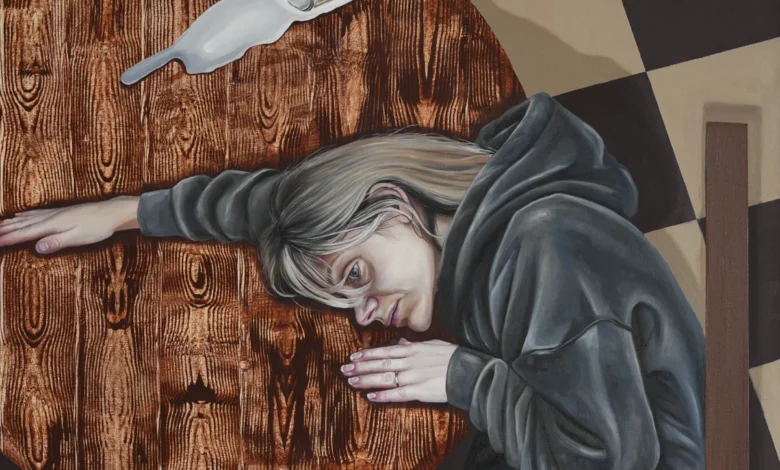
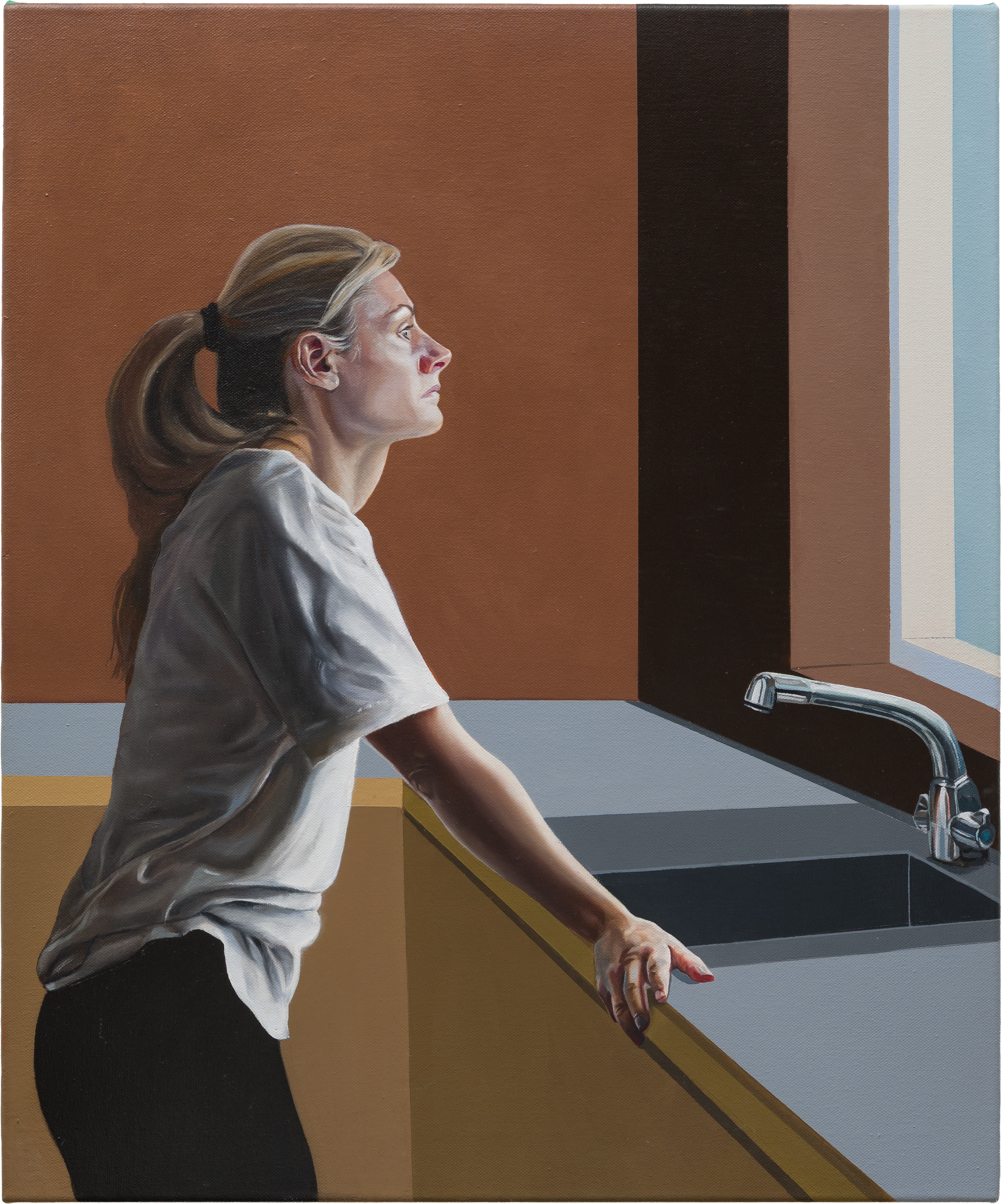
British painter Ellis King has unveiled her debut exhibition at London’s SQFT: Space Gallery, presenting a collection of works that navigate the intersection of motherhood, systemic failure, and the often-invisible nature of unresolved trauma. The exhibition, titled Spilt Milk, serves as an autobiographical inquiry into the private, domestic spaces where women frequently confront the emotional aftermath of life-altering experiences. Through a series of portraits that blend stark realism with abstract, graphic elements, King examines how the mundane environment of the home—the sink, the bath, the bedroom—becomes a repository for the complex emotions of exhaustion, shame, and grief that remain unremarked upon in public discourse.
A Journey into the Architecture of Memory
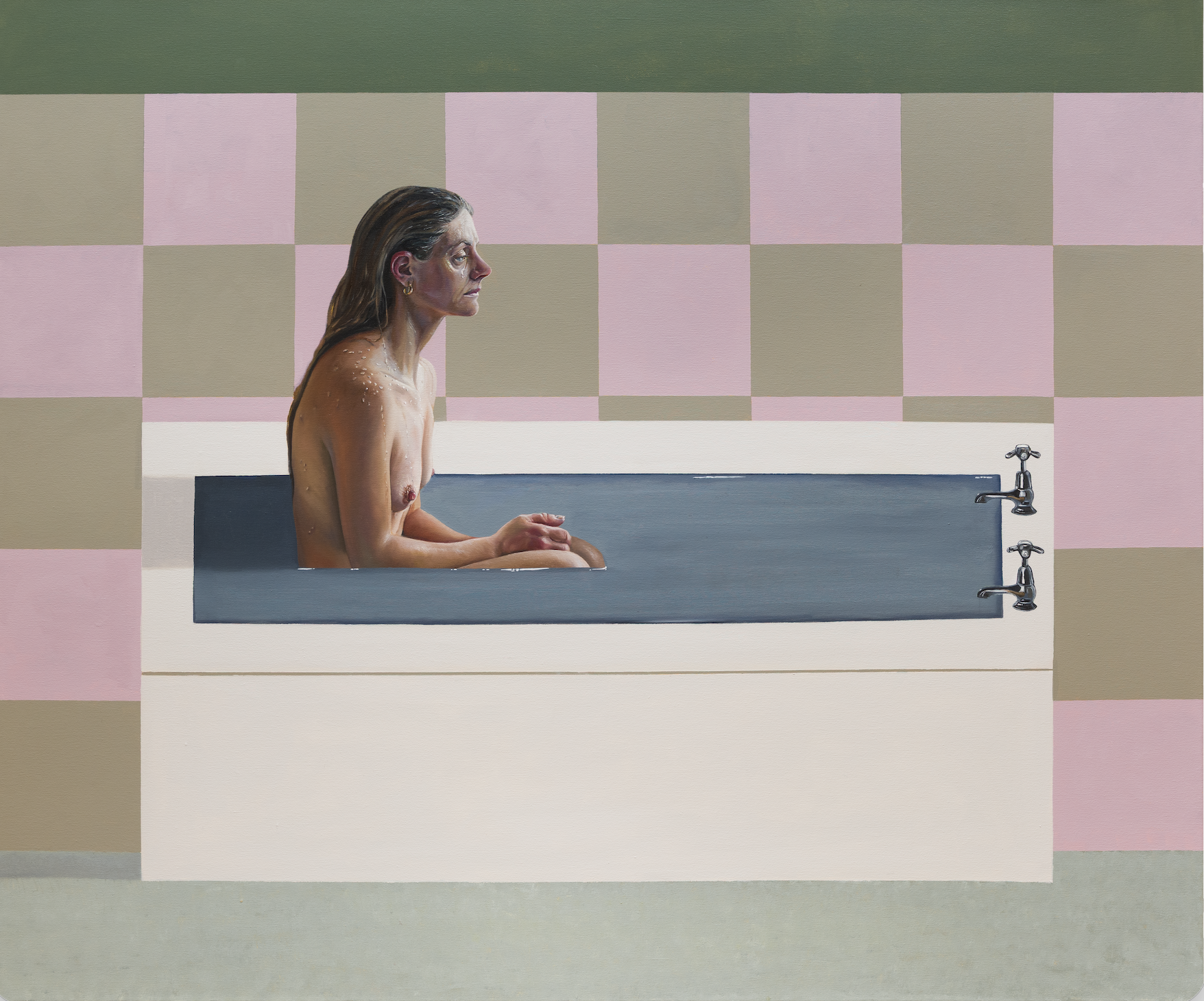
The conceptual foundation of King’s exhibition is rooted in her own arduous path to parenthood. By transforming her personal struggle into visual narrative, King invites the viewer to look beyond the surface of domestic serenity to the psychological turbulence beneath. The figures in her paintings are frequently depicted in states of suspension; a woman frozen at a kitchen sink or lost in contemplation while bathing. These compositions are intentionally designed to evoke the sensation of a sudden, involuntary collision between the present moment and a haunting memory.
King describes this process as a reaction to the sudden clarity that followed her transition into motherhood. "It changes something inside you when you have a baby," King notes, reflecting on the genesis of the project. "That, coupled with the stress of my experience, switched something in me that I hadn’t been aware of before. It was a bit like the blinkers were removed, and I suddenly saw, on a small scale, how many women experience these huge, life-changing things, and then you’re just kind of left to ‘crack on.’ It was all of that we go through that’s just never seen or heard."
Artistic Methodology and Stylistic Evolution
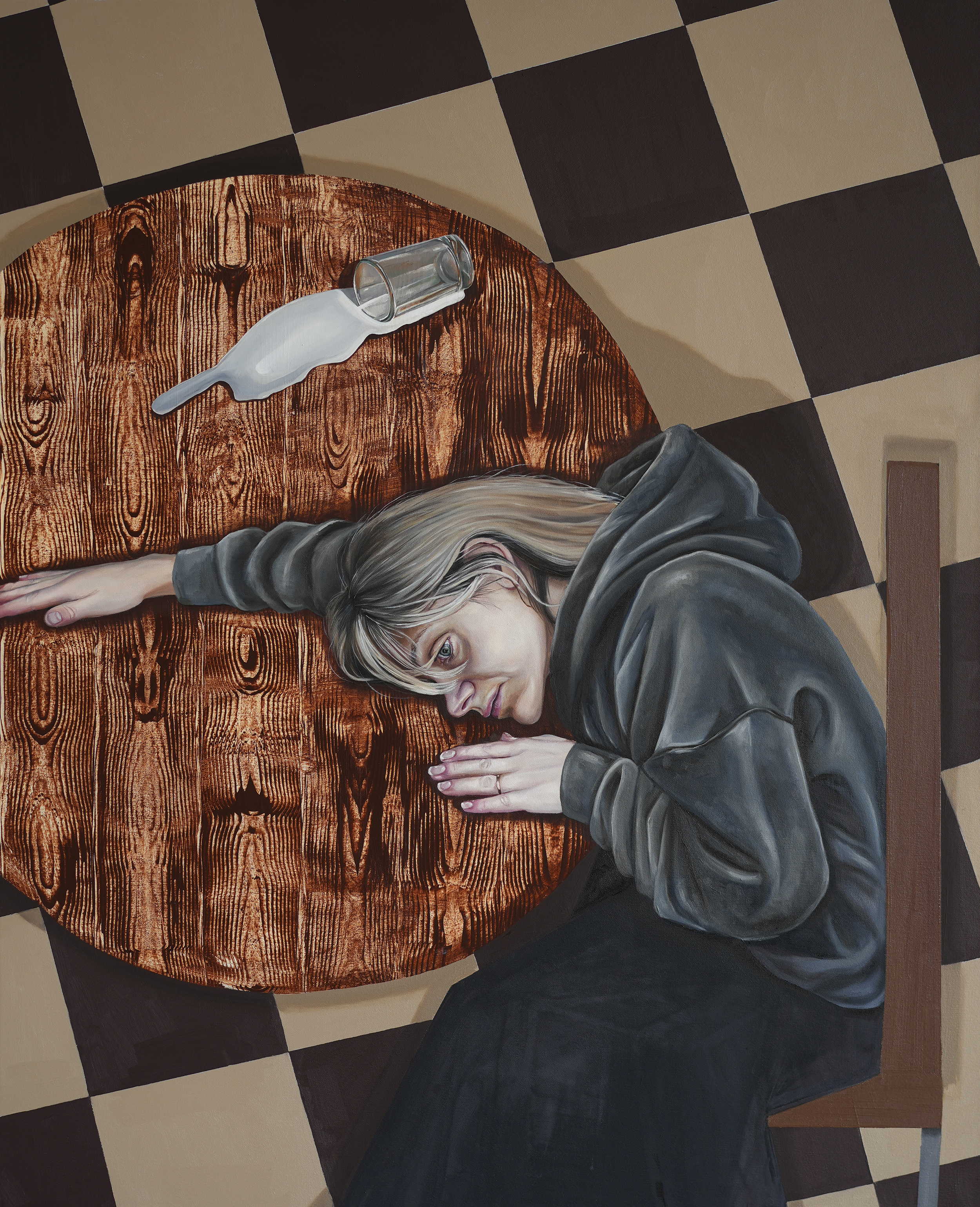
King’s aesthetic approach utilizes a distinct juxtaposition of techniques. By grounding her self-portraiture in traditional, careful realism, she creates a visceral sense of presence. This realism is then deliberately disrupted by the application of sharp, flat, graphic planes and abstract geometry. This stylistic choice acts as a metaphor for the way trauma fragments the perception of daily life.
"Working in self-portraiture meant I could be honest about the emotions I’d actually felt—disgust, shame, pity, exhaustion—rather than softening them," she explains. For King, the domestic space is not merely a setting but a silent protagonist. "The home holds some of the best and worst moments of our lives, and yet so much of what happens there stays unseen. A lone figure in a domestic space can carry a huge amount without anything dramatic happening at all. The quiet moments are where so much of women’s private experience lives, unremarked on, easy to miss, but often where the real weight sits."
Contextualizing the Maternal Experience
The themes addressed by King in Spilt Milk align with broader sociological discussions regarding the "invisible load" of motherhood and the shortcomings of reproductive healthcare systems. While King’s work is deeply personal, it functions as a representative piece for a larger demographic of women who find themselves unsupported following traumatic birthing experiences or fertility journeys.
According to data from the World Health Organization (WHO) and various maternal health advocacy groups, a significant percentage of women experience symptoms of postpartum depression or post-traumatic stress disorder (PTSD) related to childbirth. Research suggests that as many as one in three women report their birth experience as traumatic, yet this reality is often minimized by medical professionals and societal expectations that prioritize the health of the infant over the psychological well-being of the mother. King’s exhibition seeks to bridge this gap, providing a visual language for experiences that are often dismissed as mere "baby blues" or personal failings.
A Chronology of the Project
The development of the exhibition was a multi-year endeavor, beginning in the immediate aftermath of King’s personal challenges.
- 2021-2022: The initial period of processing, during which King began returning to portraiture as a therapeutic and investigative tool.
- Early 2023: The consolidation of themes focusing on the domestic interior as a site of psychological intensity.
- Mid-2023: Engagement with the SQFT: Space Gallery team to curate the collection.
- November 2023: Official launch of the Spilt Milk exhibition in London, currently slated to run until November 5.
Societal Implications and Institutional Response
The exhibition has prompted discussions among art critics and mental health advocates alike regarding the role of contemporary art in political and social activism. While King clarifies that her intention is not to provoke an argument, but rather to foster a dialogue, the implications of her work are inherently political. By forcing a confrontation with the "unseen" labor and suffering of women, the exhibition challenges the viewer to reconsider the structures—medical, social, and domestic—that maintain this silence.
"Quite honestly, I think I came back to painting partly out of rage at the system, and partly because I needed somewhere for all of that experience to go," King states. Her work highlights a critical gap in institutional support; when individuals are forced to turn to artistic expression to process medical trauma, it suggests that standard healthcare pathways are failing to provide adequate psychological closure.
The Role of Art in Processing Trauma
Psychologists have long argued that the externalization of trauma through creative outlets can facilitate cognitive processing. In the context of the art world, this is often categorized under the umbrella of "art as therapy." However, King’s work elevates this beyond a personal coping mechanism, positioning it as a broader critique of contemporary culture. The "quietness" that she emphasizes in her paintings is a reflection of a societal tendency to prioritize productivity over the emotional processing of trauma.
The response from the gallery sector has been one of support, with SQFT: Space Gallery providing a platform for this discourse to reach a wider audience. By situating the exhibition within a professional gallery context, the works are granted the gravitas they require to be taken seriously as both cultural objects and sociological artifacts.
Future Trajectory and Legacy
As the exhibition continues its run, the conversations initiated by Spilt Milk are expected to persist. King’s focus on the "things women carry quietly" serves as a resonant theme for a contemporary audience increasingly interested in intersectional perspectives on health and domestic life.
For many visitors, the experience of viewing King’s work is one of recognition. The exhibition does not offer simple solutions or optimistic resolutions to the trauma depicted. Instead, it offers validation. By placing the invisible, quiet weights of domestic life onto canvas, King demands that these experiences be acknowledged.
The exhibition remains open to the public at SQFT: Space Gallery, providing a space for those who have lived similar experiences to engage with art that reflects their own, often-unvoiced, narratives. As the discourse surrounding maternal health continues to evolve, the impact of artists like King, who use their practice to illuminate the darker, more silent corners of the human experience, will likely become increasingly significant in the broader cultural landscape. Through this exhibition, King has successfully transitioned from a personal journey of recovery to a public act of visibility, ensuring that the stories of those who "carry it quietly" are no longer left in the shadows.