Beyond the Surface: The Four Levels of Customer Understanding and Why Companies Must Stop Relying on Assumptions

In the contemporary landscape of digital product development and user experience (UX) design, corporations frequently operate under the dangerous illusion that they intimately understand their target audiences. Business leaders, product managers, and design teams routinely build expansive roadmaps based on what they believe users want, how they make purchasing decisions, and what features they value most. However, empirical industry observations consistently reveal that these foundational beliefs are rarely supported by concrete evidence; instead, they are grand assumptions and educated hunches. While surface-level feedback and obvious user behaviors may contain fragments of truth, they fail to construct an accurate or comprehensive picture of consumer psychology.
To bridge the dangerous gap between corporate perception and actual consumer reality, researchers and designers are increasingly turning toward advanced psychological frameworks. Prominent among these is Hannah Shamji’s four-level model of customer understanding, a methodology designed to dissect the messy, noisy layers of human behavior. By triangulating data across what people say, what they think or feel, what they actually do, and the root causes behind those actions, organizations can finally move beyond superficial metrics and decode true user motivations.
The Fallacy of Direct Inquiry: Why Asking Users Fails
For decades, standard market research has relied heavily on direct questioning—surveys, focus groups, and structured interviews—operating under the assumption that if you want to know what someone wants, you simply need to ask them. Yet, cognitive psychologists and design experts have long argued that direct questions are often the least effective method for extracting actionable, objective insights. Erika Hall, a recognized authority in design research, has previously noted that asking users direct questions frequently yields the worst quality answers.
Human beings are notoriously poor at articulating their true motivations. When confronted with direct inquiries, individuals invariably apply personal context, subjective interpretations, and cognitive biases. Furthermore, research demonstrates that people habitually exaggerate their needs, focus intensely on extreme edge cases or unrealistic hypothetical scenarios, and heavily favor short-term gratifications over long-term utility. For instance, if a survey respondent states that they absolutely require a complex comparative data table to evaluate a product, behavioral tracking often reveals that they can easily achieve their underlying objective through alternative, friction-free pathways.
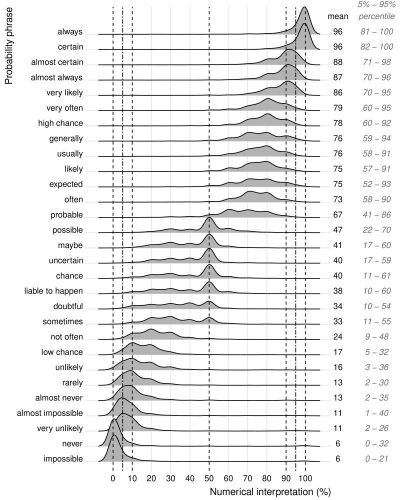
Compounding this issue is the inherent ambiguity of human language. A recent study examining Dutch verbal probability terms illustrates how unreliable word choice can be in research settings. While extreme terms carry universal weight, phrases commonly deployed in qualitative research—such as "possible," "maybe," "uncertain," or "likely"—trigger a massive spread of numerical and psychological interpretations among different respondents. A user describing a feature as "likely" to be used might envision a 90% probability, while a product manager might interpret the exact same word as a 40% chance. Consequently, relying strictly on verbal declarations introduces systemic risk into product strategy.
Triangulating Reality: The Four Levels of Customer Understanding
To achieve a realistic, unbiased appraisal of consumer requirements, organizations must systematically evaluate user data across four distinct, nested tiers.
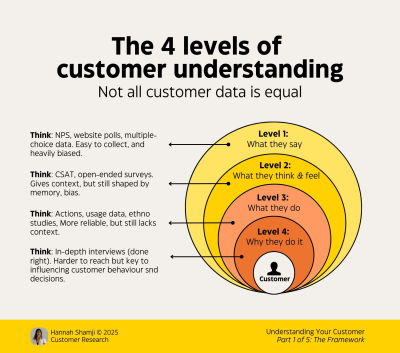
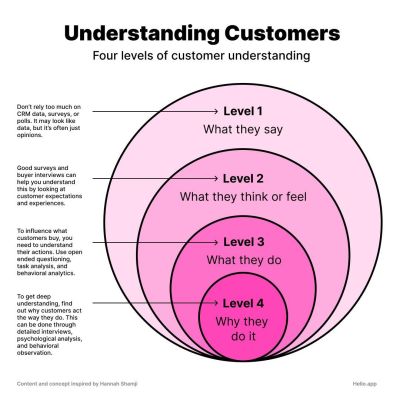
The outermost tier, Level 1, encompasses what users explicitly say. This includes qualitative interview transcripts, direct support tickets, and survey responses. While easily accessible, it is the most distorted layer. Level 2 delves into what users think or feel, capturing internal mental models, hesitations, and emotional responses that are rarely voiced aloud. Level 3 focuses strictly on objective actions—what users physically do within an interface, tracked through telemetry, click-streams, and rigorous usability observation. Finally, the innermost tier, Level 4, investigates the fundamental "why" behind those actions, uncovering the root causes, core tasks, and underlying human needs that dictate behavior.
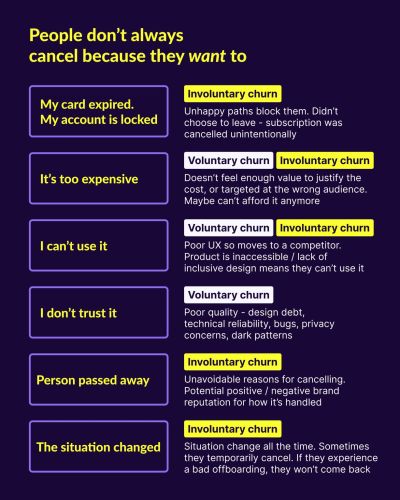
Relying exclusively on any single level inevitably leads to skewed conclusions. For example, traditional Net Promoter Scores (NPS), long favored by corporate executives as a primary health metric, frequently fail to capture these nuanced realities, often prompting organizations to seek out alternative mixed-method research frameworks. By reconciling conflicting data points across all four levels, product teams can construct a coherent narrative of user behavior.
Decoding Emotions and Nuances Through Observation
Emotions play a critical role in shaping user experiences, yet capturing them accurately remains a formidable challenge. Historically, usability researchers relied heavily on the "think-aloud" protocol, instructing participants to verbalize their inner monologues while completing tasks. However, contemporary testing methodologies suggest that forcing users to speak continuously can be profoundly disruptive. Because the cognitive load of verbalization interferes with task execution, many genuine emotional responses—such as confusion, frustration, or delight—remain obscured.
To capture authentic sentiment, modern UX practitioners increasingly advocate for silent observation combined with post-task inquiry. Rather than interrupting a user mid-task, researchers monitor physical micro-behaviors: cursor hesitation, erratic hovering, repetitive scrolling patterns, time wasted on specific interface elements, and involuntary physical cues like furrowed brows or neck tension. Once the user indicates completion or reaches a point of friction, targeted questions can be introduced.
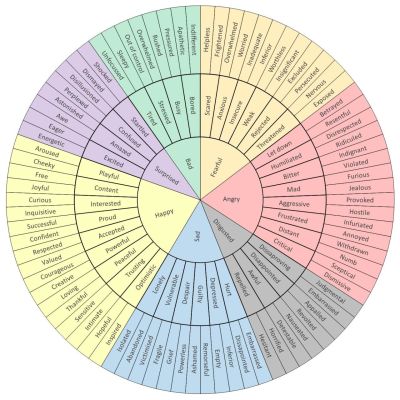
To categorize these sentiments with greater precision beyond binary descriptors like "good" or "bad," frameworks such as the Emotion Wheel have been integrated into user interview workflows. By mapping emotional states onto a structured gradient, researchers can isolate whether a user is experiencing apprehension, skepticism, or subtle relief, thereby gaining deeper context into interface friction points.
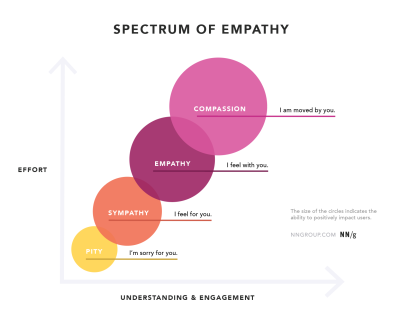
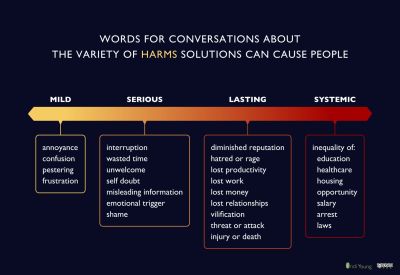
Nevertheless, the industry remains divided on the exact weight emotions should carry in design. Critics, such as designer Alin Buda, argue against the romanticized notion that a design team must emotionally absorb a user’s trauma or frustration to build effective solutions. Buda posits that the core mandate of design is pragmatic action—solving problems and eliminating systemic harms rather than performing empathy. While emotional signals remain valuable indicators of user engagement and aesthetic resonance, they must be contextualized alongside hard behavioral metrics and systemic risk assessments, such as those categorized by researcher Indi Young regarding potential design harms.
Observational Diagnostics Versus Superficial Validation
A pervasive issue in corporate product development is the misuse of user testing as a mechanism for "validation." Too often, organizations enter testing sessions with pre-existing assumptions, treating user sessions as rubber-stamping exercises designed to confirm executive hypotheses. Industry experts emphasize that companies must shift their vocabulary and mindset from "validation" to "investigation," "research," and "diagnosis."
True diagnostic research requires observing users in naturalistic environments without preconceived corporate affiliations. By evaluating where users lose time, where they exhibit behavioral hesitation, and where they encounter systemic barriers, companies can uncover critical vulnerabilities that surveys fail to expose. Uncovering these insights necessitates the cultivation of sincere, trusting relationships with users, ensuring that feedback loops are built on genuine mutual understanding rather than transactional metrics.
Operationalizing User Insights Across the Enterprise
Uncovering deep user needs does not invariably require massive corporate expenditures or complex enterprise research suites. Industry strategists have outlined dozens of lightweight, highly effective initiatives designed to internalize user struggles across an entire organization.
A core principle of modern design operations is making customer pain points visible and accessible to every department, from engineering to executive leadership. Tactics such as circulating short, anonymized video clips of usability friction points or publishing monthly diagnostic newsletters ensure that user struggles remain at the forefront of company consciousness. When engineering teams directly witness a customer stumbling through an unnecessarily complex checkout flow, the motivation to optimize the system increases exponentially.
Implications and Strategic Imperatives
Ultimately, sustainable business growth and effective product design require an absolute commitment to empirical observation over assumption. Listening exclusively to surface-level surveys or relying on executive hunches is a high-risk gamble that frequently results in costly, misallocated capital.
By systematically mapping user behavior across Hannah Shamji’s four levels of understanding, replacing superficial validation with rigorous behavioral diagnostics, and fostering cross-functional awareness of user pain points, organizations can align their digital products with the actualities of human behavior. In an increasingly competitive global marketplace, organizations that successfully decode the hidden motivations of their users will consistently outperform those trapped in the echo chamber of corporate assumptions.