A Comprehensive Guide to Model Distillation: From Technical Optimization to Geopolitical AI Conflict

The most capable artificial intelligence models in the world today, including industry-standard benchmarks like GPT-4, Claude 3.5, and Gemini 1.5, are fundamentally impractical for mass-market deployment. These frontier models, which often feature hundreds of billions of parameters, demand vast data center infrastructure, massive energy consumption, and high latency that renders them unsuitable for edge computing devices such as smartphones or localized browser environments. To bridge the gap between these massive, centralized powerhouses and accessible, performant AI, the industry has relied on model distillation—a methodology that has transitioned from an obscure academic exercise into a central pillar of AI product development, and more recently, a flashpoint for international trade and intellectual property disputes.
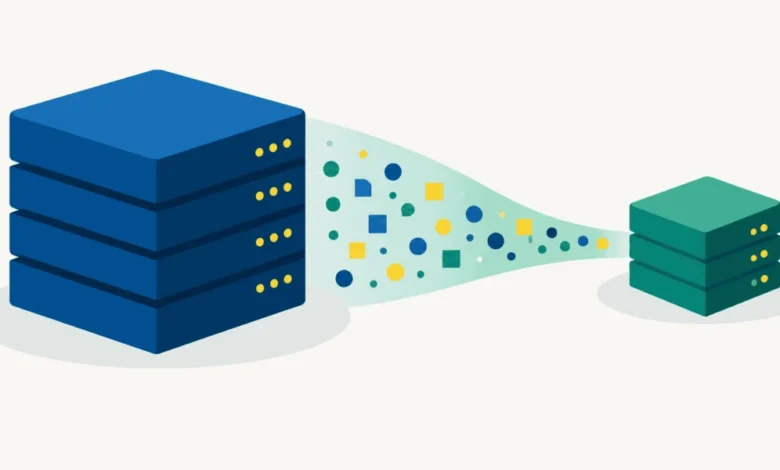
Model distillation is the process of training a smaller "student" neural network to mimic the performance and behavioral patterns of a significantly larger "teacher" model. By condensing the complex, high-dimensional insights of a massive model into a more compact architecture, engineers can achieve near-frontier performance in a package that fits on standard consumer hardware. While the efficiency gains are undisputed, the practice has become the epicenter of a growing controversy, as major AI labs allege that competitors are harvesting their proprietary intelligence through large-scale, unauthorized distillation.
The Mechanics of Dark Knowledge
To understand the evolution of distillation, one must first look at the foundational work of Geoffrey Hinton and his colleagues, who in 2015 formalized the concept of "dark knowledge." In traditional supervised learning, models are trained on "hard labels"—categorical, binary assignments where an input is either right or wrong. For example, a classifier might be told that a specific image is a "dog." However, this binary approach discards significant relational context. A sophisticated teacher model recognizes that a dog may share visual characteristics with a wolf, but bears little similarity to a car.
Hinton observed that when a large model processes data, its internal probability distribution—what it considers "plausible"—contains hidden structural knowledge. By training a student model on these "soft" probability distributions rather than hard labels, the student learns the nuances of the teacher’s reasoning. Through a process known as temperature scaling, researchers "soften" the output of the teacher, allowing the student to absorb these subtle relationships. This allows the student to achieve generalization capabilities that would typically require a much larger parameter count.
The Evolution Toward Synthetic Data
The shift from classic classification models to modern Large Language Models (LLMs) necessitated a revolution in how distillation is performed. Because LLMs generate text token-by-token across massive, open-ended vocabularies, the classical logit-based approach is often insufficient. Consequently, the industry has moved toward synthetic data distillation.
In this paradigm, the teacher model acts as a sophisticated tutor, generating high-quality reasoning chains, coding solutions, and structured logical arguments. The student model is then fine-tuned on this high-fidelity synthetic output. This method has democratized the availability of performant models. For example, open-source projects like Vicuna and Alpaca proved that smaller, open-weight models could reach competitive performance levels by training on synthetic datasets derived from larger, proprietary models.
This shift has created a clear dichotomy in industry practices:
- Feature Distillation: Requires internal access to the teacher’s architecture, typically reserved for in-house development.
- Synthetic Data Distillation: Requires only API access, making it the most common and accessible method for both legitimate development and unauthorized harvesting.
Chronology of the 2026 Distillation Crisis
The year 2026 marked a pivotal transition where distillation moved from a standard engineering optimization to a matter of national security and corporate espionage.
- January 2026: OpenAI files a formal memo with the U.S. House Select Committee on the Chinese Communist Party, alleging that DeepSeek and other entities had utilized sophisticated routing and obfuscation techniques to harvest proprietary capabilities from their models.
- February 2026: Anthropic security researchers publish a report detailing a botnet of roughly 24,000 accounts that had engaged in over 16 million specific, adversarial prompts designed to extract agentic reasoning patterns from the Claude model.
- April 2026: During legal proceedings, xAI founder Elon Musk testified under oath that his organization had utilized OpenAI’s model outputs to facilitate the training of Grok, framing the activity as standard industry practice rather than theft.
- June 2026: Anthropic publicly alleges that the Alibaba-affiliated Qwen lab conducted an extensive campaign involving 28.8 million interactions over 44 days to distill Claude’s specialized knowledge. Alibaba subsequently issued a denial.
- July 2026: Google’s Threat Intelligence Group confirms the disruption of several large-scale "distillation attacks" targeting Gemini, involving more than 100,000 distinct prompts designed to probe the model’s internal decision-making processes.
Data Discrepancies and Economic Implications
The controversy is as much about economics as it is about intellectual property. The cost of training a frontier model often exceeds $1 billion when accounting for R&D, specialized hardware, and human feedback loops. However, independent analysts, including those at SemiAnalysis, noted that some labs claim training costs in the low single-digit millions for models that demonstrate near-frontier capability.
If these performance levels are achieved through unauthorized distillation, the "cost" is effectively subsidized by the originating labs. This raises significant questions regarding the valuation of AI startups and the competitive landscape of the industry. If a competitor can bypass the most expensive stages of R&D by distilling the "final polish" from a leader’s API, the barrier to entry for developing advanced AI drops precipitously, disrupting the current market equilibrium.
Official Responses and Legal Ambiguity
The legal status of these activities remains in a state of flux. Under current U.S. copyright law, AI outputs themselves are generally not eligible for copyright protection, which complicates attempts to litigate the "theft" of generated text. Consequently, labs are forced to rely on Terms of Service (ToS) agreements.
"The industry is currently in a defensive crouch," notes an industry analyst familiar with the ongoing disputes. "When you provide an API, you are providing a service. When that service is used to reverse-engineer your intelligence, it creates a structural paradox. If you close the API, you lose the ecosystem; if you leave it open, you invite distillation."
To combat this, major players have begun to collaborate. OpenAI, Anthropic, and Google have reportedly established an intelligence-sharing pact to track anomalous traffic patterns. Technical defenses are also being rapidly deployed, including "honey-pot" prompts that trigger security alerts, advanced rate-limiting, and invisible output watermarking. However, these solutions are often temporary, as adversarial actors continuously iterate on their obfuscation techniques.
Broader Implications for the AI Ecosystem
The tension surrounding distillation highlights the fragility of the current "open-API" model of AI deployment. As models become more agentic—meaning they can perform multi-step tasks and interact with external software—the value of their internal reasoning becomes more pronounced. This, in turn, makes them higher-value targets for distillation.
Looking forward, the industry is likely to move toward two distinct tiers of access. The first is a highly restricted, high-cost enterprise tier where developers are vetted and monitored to prevent data scraping. The second is a localized, edge-optimized tier where users run models on their own hardware, effectively removing the risk of centralized harvesting.
Ultimately, model distillation will remain a double-edged sword. It is the engine that will likely bring high-quality, private, and efficient AI to the billions of devices currently in use globally. Yet, until clear international standards or legal precedents are established regarding the ownership of "learned intelligence," the practice will remain a high-stakes battleground for the world’s most powerful technology firms. The conflict demonstrates that in the race for artificial general intelligence, the ability to protect one’s intellectual labor is becoming just as critical as the ability to produce it.
Related posts: