The software development landscape underwent a seismic shift when OpenAI officially announced the acquisition of Astral, the high-performance developer tooling startup renowned for creating foundational Python utilities such as uv, Ruff, and the emerging type checker ty. For millions of developers and data scientists who have grown dependent on Astral’s hyper-fast Rust-based ecosystem, the initial reaction across social media and developer forums was a mixture of celebration and acute anxiety. The central question echoing through the programming community was straightforward: Is uv toast?
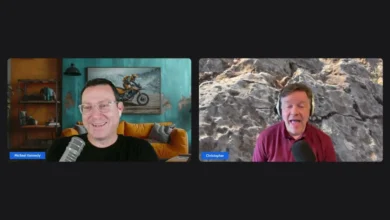
However, in a comprehensive discussion on episode 552 of the Talk Python To Me podcast hosted by Michael Kennedy, Astral founder and CEO Charlie Marsh offered a reassuring perspective. Marsh revealed that under OpenAI’s umbrella, the team may ultimately ship more open-source software than they ever did independently. As the dust settles from the multi-million-dollar deal finalized in mid-2026, the tech industry is closely evaluating what this union means for the future of Python infrastructure, the trajectory of open-source stewardship, and the evolution of AI-driven software engineering.
Background and Chronology of the Astral Journey
The story of Astral began in late 2022 when Charlie Marsh launched the project as a side endeavor while exploring the Rust programming language. At the time, Marsh was looking to build faster static analysis tools for Python, leading to the creation of Ruff—an extremely fast linter and formatter written in Rust that routinely outpaced legacy tools like Black and Flake8 by orders of magnitude.
What started as a one-person passion project rapidly snowballed into a venture-backed company. Marsh incorporated Astral in late 2022, a milestone that fortuitously coincided with the birth of his first child, leading to a notoriously chaotic period of fixing GitHub issues from hospital rooms. As venture capital funding allowed Astral to expand its headcount to a lean, highly efficient team of elite engineers, the company broadened its scope. Following the success of Ruff, Astral pivoted to one of the most notoriously painful sectors of the Python ecosystem: package management.
The introduction of uv revolutionized Python dependency resolution, environment management, and execution by offering a drop-in, lightning-fast alternative to pip, virtualenv, and poetry. Built on top of Python Build Standalone—a project that pre-packages relocatable, highly optimized CPython interpreters—uv eliminated much of the friction traditionally associated with setting up Python environments.
By mid-2025, Astral began exploring commercialization paths, launching a closed beta for pyx, a hosted Python registry and server architecture designed to address enterprise security needs, private package distribution, and complex machine learning dependencies involving PyTorch, GPUs, and CUDA. While pyx generated legitimate early revenue from high-value machine learning teams, conversations with OpenAI began to mature by early 2026. The acquisition agreement was publicly announced on March 19, 2026, and the transaction was finalized following regulatory and operational reviews approximately one month prior to the June 2026 podcast recording.
Strategic Motives Behind the OpenAI Integration
The decision to merge Astral into OpenAI stems from a convergence of technical necessity and strategic vision. OpenAI operates one of the largest Python and Rust codebases in the world, with thousands of machine learning researchers, infrastructure engineers, and applied developers relying on maximum code velocity. By bringing Astral’s core engineering team in-house, OpenAI secures world-class expertise at the exact intersection of Python tooling and high-performance systems programming.
Furthermore, the integration addresses the shifting paradigm of software development. As frontier AI models and coding agents—such as OpenAI’s Codex ecosystem—take on an increasingly central role in writing, testing, and debugging code, developer tools must evolve to serve both human programmers and autonomous agents. Traditional tools designed solely for human workflows often present bottlenecks when integrated into automated pipelines. By co-designing models, harnesses, and foundational tools like Ruff, uv, and ty, OpenAI aims to forge a frictionless developer experience optimized for the agentic era.
Despite joining a major artificial intelligence lab, Marsh emphasizes that the core mission of the Astral team remains remarkably intact. The team has established a clear two-month operational cadence, dedicating the majority of its resources to maintaining and expanding their open-source offerings rather than locking proprietary features behind corporate walls.
Operational Adjustments and the Fate of Open Source
One of the most immediate changes resulting from the acquisition involves the winding down of the commercial pyx hosted registry service. However, rather than shelving the technology, Astral has opted to open-source the extensive work done around GPU-optimized indexes and wheel distributions, making these artifacts freely available to the broader machine learning community. Without the existential pressure of building a standalone commercial business model, the team is liberated to focus entirely on technical excellence.
For uv, Ruff, and ty, development velocity has not skipped a beat. Commit histories and release cadences indicate steady, uninterrupted progress. The roadmap for uv includes highly requested community features, such as locked tool installs allowing developers to point uv tool install directly to a Git repository while reusing existing lock files to guarantee dependency parity. Meanwhile, Ruff continues to serve as an indispensable guardrail, frequently deployed within automated agent workflows to instantly catch syntax errors, lint issues, and formatting discrepancies before code is committed.
The type checker ty is also benefiting from its new environment. By serving as an internal testing ground across OpenAI’s massive and diverse codebases—spanning complex applied systems and cutting-edge machine learning research—ty is being stress-tested at a scale that few independent startups could ever replicate. This rigorous real-world feedback loop is expected to accelerate ty toward a stable public release later in the year.
Industry Implications and the Future of AI-Driven Development
The acquisition of Astral by OpenAI highlights a broader macroeconomic trend: frontier AI laboratories are actively internalizing foundational infrastructure to support their scaling ambitions. While some members of the open-source community expressed skepticism regarding the long-term independence of critical Python packages, historical precedents suggest that permissive licensing (such as the MIT license under which uv and Ruff are distributed) legally safeguards the software from sudden proprietary enshittification.
Marsh addresses the community skepticism with a pragmatic philosophy: words cannot convince skeptics, only consistent, high-quality actions over time. If Astral continues to deliver pristine, permissive, and high-performance tools that benefit the global Python ecosystem, the long-term reality will speak for itself.
As the software engineering industry navigates the rapid transition toward agentic programming, tools that abstract away environment friction will only grow more vital. By combining Astral’s engineering prowess with OpenAI’s computational and modeling resources, the collaboration aims to redefine how code is written, verified, and shipped. Whether this integration successfully ushers in a golden age of open-source productivity or merely concentrates infrastructure power within a dominant AI lab remains to be seen, but the foundation laid by uv and Ruff ensures that their impact on the Python ecosystem will endure for decades to come.