
In the summer of 2024, a specialized working group of accessibility researchers convened to address a persistent industry challenge: establishing standardized, effective methodologies for conducting user testing with individuals with cognitive disabilities. Spearheaded by advocates from Fable, where digital innovation and accessibility intersect, the initiative sought to bridge a glaring gap in mainstream user experience (UX) research. Cognitive disabilities—an umbrella term encompassing conditions that affect memory, focus, and information processing—represent the most prevalent disability demographic in the United States, accounting for roughly 13.9% of the population according to the Centers for Disease Control and Prevention (CDC). Furthermore, recent longitudinal data from Yale University indicates that the prevalence of reported cognitive disabilities among U.S. adults is on a rapid upward trajectory. Despite these figures, mainstream digital products are rarely engineered with cognitive load management in mind.
To confront this systemic oversight, the research collective established a rigorous four-part framework. The initial phase involved developing a nuanced screening tool to accurately recruit participants who self-identified with challenges in memory, focus, and learning, supplemented by a comprehensive review of existing academic and industry literature. Following this foundational work, researchers deployed a pilot study featuring 25 cognitive testers to evaluate and refine testing methodologies. The iterative process culminated in a specialized interview guide, a quantitative survey instrument for digital product evaluation, and a publicly documented case study. The overarching hypothesis was straightforward: testers representing the cognitive disability community would surface a significantly higher volume of actionable usability insights than neurotypical participants drawn from the general population.
To rigorously test this hypothesis, a controlled usability study was launched in collaboration with academic partners at the University of California, Irvine, led by Syed Fatiul Huq alongside Fable researchers Pranav Pidathala, Ali Brown, and Michael Fagan. To remove design bias and test a diverse array of user journeys, researchers utilized an AI prototyping tool to generate three distinct websites, each featuring unique functional architectures, visual aesthetics, and user goals.
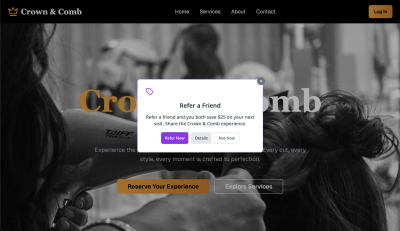
The first platform, Strong Snacks, was designed as a minimalist, brutalist-style recipe portal featuring high-protein, three-ingredient meals, basic category filters, and an integrated blog. The second platform, Turning Pages, mirrored a sophisticated e-commerce bookstore complete with complex filtering systems, multi-tiered category selections, a book-matching swiping feature, custom recommendation lists, and a full shopping cart and checkout workflow. The third platform, Crown & Comb, was intentionally constructed as a high-complexity digital portal for a luxury hair salon, featuring service bookings, VIP membership packages, and intentionally obscured navigation paths to test failure points—specifically requiring users to locate an elusive bridal package.
Methodology and Comparative Testing Framework
The research design leveraged a unified screener to categorize participants into two distinct cohorts: those with self-identified cognitive accessibility needs and a control group of general population participants. A total of 30 structured, remote user interviews were conducted, evenly split with 10 participants per website, divided equally between the two demographic cohorts. Every session was facilitated online by trained researchers following a standardized protocol.
Upon concluding their task execution, all participants completed the Accessible Usability Scale (AUS), a standardized, Creative Commons-licensed 10-question instrument designed to quantify the perceived usability of digital interfaces on a numerical scale from 0 to 100, where higher scores denote superior user experience.
Data analysis was conducted through a uniform qualitative and quantitative coding process. Reviewing exhaustive session recordings and verbatim transcripts, the lead researcher cataloged every instance where a participant articulated a question, confusion, friction point, or explicit usability concern, categorizing these as issues. Instances where participants missed critical interface elements during task execution—even if unvoiced—were similarly logged, alongside all user-generated suggestions for product improvement. To ensure analytical integrity, recurring issues mentioned multiple times by a single participant were counted once, while cross-participant patterns were aggregated to signal systemic design flaws.
Empirical Findings: Quantifying the Cognitive Dividend

The empirical data decisively validated the initial research hypothesis. Across all three test environments, participants with cognitive accessibility needs identified 197 distinct usability issues, compared to just 113 issues raised by the general population cohort. Furthermore, the cognitive cohort generated 93 actionable design suggestions, eclipsing the 54 recommendations put forward by general population users. In aggregate, cognitive participants surfaced 1.8 times more issues and formulated 1.8 times more enhancement recommendations than their neurotypical counterparts.
On Strong Snacks—the simplest interface evaluated—cognitive participants reported an average of 9.8 issues and 4.8 suggestions, yielding a mean AUS satisfaction score of 76.8, compared to an average of 6.4 issues, 2.6 suggestions, and an AUS score of 90.5 for the general population.
On Turning Pages, the platform featuring the most complex e-commerce workflows, cognitive participants averaged 17 issues and 8.4 suggestions, with a mean AUS score of 60.8. Conversely, the general population cohort averaged 11 issues and 5.2 suggestions, registering a notably higher mean AUS score of 78.0.
The results from Crown & Comb provided the most striking contrast. Designed intentionally for high cognitive friction, this platform challenged all users, yet cognitive participants uncovered an average of 12 issues and 5.4 suggestions. Interestingly, while general population users recorded a meager mean AUS score of 49.5, the cognitive cohort reported a higher mean AUS score of 63.8. Researchers attributed this inversion to the psychological processing of frustration: while general population users dismissed the site as unengaging, cognitive participants engaged deeply with the friction points, subsequently offering precise structural critiques that elevated their overall evaluation once specific bottlenecks were understood.
Qualitative Insights and Systematic Issue Categorization

Categorizing the qualitative data revealed sharp divergences in how different cohorts interacted with digital interfaces. Cognitive participants overwhelmingly targeted content clarity, interactive button affordances, icon comprehension, and media integration. For instance, while general population users frequently glossed over ambiguous microcopy or muddled through confusing navigation paths by trial and error, cognitive participants experienced these obstacles as severe cognitive load multipliers.
A comparative analysis of participant feedback from the Crown & Comb sessions underscored this divergence. A general population participant described the interface as frustrating and unengaging: "As soon as you have a name of a treatment and a little explanation… as soon as you click onto that, it should be that you can interact with that service straight away… This feels not particularly engaging."
In contrast, a cognitive participant articulated a far more profound systemic impact on personal well-being: "For example, like, the mental energy aspect of it… sometimes there’s cookies, and then ads, pop-ups, or maybe the website or service has too many options to look through… It makes me, like, feel drained and less able to focus."
This distinction illustrates how minor usability flaws for neurotypical users frequently cross the threshold into disabling accessibility barriers for individuals managing cognitive load limits. When pop-ups, ambiguous button states, and dense text blocks converge, the resulting cognitive exhaustion prevents task completion entirely.
Broader Implications for UX Strategy and Business Outcomes
The implications of these findings extend far beyond compliance-driven accessibility. By systematically integrating cognitive accessibility into UX research, design teams effectively future-proof their digital assets against a rapidly aging demographic shift. According to U.S. Census projections, the proportion of Americans aged 65 and older is expected to climb from 17% to 25%, meaning that by 2060, one in four citizens will be an older adult navigating age-related cognitive shifts. Building intuitive, low-cognitive-load digital environments is no longer a niche accommodation; it is an economic imperative for user retention and market expansion.
Furthermore, cognitive inclusion serves as an ideal on-ramp for organizations attempting to mature their broader accessibility practices. While testing with screen reader or alternative navigation users requires specialized technical understanding, evaluating digital interfaces through the lens of cognitive load addresses universal principles of clarity, predictability, and straightforward information architecture. As industry case studies demonstrate—such as feedback from UX managers at major media enterprises—sessions conducted with cognitive accessibility participants yield an exceptionally high density of actionable insights per hour of research.
Study Limitations and Future Outlook
Researchers noted certain methodological limitations within the exploratory study, including a modest sample size that positions the findings as primarily qualitative rather than statistically definitive. Additionally, testing environments varied slightly, with cognitive participant sessions hosted on specialized accessibility platforms and general population sessions managed via standard testing panels.
Despite these variables, the core takeaway remains unequivocal: cognitive inclusion in UX research is an indispensable catalyst for operational efficiency, content clarity, and streamlined digital architecture. By designing products that accommodate the highest thresholds of cognitive processing demand, organizations inevitably deliver superior, frictionless digital experiences for every user, transforming accessibility from an afterthought into the core foundation of modern product innovation.