The Creative Process Behind the Visual Realization of the God of Bones Cinematic Project

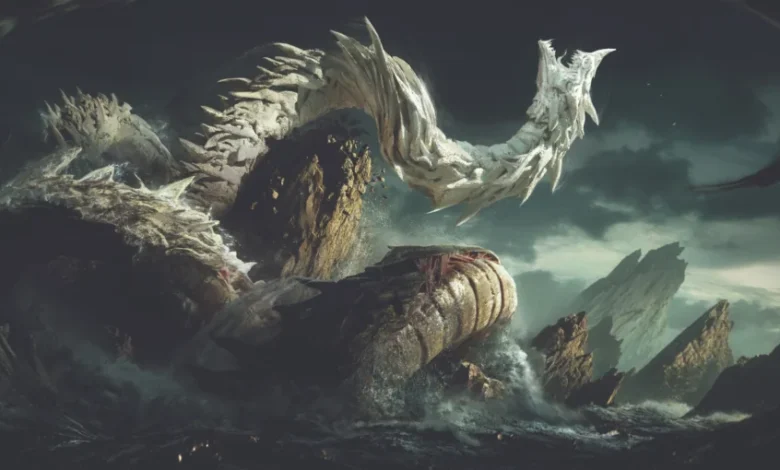
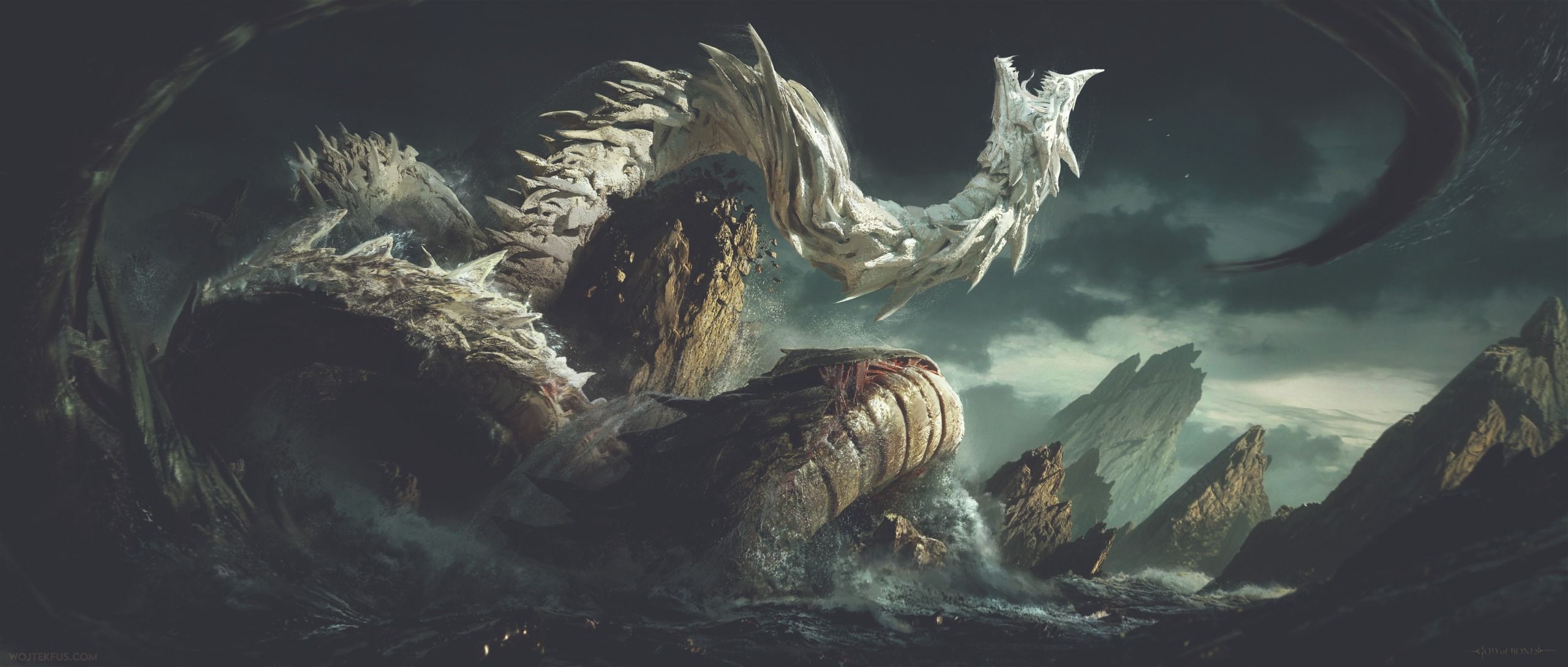
The production of the upcoming short film God of Bones, directed by Paul Coulthard, represents a significant case study in the intersection of traditional conceptual illustration and modern 3D pipeline efficiency. At the heart of the project’s visual identity is a pivotal vista shot depicting a gargantuan serpent, captured in the precise moment of its demise, calcified as it collapses into an inert geological formation. This scene, which serves as a thematic anchor for the film’s narrative, required a meticulous blend of artistic intent and technical execution to convey the necessary sense of overwhelming scale, physical weight, and suspended animation.
Conceptual Foundations and Narrative Intent
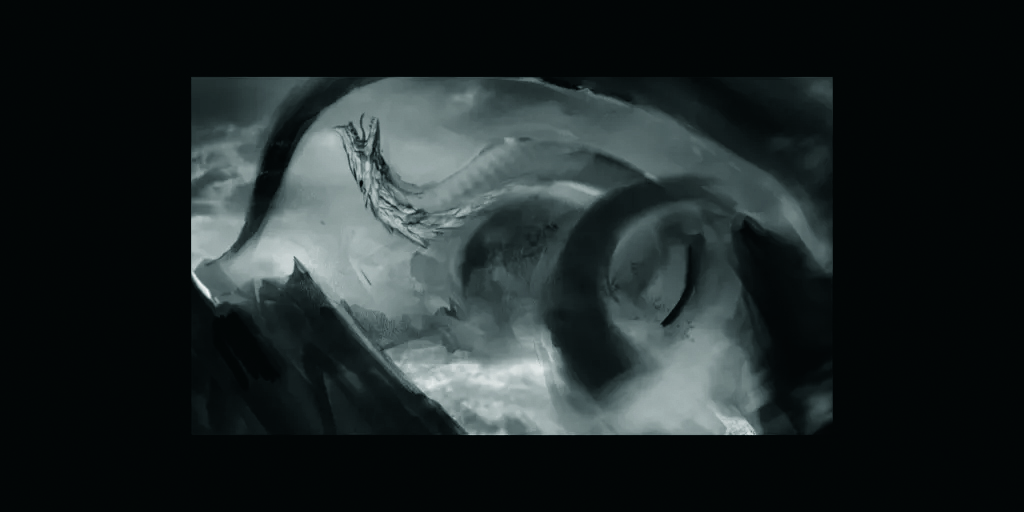
The genesis of the God of Bones project began with a series of exploratory sketches by director Paul Coulthard. These initial drawings were designed to establish the core visual language of the film: a synthesis of violence, mythic scale, and environmental storytelling. The primary objective was to visualize a creature of immense proportions, caught in its final death throes, rendered as a permanent, stone-like monument.
In the early stages of development, the team faced challenges in capturing the "halted motion" of the serpent. The initial compositions lacked the required cinematic weight to make the viewer perceive the creature as a massive, organic entity transitioning into an architectural feature of the landscape. The artistic challenge was not merely to model a monster, but to integrate it into the environment in a way that felt historically and biologically inevitable within the film’s internal logic.
Chronology of Production
The development of the vista shot followed a structured three-phase pipeline:
- Conceptualization (Weeks 1-2): The collaborative process focused on refining the rhythm of the serpent’s body and its placement within the landscape. The objective was to ensure that the creature’s trajectory through the frame guided the viewer’s eye, reinforcing the feeling of a sudden, violent cessation of life.
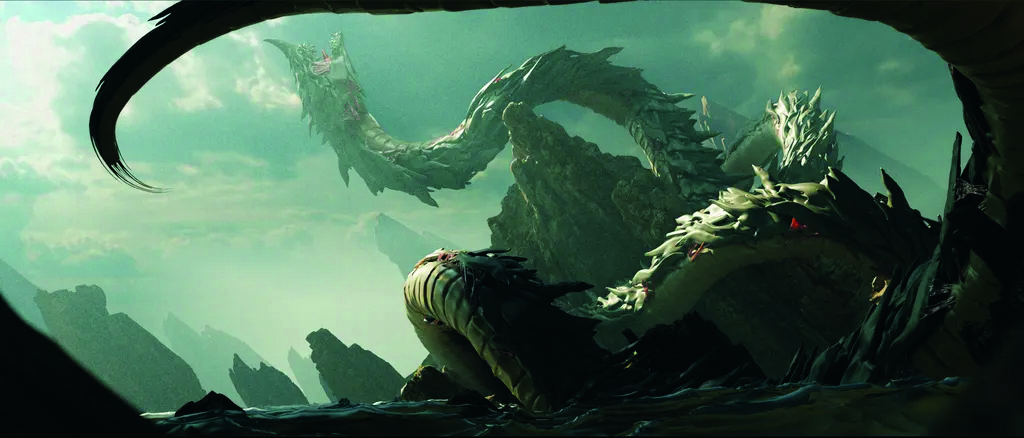
- 3D Layout and Structural Blocking (Weeks 3-5): Using Blender as the primary environment for scene composition, the team established the rocky formations and the base geometry of the serpent. This phase was critical for balancing the scale; the placement of the serpent against the jagged rock formations was adjusted repeatedly to ensure the creature maintained a dominant presence without overwhelming the environmental context.
- Refinement and Integration (Weeks 6-8): The final phase involved rendering and a multi-layered digital paintover. Technical artists integrated photographic elements, such as atmospheric ocean spray and complex rock textures, to ground the 3D model in a realistic physical environment. A notable artistic choice made during this stage was the horizontal mirroring of the entire composition, which provided a more dynamic, unconventional balance to the final frame.
Technical Collaboration and Asset Creation
While the composition and atmospheric direction were managed by the core creative team, the high-fidelity assets were developed through a specialized workflow. The serpent’s design was under the direct supervision of Christian Bull, whose work ensured that the creature’s anatomical features remained consistent with the film’s aesthetic requirements.
The modeling of the serpent was handled by Laurens Rasti and Wilmar Ballespi of Shoot First. Their contribution was essential to the "calcification" effect—a complex visual challenge that required the texture of the serpent’s scales to transition seamlessly into the jagged, irregular appearance of stone. The successful rendering of this transition was a turning point for the scene, allowing the creature to feel as though it had always been a part of the landscape, rather than an entity placed on top of it.
Supporting Data and Industry Trends
The production of God of Bones reflects a broader trend in independent filmmaking where the utilization of open-source 3D software, such as Blender, is enabling smaller teams to achieve visual fidelity previously reserved for high-budget studio productions. According to recent industry surveys on digital production workflows, the integration of 3D layout tools within the early concept phase—a process often referred to as "pre-visualization"—has reduced the iterative time for complex environmental shots by approximately 30 percent.
The reliance on a hybrid workflow, where 3D renders are enhanced through traditional digital painting, remains the industry standard for achieving "hero" shots that require specific atmospheric qualities. By combining the precision of 3D geometry with the expressive flexibility of hand-painted textures, the team behind God of Bones was able to achieve a level of detail that is often lost in purely procedural or photogrammetry-based pipelines.
Implications for Visual Storytelling
The success of this specific sequence in God of Bones highlights the importance of compositional psychology in visual media. By focusing on the "unstable" nature of the composition—where the serpent’s body appears to be caught in a precarious state of collapse—the creators were able to elicit a visceral reaction from the audience. The "frozen" nature of the creature serves as a metaphor for the film’s broader themes of permanence and decay.
From a production standpoint, the project demonstrates that high-concept visual storytelling does not necessarily require massive, multi-departmental teams. Instead, it requires a clear, shared vision and the ability to leverage a small, highly skilled group of specialists. The collaboration between directors, designers, and modelers allowed for a focused, iterative approach that prioritized the "readability" of the image above all else.
Institutional and Professional Feedback
While the film is currently in development, early previews of the God of Bones visuals have been noted by industry observers for their distinct, painterly aesthetic. Experts in the field of digital art have pointed out that the decision to mirror the final composition was a bold choice that effectively broke the standard "rule of thirds" to create a sense of unease and curiosity in the viewer.
The project’s inclusion in publications such as ImagineFX serves as a testament to the growing interest in the technical workflows of independent creators. By documenting the "how-to" aspects of their production, the team has contributed to a growing body of knowledge that helps standardize the use of 3D pipelines for narrative-driven art.
Broader Context
The "God of Bones" project is positioned at a time when the accessibility of high-end modeling software is democratizing the production of high-concept cinema. As creators gain access to more sophisticated tools, the standard for what constitutes a "short film" is rapidly evolving. Today, a short film can carry the production value of a feature-length project, provided the team maintains a rigorous, disciplined approach to visual development.
The methodology employed by Paul Coulthard and his team provides a clear template for future projects of a similar scale. By establishing a rigid, well-defined pipeline—starting from a rough, narrative-driven sketch and culminating in a highly refined, atmospheric final render—the team has ensured that their artistic vision remained intact throughout the transition from two-dimensional concept to three-dimensional reality.
As God of Bones moves toward its final release, the scene of the calcified serpent will likely remain a signature moment for the film, serving as a reminder of the power of calculated composition and the importance of collaborative artistic refinement in the digital age.