The Evolution of Intent-Driven Web Design: Moving Beyond Menus, Forms, and Endless Clicks

The digital landscape is undergoing a fundamental architectural transformation, shifting away from the traditional point-and-click paradigm toward ecosystems shaped entirely by human intent. For decades, user experience (UX) design has been tethered to visual interfaces—menus, range sliders, multi-step checkout forms, and persistent cookie pop-ups. Users have grown accustomed to spending significant portions of their digital sessions managing software rather than achieving their actual objectives. However, accelerated by breakthroughs in artificial intelligence (AI) and large language models (LLMs), web architecture is embracing a radical philosophy: intent-driven design. This shift challenges UX professionals to reconsider their foundational responsibilities, moving away from constructing static, visible interfaces and toward guiding transparent, automated user journeys.

The Historical Context of Point-and-Click Interfaces
To understand the magnitude of the current shift, it is necessary to examine the half-century dominance of the Graphical User Interface (GUI). Pioneered by systems like the Xerox Star in the late 1970s and popularized globally by the original Apple Macintosh in 1984, the GUI established a reliable contract between human and machine: the computer acts as a passive container of data, while the human serves as the mechanical orchestrator.
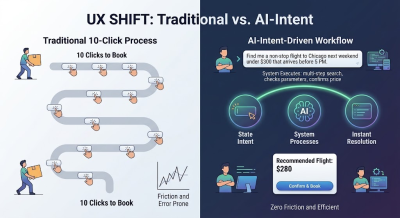
Under this model, accomplishing routine digital tasks required navigating complex software labyrinths. Booking a flight, for example, demands a hyper-interactive, multi-step process: opening a browser, navigating to an aggregator, typing departure and arrival cities, manually adjusting date pickers, filtering by stops and carriers, sorting by price, dismissing promotional overlays, inputting passenger details, and finally executing the transaction across multiple screens. This 10-click process epitomizes the traditional interaction model, where software requires constant micro-management.
Over the years, human-computer interaction (HCI) theorists have continuously critiqued this friction. Visionary designers such as Don Norman, through his foundational principles of human-centered design, and Golden Krishna, author of the seminal 2015 book The Best Interface Is No Interface, argued that screens and buttons should ideally be secondary to human needs. Krishna famously asserted that the ultimate goal of modern web design is not to build prettier buttons or flashier animations, but to eliminate the interface entirely wherever possible. Until recently, technological limitations kept these concepts in the realm of philosophy. Today, generative AI and background agents are finally making screenless, intent-driven interactions a technical reality.
Chronology of the Shift Toward Ambient and Intent-Based Computing
The transition from command-based software to intent-driven experiences has accelerated rapidly over the past decade, driven by parallel advancements in machine learning, natural language processing, and cloud computing infrastructure.
- 2015–2018 (The Rise of Conversational Assistants): Early consumer AI assistants, such as Amazon Alexa, Apple Siri, and Google Assistant, introduced the general public to voice-activated intent parsing. While largely confined to smart speakers and mobile operating systems, these tools proved that users preferred stating high-level goals over navigating application menus.
- 2019–2022 (The Proliferation of Contextual and Ambient Design): Mobile operating systems adopted sophisticated ambient design guidelines. Software began leveraging environmental metadata—such as device location, physical activity, and historical usage patterns—to proactively surface relevant tools before a user explicitly searched for them, laying the groundwork for predictive interfaces.
- 2023–2024 (The Generative AI Explosion): The widespread commercialization of large language models fundamentally altered software expectations. Platforms began introducing generative user interfaces (Generative UI), dynamically rendering custom layouts, data tables, and interactive widgets on the fly based on real-time conversational prompts.
- 2025–Present (The Rise of Autonomous AI Agents): Modern web platforms have moved beyond simple text generation to autonomous execution. Specialized web agents now perform complex, multi-step background research, code generation, and task decomposition, effectively replacing traditional sidebars, dashboards, and form fields with single-input intent bars.
Real-World Implementation: Three Platforms Redefining Web Interaction
The transition from buttons to intent is no longer a futuristic theory; it is actively reshaping how major digital platforms operate. Several prominent web applications demonstrate this transformation in practice:
- Perplexity AI and the Decline of the Multi-Tab Search: Traditional search engines were built as digital directories, rewarding users with a list of blue links and leaving the manual labor of opening multiple browser tabs, reading long articles, and synthesizing data to the human. Perplexity AI replaces this model by capturing the user’s specific informational intent and synthesizing a comprehensive, cited response instantly. Rather than managing ten separate tabs, the user receives a unified, actionable resolution.
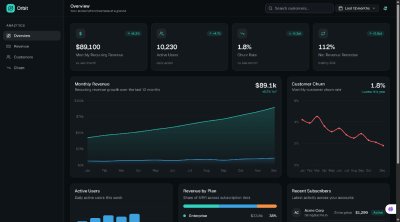
- Vercel v0 and Generative Web Development: Historically, creating web interfaces required designers and developers to utilize visual builders like Figma or drag-and-drop editors, manually drawing rectangles, assigning hexadecimal color codes, and configuring CSS padding. Platforms like Vercel v0 allow users to input natural language descriptions of desired software components—such as a complex SaaS dashboard—and instantly generate functional, production-ready code and UI layouts on demand.
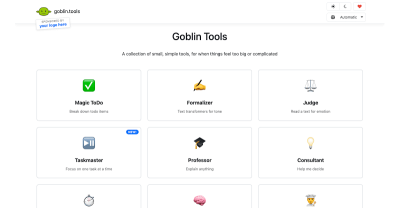
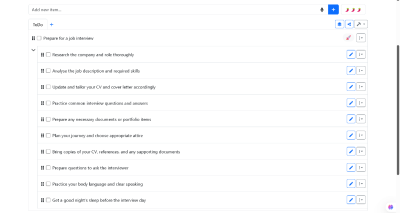
- Goblin.tools and Frictionless Task Management: Traditional productivity suites demand significant administrative overhead, requiring users to manually construct task lists, assign metadata, configure Kanban boards, and manage deadlines. Goblin.tools utilizes specialized single-task AI models to take overwhelming, vaguely stated human goals and automatically break them down into structured, manageable micro-checklists with zero configuration or sign-up friction.
Core Pillars of Intent-Driven Web Design
As digital product designers dismantle traditional menus, sidebars, and forms, they are establishing a new framework built upon three essential architectural pillars:
| Pillar | Traditional UX Approach | Intent-Driven UX Approach |
|---|---|---|
| User Input | Micro-actions (Clicks, dropdown menus, manual toggles) | High-level goals (Natural language, environmental context, behavioral habits) |
| Interface State | Static layouts (Every visitor encounters the identical UI structure) | Generative UI (Interfaces rendered dynamically on the fly based on immediate context) |
| Task Execution | Manual execution orchestrated step-by-step by the human user | Autonomous execution handled securely by background AI agents |
1. High-Level Goals and Ambient Context
Intent-driven interfaces do not merely wait for explicit keyboard commands; they leverage contextual awareness to anticipate user needs. By analyzing device telemetry, location data, and behavioral histories, modern applications can initiate proactive workflows. For instance, a travel application recognizing a delayed flight and an upcoming hotel reservation can automatically communicate with the lodging provider to adjust check-in times without requiring the user to navigate a support portal.
2. Generative User Interfaces
In legacy web design, digital properties maintain rigid uniformity. An e-commerce marketplace presents the same navigation hierarchy to every visitor, regardless of whether they require immediate customer support, wish to track an existing delivery, or are browsing for a new product. Generative UI upends this rigidity. By shifting computing from command-based interaction to outcome-specification, applications assemble custom interfaces dynamically. If a user expresses a need to compare three specific financial investment strategies, the system generates a tailored comparison widget that appears for the duration of the task and recedes once the goal is accomplished.
3. Autonomous Execution and Frictionless Reversibility
Traditional software design is deeply rooted in error prevention, frequently interrupting users with intrusive confirmation modals ("Are you sure you want to delete this file?"). Intent-driven platforms adapt established usability heuristics—such as Jakob Nielsen’s principles of user control and error recovery—by shifting the safety net from prevention to easy reversibility. Because autonomous agents execute actions on behalf of the user, applications prioritize transparent rollback mechanisms. Prominent undo functions, natural language revision prompts, and clear audit logs replace disruptive warning dialogs.
Industry Implications and the Black Box Challenge
While the elimination of interface friction offers profound productivity benefits, it introduces significant technical and ethical challenges for product design teams.
Chief among these is the "illusion of control" and the "black box problem." In a conventional graphical user interface, an unexpected outcome is easily diagnosed; a user can review their filter settings or check form inputs to locate the error. In contrast, intent-driven interfaces rely on backend machine learning models whose intermediate decision-making processes are often opaque. When an autonomous agent misinterprets a complex goal, troubleshooting can become frustrating for the user.
To mitigate these risks, industry research groups—including the Stanford Human-Computer Interaction Group and the Google PAIR (People + AI Research) initiative—advocate for rigorous transparent feedback loops. Modern intent-driven systems must explicitly display their interpretation of a user’s prompt (e.g., "Searching for non-stop flights to Chicago departing next weekend under $300…") before executing transactions. Furthermore, ethical frameworks established by organizations like the Center for Humane Technology emphasize that designers must maintain strict boundaries, ensuring that routine execution is automated while high-stakes decisions—such as financial expenditures, public data publishing, and privacy modifications—continue to require explicit human confirmation.
Conclusion
For decades, the digital economy evaluated software success through engagement metrics centered on volume: time spent in-app, click-through rates, and page views per session. Digital products were intentionally engineered to maximize visual complexity and interaction frequency.
The widespread adoption of intent-driven design fundamentally inverts these legacy metrics. Aligned with the broader "Time Well Spent" movement, the ultimate test of a modern digital product is no longer how captivating its buttons are, but how efficiently the software solves a user’s problem and gets out of the way. As digital architecture transitions toward agent-driven workflows, the future of the web will not be measured by the abundance of its interactions, but by the seamless, invisible completion of human intent.