The Ultimate Roadmap to Mastering Voice Agents: From Technical Foundations to Real-World Deployment

Voice interfaces are rapidly evolving from niche novelty items into the standard operating system for human-computer interaction. As industries from healthcare to retail seek more intuitive ways to engage users, the demand for sophisticated voice agents has surged. Unlike text-based large language models (LLMs) that have dominated the AI landscape since 2022, voice agents represent a distinct leap forward in user experience design. They combine the reasoning capabilities of modern artificial intelligence with the immediacy and fluidity of natural speech. Mastering this technology requires more than just proficiency in natural language processing; it demands a mastery of audio engineering, low-latency infrastructure, and human-centric conversation design.
The Anatomy of a Voice Agent Pipeline
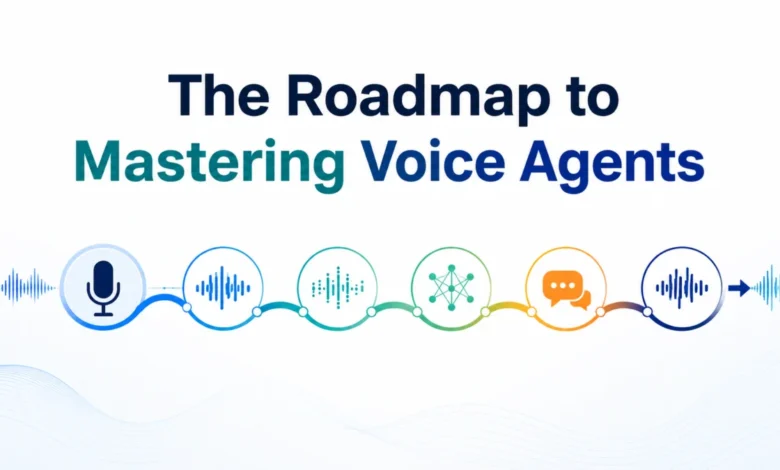
To understand the shift in AI development, one must first deconstruct the core architecture of a voice-enabled agent. While a standard LLM processes discrete text inputs, a voice agent operates as a continuous, high-speed pipeline consisting of three critical, sequential stages: Speech-to-Text (STT), Language Processing, and Text-to-Speech (TTS).
The process begins with Automatic Speech Recognition (ASR), or STT, which converts raw audio waves into actionable text. This stage is highly susceptible to environmental variables, such as ambient noise, microphone quality, and regional accents. Once the audio is digitized and transcribed, it enters the "brain" of the agent—the LLM or reasoning engine. This component mimics the function of text-based systems by interpreting intent and generating a logical, contextually appropriate response. Finally, the TTS layer synthesizes the text output into a natural-sounding voice, delivering the message back to the user.
The technical challenge lies in the orchestration of these stages. In production environments, any delay in one of these segments can render the system unusable. Industry benchmarks suggest that for a conversation to feel "human," the total round-trip latency—the time from when a user finishes speaking to when the agent begins its response—must remain below 500 to 800 milliseconds.
A Chronological Evolution of AI Interaction
The progression toward voice-first AI has been marked by several distinct phases. In the early 2010s, rule-based systems like early iterations of Siri and Alexa relied on rigid, keyword-dependent programming. These systems often struggled with ambiguity and lacked the capacity for true open-ended conversation.
The transition to neural-network-based speech recognition significantly improved accuracy between 2015 and 2020. However, the true inflection point arrived with the widespread adoption of transformer-based LLMs. By 2023, developers began integrating these models into real-time pipelines, enabling agents to handle complex instructions, maintain long-term memory, and adapt to diverse conversational styles. Today, the focus has shifted from merely recognizing speech to ensuring the "prosody"—the rhythm, stress, and intonation of speech—conveys emotional intelligence and authority.
Data-Driven Challenges in Voice Implementation
The industry is currently grappling with significant technical hurdles that differentiate voice development from traditional software engineering. Research indicates that "Word Error Rate" (WER) remains a critical performance metric for STT systems. While state-of-the-art models now achieve WERs of below 5% in clean audio environments, that number can climb significantly in real-world scenarios, such as a customer service center with background chatter or a mobile device in a windy outdoor space.
Furthermore, the lack of visual formatting presents a unique design constraint. In a text-based interface, users can scan headers, bullet points, and links. Voice agents, by contrast, are linear. A user cannot "scan" a spoken answer. Consequently, developers must employ "verbal formatting"—using pacing, pauses, and clear sentence structures to emphasize key information without overwhelming the listener. Data suggests that voice responses exceeding 45 seconds often lead to user abandonment, forcing developers to prioritize brevity and high-information density.
The Seven-Stage Roadmap for Developers
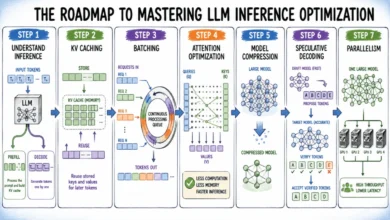
For engineers and designers looking to enter this field, a structured, seven-stage approach is recommended to ensure robust deployment:
1. Architectural Foundation: Beginners must first master the mechanics of the three-stage pipeline. This involves understanding audio encoding formats (e.g., PCM, WAV, MP3) and the trade-offs between local and cloud-based processing.
2. Language Model Integration: Leveraging existing LLM expertise, developers must learn to optimize prompts specifically for audio. This includes restricting models from generating markdown, symbols, or long-form citations that do not translate well to speech.
3. Real-Time Streaming: To address latency, developers must move away from "batch" processing (waiting for the entire response to be generated) toward streaming architectures, where the system begins speaking the first few words while the rest of the response is still being calculated.
4. Conversation Design: Drawing from linguistics, this stage focuses on the "personality" of the agent. This includes designing turn-taking logic, handling interruptions, and ensuring the agent knows how to ask for clarification when it fails to understand a query.
5. Tool Use and State Management: Advanced agents must move beyond pre-trained knowledge. By integrating API calls—allowing the agent to check inventory, process payments, or update databases—the agent evolves into a functional assistant. Memory, or "context window management," is crucial here to ensure the agent remembers user preferences from previous sessions.
6. Deployment and Telephony Infrastructure: Moving from a development environment to a production system requires managing telephony stacks (such as SIP or WebRTC), monitoring real-time performance, and establishing feedback loops to analyze where conversations fail.
7. Advanced Optimization: Once the core is stable, developers can explore sophisticated features like multi-lingual support, real-time emotion detection, and custom voice cloning, which allows for consistent brand identity across all customer touchpoints.
Broader Implications and Future Outlook
The implications of widespread voice agent adoption are profound. Analysts predict that as these systems become more reliable, the "barrier to entry" for technology will vanish. Elderly populations, individuals with visual impairments, and those in manual-labor sectors will gain unprecedented access to complex digital services simply by speaking.
However, this transition also raises significant concerns regarding privacy and the ethics of voice synthesis. As agents become more capable of human-like speech, the potential for misuse—such as sophisticated social engineering or voice cloning for fraud—grows. Industry leaders are currently advocating for transparent watermarking of synthetic audio to combat these risks.
The move toward voice-first AI is not merely a change in input method; it is a fundamental shift in how we build and interact with intelligence. By adhering to a rigorous, stage-based learning path, developers can navigate the complexities of latency, design, and infrastructure to build systems that are not only technologically advanced but also functionally vital to the future of the digital economy. Whether the goal is to revolutionize customer support or create a personal digital assistant, the roadmap to mastery lies in the intersection of careful engineering and human-centric interaction design.