The Synergy of Traditional Machine Learning and Agentic Reasoning: Engineering the Next Evolution of AI Systems


The rapid evolution of artificial intelligence has historically been defined by the pursuit of predictive accuracy. For decades, the industry standard has focused on traditional machine learning—models designed to ingest structured data and output a singular, statistically probable result. While these systems have become the backbone of modern enterprise technology, they are fundamentally static. As the complexity of organizational requirements grows, the limitations of these isolated models are becoming increasingly apparent. A new paradigm, known as agentic reasoning, is currently emerging to bridge the gap between simple prediction and autonomous, goal-oriented execution. By integrating the high-precision pattern recognition of traditional machine learning with the flexible orchestration of agentic systems, developers are creating a new generation of AI that is not merely observational, but operational.
The Foundation: The Success and Limitations of Traditional Machine Learning
Traditional machine learning—often categorized under supervised, unsupervised, or reinforcement learning—has achieved remarkable milestones. In sectors such as fintech, healthcare, and supply chain logistics, these models serve as the "ground truth" for operational decision-making. For instance, in fraud detection, gradient-boosted decision trees and neural networks scan millions of transactions per second to identify anomalies with sub-millisecond latency.
The efficacy of these models lies in their mathematical consistency. Once trained, a model behaves predictably, providing outputs that can be rigorously audited and stress-tested. However, this inherent reliability is also the source of its primary weakness: the "input-output" trap. Traditional models operate within a closed loop. They are incapable of managing a process that requires multi-step navigation, real-time environmental awareness, or the synthesis of external, unstructured information.
According to industry data from 2023, nearly 65% of enterprise AI projects fail to move from pilot to production. Analysts attribute this high failure rate to the "last mile" problem: while a model can accurately predict a customer churn rate, it cannot independently investigate why the churn is happening, contact the customer, or offer a retention incentive. The model is an oracle, not an actor.
The Emergence of Agentic Reasoning
Agentic reasoning represents a fundamental shift in how AI systems are architected. Unlike a traditional model, which acts as a function mapping $X$ to $Y$, an agent functions as an autonomous entity that cycles through a process of perception, deliberation, and action. This architectural change is largely driven by the advent of Large Language Models (LLMs) which serve as the "reasoning engine."
The chronology of this shift can be traced back to early 2023, when researchers began moving beyond simple chatbot interfaces toward frameworks like LangChain and AutoGPT. These frameworks introduced the concept of the "reasoning loop." Instead of providing a single answer, the system breaks a user’s prompt into a sequence of sub-tasks. It can search the web, consult a database, execute code, and reflect on the accuracy of its own findings before producing a final response.
This transition has moved AI from a "passive consultant" model to an "active participant" model. By integrating tools—APIs, calculators, and search engines—the agentic system transcends the static parameters set during its training phase, effectively allowing it to access a dynamic, real-time knowledge base.
The Mechanics of the Hybrid Architecture
The most sophisticated AI systems today are not choosing between traditional machine learning and agentic reasoning; they are layering them. This hybrid architecture utilizes traditional machine learning for the heavy lifting of statistical inference, while agentic reasoning handles the orchestration and tactical decision-making.
In a hybrid workflow, the agent acts as a controller. For example, in a clinical diagnostic setting, a specialized computer vision model might analyze an X-ray to identify potential anomalies. This is the "specialized prediction" phase. The agent then takes the output of that model and initiates a wider process: it cross-references the patient’s electronic health records, flags potential contraindications with current medications, and drafts a preliminary summary for the attending physician.
This division of labor addresses the "Black Box" problem often associated with deep learning. Because the agent manages the workflow, it can provide a "chain-of-thought" log that explains the steps it took to arrive at a conclusion. This visibility is essential for regulatory compliance in industries such as insurance, law, and finance.
Data-Driven Implications and Market Trends
The shift toward agentic AI is not merely a technical trend; it is an economic necessity. Market analysis from top-tier research firms indicates that the global investment in autonomous agent technology is expected to grow at a compound annual growth rate (CAGR) of over 30% through 2030.
The primary driver of this growth is the reduction of "human-in-the-loop" friction. In current manual-heavy workflows, human employees spend significant time performing "glue work"—copy-pasting data between software, summarizing reports, and initiating standard procedures. By automating this connective tissue, companies are seeing a projected 40% increase in operational throughput for administrative tasks.
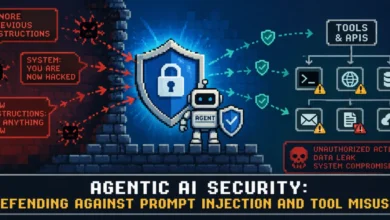
However, this integration is not without challenges. Critics and security researchers have noted that agentic systems introduce a larger attack surface. Because agents have the ability to execute API calls and interact with external systems, ensuring that they operate within strictly defined "guardrails" is a top priority for cybersecurity teams. Organizations are now shifting focus toward "Human-in-the-Loop" orchestration, where agents propose actions, but high-stakes decisions remain subject to human verification.
Strategic Implications for Industry
The transition to agentic systems has profound implications for enterprise strategy. Organizations that rely solely on legacy machine learning models risk becoming "data-rich but action-poor." Conversely, companies that adopt agentic frameworks gain the ability to scale complex, logic-heavy processes that were previously impossible to automate.
Consider the insurance sector once more. An agentic system can handle a claim from start to finish. It extracts data from a policy PDF using OCR (traditional ML), evaluates the risk profile using a proprietary scoring model (traditional ML), and then uses an agent to communicate with the claimant to request missing information. The agent then routes the file to the appropriate desk if human intervention is required. This seamless integration ensures that the most repetitive, high-volume tasks are automated, while the unique expertise of human professionals is reserved for complex edge cases.
Conclusion: The Future of Autonomous Workflows
The synthesis of traditional machine learning and agentic reasoning represents a turning point in the utility of artificial intelligence. We are moving away from the era of "AI as a tool" and into the era of "AI as a workforce." By leveraging the precision of trained models for specific analytical tasks and the reasoning capacity of agents for workflow orchestration, developers are building systems that mirror the complexity of human cognitive processes.
As these hybrid systems mature, the expectation for AI will move beyond "How accurate is the prediction?" to "How effectively can the system achieve the desired outcome?" This evolution promises a future where AI does not just inform our decisions but actively participates in the realization of our business and operational goals. The successful enterprises of the coming decade will be those that effectively integrate these two technologies, creating a unified architecture that is both highly accurate and profoundly capable.